Are Laser Devices Evidence-Based for Female Hair Loss?
Explore the scientific evidence on low-level laser therapy devices for female hair loss. Learn how LLLT fits into a personalized, clinician-guided plan.
Hair thinning can be a deeply personal and emotionally challenging experience for many women. Whether caused by female pattern hair loss (androgenetic alopecia), acute physiological stress, perimenopausal hormonal transitions, or nutritional changes, finding a reliable path toward maintaining hair density and scalp health is a primary concern for millions.
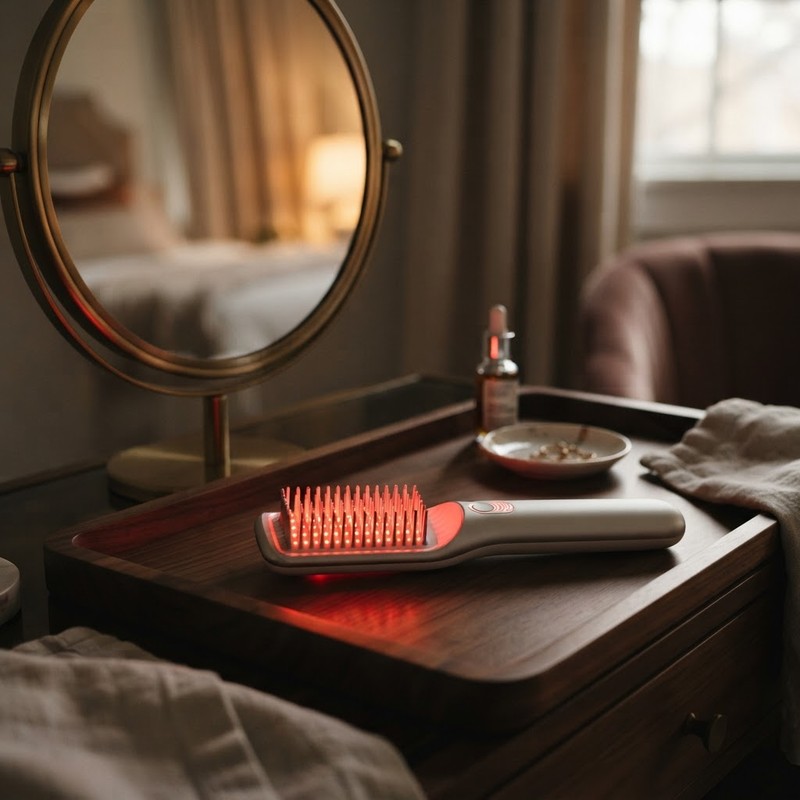
Hair thinning can be a deeply personal and emotionally challenging experience for many women. Whether caused by female pattern hair loss (androgenetic alopecia), acute physiological stress, perimenopausal hormonal transitions, or nutritional changes, finding a reliable path toward maintaining hair density and scalp health is a primary concern for millions. In recent years, at-home low-level laser therapy (LLLT) devices—ranging from laser caps and helmets to flexible bands and handheld combs—have gained remarkable popularity across the wellness market. Promoted as convenient, non-invasive solutions, these devices claim to energize hair follicles using specific wavelengths of visible red light.
However, with an increasing number of high-tech wellness gadgets flooding online marketplaces, it is essential to step back from promotional claims and examine the actual medical evidence. Are laser devices truly evidence-based for female hair loss? How do they function at a cellular level, what do high-quality clinical trials actually tell us about their efficacy, and where do they fit within a comprehensive, clinician-guided healthcare approach? This detailed clinical review examines the biological mechanisms of photobiomodulation, evaluates peer-reviewed trial outcomes, emphasizes the indispensable role of internal diagnostic blood work, and outlines how women can navigate hair health decisions with clear, realistic expectations.
Understanding Low-Level Laser Therapy (LLLT) and Photobiomodulation
Low-level laser therapy, frequently referred to in medical literature as photobiomodulation (PBM) or cold laser therapy, involves delivering low-intensity red to near-infrared light (typically emitted at wavelengths between 630 and 670 nanometers) directly to scalp tissue. Unlike ablative or thermal lasers used in dermatology for skin resurfacing or permanent hair removal, LLLT devices produce non-thermal, non-damaging light energy. This light penetrates the epidermal and dermal layers of the scalp without causing cellular trauma, interacting directly with hair follicle structures.
The primary cellular receptor for photobiomodulation is cytochrome c oxidase, a vital chromophore and terminal enzyme located within the inner membrane of cellular mitochondria. When red light photons are absorbed by cytochrome c oxidase, a cascade of intracellular biochemical events is initiated within follicular tissue:
- Enhancement of Mitochondrial ATP Production: Absorbed light energy stimulates electron transport chain activity, significantly boosting the synthesis of adenosine triphosphate (ATP). Higher ATP availability provides the metabolic energy necessary for rapid cell division within the hair matrix during growth cycles.
- Dissociation of Nitric Oxide: Light absorption aids in displacing inhibitory nitric oxide from cytochrome c oxidase binding sites. The release of free nitric oxide promotes localized vasodilation, increasing capillary blood flow and oxygen delivery to oxygen-deprived or dormant hair follicles.
- Attenuation of Oxidative Stress: Photobiomodulation helps modulate reactive oxygen species (ROS) and inflammatory signaling molecules within the follicular microenvironment, fostering a healthier scalp ecosystem.
- Stimulation of Anagen Transition: Experimental research suggests that red light photobiomodulation may encourage resting hair follicles in the telogen phase to transition into the active growth (anagen) phase, while extending the operational duration of the anagen cycle.
A critical technical distinction in evaluating LLLT devices is the difference between true medical-grade laser diodes and light-emitting diodes (LEDs). Laser diodes emit coherent, monochromatic light that travels in uniform, parallel waves, allowing deeper and more uniform light penetration into scalp tissue. In contrast, LEDs produce non-coherent light that disperses over a wider area with shallower tissue depth. While consumer devices sometimes incorporate a hybrid mix of lasers and LEDs, clinical research evaluating measurable hair density increases has relied predominantly on true laser diode panels operating at precise 650 nm wavelengths.
What the Clinical Research Says: Evaluating LLLT Quality and Evidence
Over the past two decades, medical researchers have conducted numerous randomized, double-blind, sham-controlled clinical trials to assess the clinical efficacy and safety of low-level laser therapy in women experiencing female pattern hair loss. In clinical study designs, sham-controlled trials represent the gold standard: control subjects receive an identical-looking device that emits non-therapeutic ambient light, eliminating psychological placebo effects.
Findings published in peer-reviewed medical journals demonstrate several noteworthy outcomes:
- Statistically Significant Increase in Hair Density: Multi-center double-blind trials evaluating women with mild-to-moderate androgenetic alopecia showed that participants using active 650 nm laser devices 3 to 4 times weekly for 16 to 26 weeks demonstrated a statistically significant increase in mean terminal hair density (measured as target-area hair count per square centimeter) compared to placebo control groups.
- Improvements in Hair Shaft Thickness: Objective phototrichogram assessments revealed measurable increases in hair shaft caliber and diameter among active device users. Thicker hair shafts contribute significantly to overall visual coverage and perceived hair volume across thinning scalp regions.
- Favorable Clinical Safety Profile: Systematic reviews and meta-analyses consistently confirm that low-level laser therapy possesses an excellent safety record when used according to clinical guidelines. Observed adverse events across trials were overwhelmingly mild, self-limiting, and non-serious, consisting primarily of transient scalp warmth, mild localized pruritus (itching), or temporary mild headaches.
Despite these supportive clinical findings, healthcare clinicians emphasize that study results must be interpreted thoughtfully. Clinical trials typically monitor compliant participants over relatively short timeframes (ranging from 16 to 26 weeks). In everyday life, individual clinical responses vary based on baseline degree of hair miniaturization, underlying systemic health factors, device optical energy density, and long-term user consistency. Crucially, laser devices cannot regenerate hair follicles that have undergone complete fibrotic atrophy or scarring; their biological efficacy depends entirely on reviving miniaturized, viable follicles.
Realistic Expectations: What Laser Devices May and May Not Do
For any woman considering low-level laser therapy, establishing clear and evidence-based expectations is the most effective way to avoid disappointment and ensure well-aligned care goals. Marketing materials often feature dramatic claims, but understanding the biological scope of photobiomodulation provides a grounded perspective.
What laser devices may accomplish:
- May support healthy hair density by delivering light energy to miniaturized, struggling hair follicles.
- May help slow down the rate of progressive hair thinning associated with female pattern hair loss.
- May increase individual hair strand diameter, improving overall scalp coverage and hair texture.
- May offer a non-invasive, drug-free supportive option for women who prefer non-pharmacological modalities or wish to complement existing care plans.
What laser devices cannot accomplish:
- Cannot revive hair follicles that have completely ceased function or transitioned into permanent scar tissue.
- Cannot address underlying nutritional deficiencies, such as low iron stores or insufficient protein intake, which require targeted internal correction.
- Cannot correct internal endocrine imbalances, such as thyroid disorders or hyperandrogenism, without appropriate medical management.
- Cannot produce overnight transformations; consistent application over 4 to 6 months is generally necessary before changes in hair density become noticeable.
Understanding regulatory terminology is equally important when evaluating consumer devices. Many commercially available laser caps highlight an "FDA Clearance" designation. FDA clearance signifies that a device has demonstrated technical safety and equivalence to a previously marketed device (a predicate device) for home use. FDA clearance is distinct from FDA drug approval, which requires rigorous, multi-phase clinical trial evidence demonstrating therapeutic cure or disease treatment. While FDA clearance provides assurance regarding basic device safety standards, it does not ensure uniform individual therapeutic outcomes.
Why Clinical Evaluation Comes First: Ferritin, Thyroid, and Hormones
A frequent shortcoming in managing female hair thinning is relying exclusively on external devices or topical applications while ignoring internal systemic health. Hair follicles are among the most metabolically active tissues in the human body, highly sensitive to subtle shifts in blood chemistry, micronutrient status, and hormone levels. Before purchasing an expensive laser cap or device, seeking a comprehensive clinical evaluation is essential to identify and address underlying root causes.
Key biological factors evaluated during a clinician-guided diagnostic review include:
- Serum Ferritin and Stored Iron: Iron functions as a crucial cofactor for ribonucleotide reductase, an enzyme required for cellular DNA synthesis in rapidly dividing hair matrix cells. Depleted iron storage—indicated by low serum ferritin levels—is a frequent primary driver of telogen effluvium and diffuse shedding in women, even when standard hemoglobin levels appear normal.
- Thyroid Panel (TSH, Free T3, Free T4, TPO Antibodies): Both hypothyroidism (underactive thyroid) and hyperthyroidism (overactive thyroid) disrupt the normal hair follicle cycle, leading to diffuse scalp thinning, hair fragility, and texture changes. Normalizing thyroid function through medical management is a foundational requirement for sustained hair recovery.
- Hormonal Dynamics and Androgen Balance: Shifts in circulating estrogens, progesterone, and free testosterone—whether associated with polycystic ovary syndrome (PCOS), perimenopause, or menopausal transitions—can increase hair follicle sensitivity to dihydrotestosterone (DHT). Elevated androgen influence leads to progressive follicular miniaturization over time.
- Micronutrient and Nutritional Status: Optimal serum levels of vitamin D, zinc, vitamin B12, and adequate protein intake are essential for maintaining keratin structural synthesis and hair follicle cell turnover.
Addressing these systemic factors under professional clinical supervision establishes the required physiological environment for hair growth. Applying low-level laser light to a scalp backed by healthy blood chemistry and hormonal balance yields far greater clinical utility than relying on light energy alone.
Integrating LLLT into a Comprehensive, Clinician-Guided Plan
In modern clinical practice, optimal outcomes for female hair loss are rarely achieved through a single standalone treatment. Instead, most women benefit from an integrated, clinician-guided care plan that combines internal physiological support with targeted external modalities tailored to their unique diagnostic profile.
A multi-faceted hair restoration strategy may incorporate several evidence-backed components:
- Targeted Metabolic and Nutritional Optimization: Correcting documented iron deficiency through individualized oral supplementation, adjusting thyroid therapies, and optimizing key micronutrient levels.
- Clinician-Prescribed Formulations: Based on comprehensive medical history, clinicians may recommend custom prescription formulations tailored to an individual's pattern of hair thinning. It is important to note that customized compounded topicals (such as multi-ingredient combination formulas) are prepared by specialized compounding pharmacies to meet specific patient requirements; these compounded topicals are not FDA-approved products, though their individual active ingredients carry well-documented clinical usage histories.
- Photobiomodulation Adjunct Therapy: Utilizing an LLLT device 3 to 4 times per week as a supportive tool to maintain local follicular microcirculation and cellular energy production.
- Ongoing Clinical Follow-Up: Regular consultations with a healthcare clinician enable objective monitoring of scalp progress, adjustment of treatment protocols, and periodic laboratory re-testing.
By engaging with a knowledgeable healthcare clinician, women can navigate their hair health journey with clarity, avoiding unnecessary expenditures on unproven remedies and ensuring that every intervention is clinically appropriate.
Taking the Next Step in Your Hair Health Journey
Low-level laser therapy devices offer an evidence-backed, non-invasive option that may support healthy hair density and complement a broader medical approach. However, durable hair health relies on addressing internal biological factors first. Identifying baseline blood markers, evaluating hormone levels, and ruling out systemic contributors to hair shedding are the foundational steps toward achieving lasting hair quality and volume.
If you are experiencing hair thinning and wish to explore your options with expert guidance, start with a comprehensive medical evaluation. Explore EOS Health's personalized women's hair loss evaluations to connect with a licensed clinician and develop a customized care plan tailored to your health profile.
Photobiomodulation (PBM)
A non-thermal light therapy technique utilizing low-level red or near-infrared laser light to stimulate cellular function, enhance mitochondrial ATP production, and support tissue microcirculation.
Cytochrome C Oxidase
A vital mitochondrial enzyme that absorbs red light photons during photobiomodulation, triggering increased cellular energy synthesis and enhanced nitric oxide release within hair follicle tissue.
Anagen Phase
The active growth phase of the hair follicle cycle, during which hair matrix cells rapidly divide and synthesize new structural hair keratin fibers.
Telogen Effluvium
A temporary form of hair shedding characterized by diffuse scalp thinning, occurring when systemic stressors, nutritional deficiencies, or hormonal shifts cause hair follicles to prematurely enter the resting phase.
Serum Ferritin
A key blood protein that measures stored iron reserves in body tissue; adequate serum ferritin levels are essential for cellular DNA synthesis and sustained hair follicle growth phases.
Sources
faq
Common questions, answered.
How long does it take to notice changes from laser hair therapy?
Low-level laser therapy operates gradually at the cellular level. Most clinical studies report initial subtle stabilization of shedding after 12 to 16 weeks of consistent use, with measurable improvements in hair density and coverage typically observed between 24 and 26 weeks.
Are red light laser caps safe for long-term home use?
Yes. Low-level laser therapy utilizes non-thermal cold laser light that does not burn or damage scalp tissue. Controlled clinical trials have demonstrated an excellent safety profile with minimal, mild side effects such as temporary scalp warmth or slight localized itching.
What is the difference between FDA clearance and FDA approval for laser caps?
FDA clearance indicates that a medical device has demonstrated safety standards and technical equivalence to a previously cleared device for home use. FDA approval applies to pharmaceutical drugs and high-risk medical devices, requiring extensive multi-phase clinical trials to prove disease cure or therapeutic efficacy.
Can laser devices help with hair shedding caused by stress or post-pregnancy?
Laser therapy may support follicular cellular energy during recovery from temporary shedding episodes, such as telogen effluvium. However, addressing the underlying physiological trigger—such as restoring iron stores or balancing post-partum hormones—remains the primary clinical priority.
Do laser devices work better when combined with topical hair treatments?
Many clinicians recommend a multi-modality approach. Combining local photobiomodulation with clinician-guided topical treatments or internal nutritional support often yields more comprehensive overall support for hair follicle health than using light therapy in isolation.
Are LED light therapy caps as effective as laser diode devices?
Clinical trials demonstrating statistically significant increases in hair density have primarily evaluated laser diodes. Laser diodes produce focused, coherent light that penetrates deep into scalp tissue, whereas LEDs produce broader, non-coherent light that scatters closer to the skin surface.
What blood tests should be completed before buying a laser device for hair loss?
A comprehensive clinical evaluation should include serum ferritin (stored iron), a full thyroid panel (TSH, Free T3, Free T4), key sex hormones (estrogen, progesterone, testosterone, DHEA-S), and micronutrients such as vitamin D and vitamin B12.
What happens if I stop using my low-level laser therapy cap?
Because low-level laser therapy provides ongoing cellular stimulation to hair follicles, discontinuing treatment will cause hair follicles to gradually return to their baseline physiological state over time, potentially leading to a gradual loss of observed hair density improvements over time.
You deserve to feel this way.™
Start free consultationwhat are you waiting for?
You're one click away from a new you.
Fill out our brief form and a licensed physician will evaluate which treatment plan is best for you.