B12 Injections vs. B12 Pills: Why Absorption Matters
Compare oral vs. injectable vitamin B12 absorption mechanisms. Understand GI digestive barriers, intrinsic factor, and clinical protocols with EOS Health.
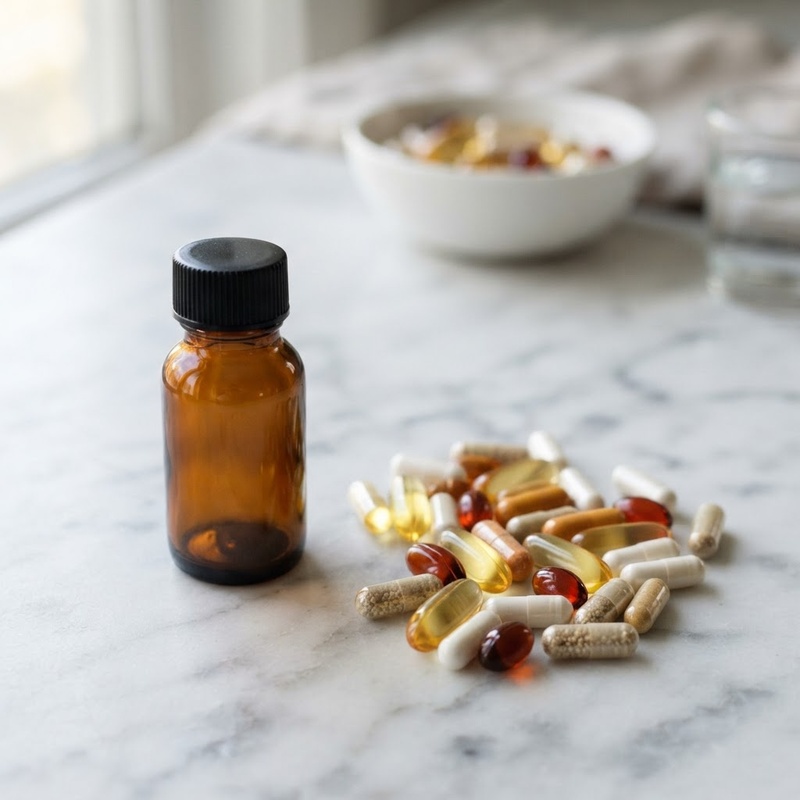
When addressing suboptimal vitamin B12 status or supporting baseline cellular metabolism, individuals are typically presented with two primary delivery methods: conventional oral supplementation (pills, tablets, or sublingual drops) and parenteral injections. While both approaches aim to increase systemic cobalamin levels, their physiological pathways, absorption efficiencies, and clinical applications differ substantially.
When addressing suboptimal vitamin B12 status or supporting baseline cellular metabolism, individuals are typically presented with two primary delivery methods: conventional oral supplementation (pills, tablets, or sublingual drops) and parenteral injections. While both approaches aim to increase systemic cobalamin levels, their physiological pathways, absorption efficiencies, and clinical applications differ substantially. The human gastrointestinal tract presents a sophisticated, multi-step barrier to oral B12 uptake. Examining the physiological differences between oral digestive absorption and direct parenteral delivery enables patients and clinicians to select evidence-informed strategies tailored to individual biological requirements.
The Physiology of Oral B12 Absorption
Oral intake of vitamin B12 through food or dietary pills is far more complex than the digestion of most other water-soluble micronutrients. Rather than diffusing freely across the intestinal membrane in large quantities, cobalamin depends on a tightly regulated, protein-dependent cascade that must operate flawlessly from the oral cavity to the lower intestine.
Gastric Acid and R-Protein Binding in the Stomach
When B12 is consumed in dietary form or swallowed as a supplement pill, it enters the stomach bound to food proteins or carrier matrices. Parietal cells in the stomach mucosa must secrete adequate hydrochloric acid (HCl) and pepsin to detach cobalamin from these binding proteins. Once liberated, free B12 immediately binds to haptocorrin (R-protein), a glycoprotein secreted by salivary glands and gastric mucosa. R-protein shields the fragile cobalamin molecule from degradation in the acidic gastric environment as it passes toward the small intestine.
If gastric pH remains elevated due to antacid medications or mucosal atrophy, this initial cleavage phase fails, leaving cobalamin bound to dietary proteins and unable to complex with downstream protective proteins.
Intrinsic Factor and Ileal Receptor-Mediated Uptake
As the B12-R-protein complex enters the duodenum, pancreatic proteases break down the R-protein, releasing cobalamin once more. Simultaneously, gastric parietal cells produce Intrinsic Factor (IF), a specialized transport glycoprotein. Free B12 binds to Intrinsic Factor to form a stable B12-IF complex. This complex travels to the terminal ileum—the final section of the small intestine—where specialized cubam receptors recognize Intrinsic Factor and absorb the complex via receptor-mediated endocytosis. Inside intestinal enterocytes, B12 is transferred to transcobalamin II for transport into systemic blood circulation.
This receptor-mediated endocytosis mechanism is highly efficient for small quantities of cobalamin, but it possesses finite operational capacity. Under normal physiological conditions, the terminal ileum can absorb only about 1.5 to 2.0 micrograms of B12 per single digestive event due to receptor saturation limits.
Enzymatic Proteolysis in the Duodenum
Proper duodenal pancreatic enzyme secretion is critical during this transition phase. Patients with exocrine pancreatic insufficiency (EPI) or chronic pancreatitis may produce insufficient trypsin and chymotrypsin to degrade haptocorrin. As a result, B12 remains trapped in the R-protein complex and cannot bind Intrinsic Factor, demonstrating another digestive bottleneck that impairs oral bioavailability.
Key Factors That Impair Oral B12 Uptake
Because oral cobalamin uptake depends on a multi-stage enzymatic process, a breakdown at any single phase can severely restrict the volume of B12 entering the bloodstream, regardless of oral dosage.
Gastrointestinal Conditions and Surgical History
Inflammatory digestive disorders such as Crohn’s disease, Celiac disease, or ulcerative colitis frequently damage the mucosal lining of the terminal ileum, compromising cubam receptors. Similarly, patients who have undergone bariatric procedures (such as gastric bypass or sleeve gastrectomy) or surgical ileal resections have significantly reduced parietal cell surface area and fewer intestinal absorption sites. In these patient populations, oral B12 absorption mechanisms are structurally impaired.
Age-Related Decreases in Hydrochloric Acid (Hypochlorhydria)
As individuals age, the gastric mucosa often undergoes progressive atrophic changes, resulting in decreased stomach acid output—a condition known as hypochlorhydria. Studies show that up to 30% of adults over age 50 produce insufficient stomach acid to separate B12 from protein complexes efficiently. Consequently, oral dietary uptake drops even when food intake appears adequate.
Pharmacological Interactions: PPIs, H2 Blockers, and Metformin
Widely prescribed medications can directly interfere with B12 absorption pathways. Proton pump inhibitors (PPIs) and H2 receptor antagonists reduce gastric acid production, impairing enzymatic B12 cleavage. Furthermore, long-term administration of metformin—a common medication for glucose management—interferes with calcium-dependent B12-IF complex binding in the ileum, leading to gradual cobalamin depletion over time.
Patients on chronic metformin or PPI therapy frequently exhibit declining serum B12 levels over two to five years, highlighting the value of periodic diagnostic screening and targeted intervention options.
Parenteral Administration: How Injections Bypass GI Barriers
Parenteral B12 administration—delivered via intramuscular or deep subcutaneous injection—presents a fundamentally distinct pharmacokinetic profile. By depositing cobalamin directly into vascularized muscle tissue, injections circumvent the entire gastrointestinal tract.
Direct Intramuscular Delivery into Systemic Circulation
When B12 is injected intramuscularly, it diffuses rapidly into local capillary beds and attaches directly to circulating transcobalamin transport proteins. This direct entry eliminates reliance on stomach acid, pepsin, haptocorrin, pancreatic enzymes, Intrinsic Factor, and ileal receptor binding. Consequently, 100% of the injected dose enters systemic circulation, bypassing digestive barriers and pharmaceutical interference.
Passive Diffusion vs. Active Intrinsic Factor Transport
Active Intrinsic Factor transport becomes saturated at approximately 1.5 to 2.0 micrograms per meal due to receptor limitations. While high oral supplement doses (e.g., 1,000 to 2,000 micrograms) allow roughly 1% of the dose to cross the gut barrier via passive diffusion, individuals with severe malabsorption may still struggle to attain optimal cellular levels through oral pills alone. Injections deliver concentrated doses that rapidly restore tissue reserves.
By bypassing the saturable Intrinsic Factor transport bottleneck, injectable delivery creates a high concentration gradient between intravascular fluids and intracellular storage pools in the liver, enabling rapid cellular uptake and enzymatic activation.
Bioavailability Dynamics of High-Dose Parenteral Repletion
Pharmacokinetic modeling shows that intramuscular cobalamin injections achieve peak plasma concentrations within 8 to 12 hours post-administration. A significant portion of the injected dose is bound to transcobalamin proteins and distributed to hepatic storage sites, while excess unbound cobalamin is cleared through glomerular filtration. This rapid tissue saturation makes injections the preferred clinical choice during initial repletion phases for severe malabsorption.
Comparing Bioavailability and Clinical Utility
Choosing between oral B12 pills and direct parenteral injections requires weighing absorption bio-availability, patient compliance, laboratory metrics, and individual health goals.
High-Dose Oral Supplementation Protocols
For individuals with healthy digestive systems, mild suboptimal status, or plant-based dietary preferences, oral supplementation can serve well for routine baseline maintenance. Oral pills are convenient, non-invasive, and simple to incorporate into daily habits. However, daily compliance is required, and response times can be slower or variable in those with subtle digestive limitations.
Injectable Protocols for Confirmed Malabsorption
For individuals with documented malabsorption, elevated Methylmalonic Acid (MMA), post-bariatric status, severe depletion, or active GI conditions, injectable B12 offers distinct clinical advantages. Injections provide rapid, predictable elevation of serum cobalamin levels, enabling clinicians to restore depleted stores efficiently under medical oversight.
Myth vs. Reality: Sublingual Tablets and Oral Dissolution
As interest in non-invasive micronutrient delivery has grown, sublingual tablets and liquid drops have gained widespread attention as potential alternatives to conventional swallowed pills. However, examining the underlying mucosal physiology clarifies common misconceptions surrounding oral absorption pathways.
The Reality of Sublingual Transmucosal Absorption
A common belief is that sublingual formulations bypass the gastrointestinal tract entirely by absorbing directly through the oral mucosa into sublingual capillaries. While small, lipophilic molecules can cross oral mucosal membranes, cobalamin is a comparatively large, water-soluble coordination complex with a molecular weight of approximately 1,355 Daltons. Clinical research indicates that transmucosal transport of intact cobalamin across sublingual tissue is minimal. In practice, the majority of sublingual formulations dissolve in saliva and are swallowed, following the identical gastric acid and Intrinsic Factor-dependent digestive cascade as standard oral tablets.
Passive Diffusion at High-Dose Oral Thresholds
When high-dose oral protocols (such as 1,000 to 2,000 micrograms daily) are administered, roughly 1% to 2% of the total dose enters circulation via non-receptor passive diffusion throughout the intestinal tract. While this passive pathway can help support baseline levels in individuals with partial digestive function, individuals with severe malabsorption, ileal resections, or anti-Intrinsic Factor antibodies may still experience sub-optimal intracellular availability. Comparing these passive diffusion kinetics against direct parenteral administration highlights why licensed clinicians evaluate individual digestive history when designing repletion strategies.
What the Research Says: Intracellular Tissue Accumulation and Clearance
Understanding how the body utilizes and stores cobalamin after absorption provides critical context when evaluating oral versus parenteral repletion strategies. Systemic cobalamin does not remain freely floating in circulation; rather, it undergoes structured hepatic storage and cellular distribution.
Hepatic Storage Dynamics and Transcobalamin Transport
Once cobalamin reaches the bloodstream—whether via ileal transport or parenteral delivery—it binds to transport proteins, primarily Transcobalamin II (TC-II) and Haptocorrin (TC-I). TC-II delivers active cobalamin directly to peripheral tissue cells and hepatocytes via receptor-mediated endocytosis. The liver serves as the body’s principal storage reservoir, holding up to 2 to 5 milligrams of cobalamin under healthy physiological conditions. Studies indicate that parenteral delivery rapidly saturates TC-II receptors, promoting efficient replenishment of hepatic stores in individuals recovering from significant depletion.
Renal Clearance and Plasma Half-Life Profiles
Because B12 is a water-soluble micronutrient, circulating cobalamin exceeding transport protein binding capacity is filtered by the kidneys and excreted in urine. Pharmacokinetic investigations show that following a high-dose parenteral administration, a portion of the dose is excreted within the first 24 to 48 hours, while the remainder binds tightly to tissue stores to support ongoing metabolic demands. Evaluating these clearance profiles helps healthcare providers establish appropriate administration schedules tailored to individual lab findings.
Determining the Right Approach with a Licensed Provider
Selecting a B12 administration method should be based on diagnostic evidence and medical history rather than general assumptions. A qualified healthcare provider utilizes targeted blood tests to customize an effective protocol.
Serum B12, MMA, and Homocysteine Testing
Before initiating care, clinicians assess key blood markers. Evaluating serum cobalamin alongside functional biomarkers such as Methylmalonic Acid (MMA) and Homocysteine clarifies whether B12 is successfully entering intracellular metabolic pathways. Elevated MMA indicates functional cellular deficiency, often pointing toward an absorption bottleneck that benefits from parenteral support.
Developing an Individualized Protocol
Your clinician evaluates your digestive history, medication list, lifestyle patterns, and baseline labs. If injectable nutrient support is indicated, your provider outlines an initial repletion schedule followed by a structured maintenance plan, monitoring follow-up blood markers to ensure ongoing safety and response.
Regular clinical follow-ups allow your provider to refine administration frequency, transitioning patients from acute repletion protocols to maintenance regimens as biomarker values normalize.
Conclusion: Personalized Strategies for B12 Status
Understanding the fundamental absorption differences between oral B12 pills and direct parenteral injections equips you to make informed decisions about your metabolic health. While oral supplements suit routine maintenance for many, injectable protocols offer a reliable, GI-bypassing solution for individuals facing absorption hurdles or requiring targeted repletion. Partnering with the clinical team at EOS Health ensures your nutrient strategy is rooted in laboratory diagnostics, safety, and individual care.
Ready to explore whether injectable nutrient support is right for you? Complete a short online intake at EOS Health to connect with a licensed clinician.
Intrinsic Factor (IF)
A glycoprotein secreted by parietal cells in the stomach lining that binds to Vitamin B12 and enables its absorption in the small intestine.
Terminal Ileum
The final section of the small intestine where the Intrinsic Factor-B12 complex is recognized and absorbed into mucosal cells.
Hypochlorhydria
A state of reduced hydrochloric acid production in the stomach, commonly occurring with age or antacid use, which impairs dietary B12 release.
Parenteral Delivery
Administration of nutrients or medications via routes other than the digestive tract, such as intramuscular or subcutaneous injection.
Transcobalamin II
A specific blood transport protein that binds bioavailable Vitamin B12 and delivers it to peripheral cells and organs throughout the body.
Sources
faq
Common questions, answered.
Why is oral Vitamin B12 absorption so complex?
Oral B12 requires a multi-step process involving stomach acid, protective R-proteins, pancreatic enzymes, and Intrinsic Factor to be absorbed in the terminal ileum.
How do B12 injections bypass gastrointestinal absorption barriers?
Injections deliver cobalamin directly into muscle tissue and systemic circulation, completely bypassing stomach acid, Intrinsic Factor, and intestinal receptors.
Can high-dose oral B12 pills work as well as injections?
For individuals with healthy digestion, high oral doses can maintain levels via passive diffusion. However, those with gastrointestinal malabsorption often require injections for effective tissue repletion.
What medications can interfere with oral B12 absorption?
Long-term use of proton pump inhibitors (PPIs), H2 blockers, and metformin can significantly reduce gastric acid or impair Intrinsic Factor binding, lowering oral B12 uptake.
How does age affect Vitamin B12 absorption?
Aging often reduces gastric stomach acid production (hypochlorhydria), making it difficult to unbind B12 from food proteins during digestion.
Are B12 injections painful?
Most patients experience minimal discomfort, similar to a routine vaccination, when administered properly into intramuscular or subcutaneous tissue.
How often are B12 injections typically administered?
Frequency varies based on individual lab results and clinician guidance, ranging from weekly initial repletion doses to monthly maintenance protocols.
How do I know if I have B12 malabsorption?
A licensed clinician can evaluate your digestive history, risk factors, and functional lab tests like Methylmalonic Acid (MMA) to identify malabsorption issues.
Invest in the years ahead.™
Start free consultationwhat are you waiting for?
You're one click away from a new you.
Fill out our brief form and a licensed physician will evaluate which treatment plan is best for you.