What Are Senescent Zombie Cells? Cellular Aging Explained
Explore the science of senescent zombie cells, why they accumulate with age, and how emerging senolytics research aims to support cellular health science.
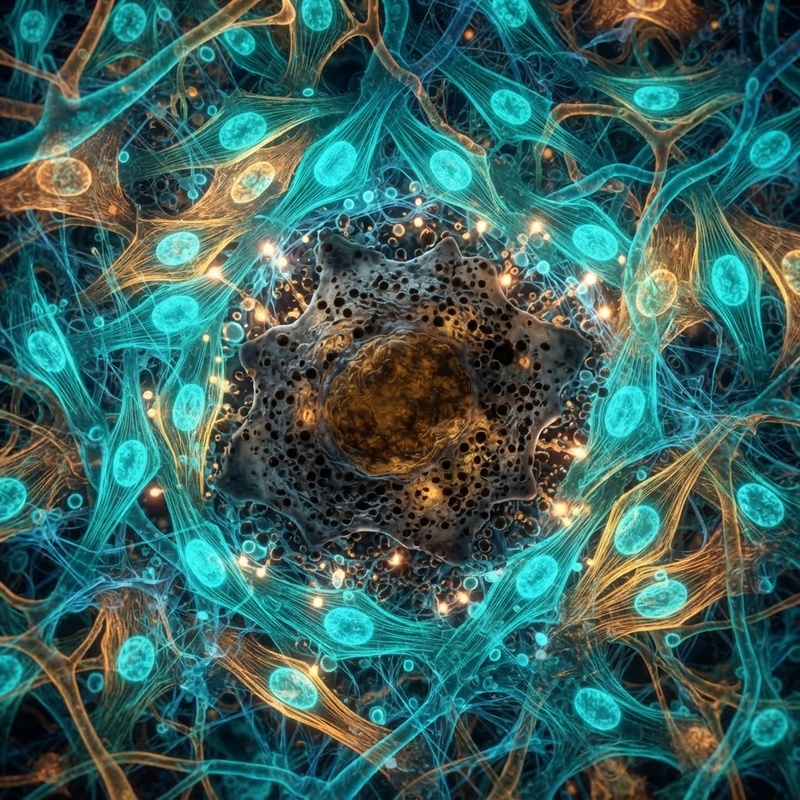
In mainstream health reporting and longevity science, the term "zombie cells" has captured widespread public attention. While the moniker sounds like science fiction, it refers to a very real and significant biological phenomenon known to cell biologists as cellular senescence.
In mainstream health reporting and longevity science, the term "zombie cells" has captured widespread public attention. While the moniker sounds like science fiction, it refers to a very real and significant biological phenomenon known to cell biologists as cellular senescence. Cellular senescence represents one of the recognized hallmarks of aging, playing a complex dual role in human health across different life stages.
At EOS Health, our clinical team believes in translating fascinating biological concepts into clear, accurate, and useful knowledge. Understanding what senescent cells are, why they earn the popular nickname "zombie cells," why they accumulate as we age, and what the emerging field of senolytics research is investigating allows individuals to engage with longevity science thoughtfully. In this guide, we examine the molecular triggers of senescence, the pro-inflammatory secretory profile of these cells, current scientific research, and practical strategies for supporting cellular resilience.
What Is Cellular Senescence?
Cellular senescence is a physiological state in which a cell enters an irreversible state of permanent cell cycle arrest. Although senescent cells stop dividing and replicating, they do not undergo normal programmed cell death (apoptosis). Instead, they remain metabolically active, lingering in tissues for extended periods—hence the popular colloquial term "zombie cells."
Molecular Triggers and Tumor-Suppressor Functions
Cellular senescence did not evolve as a flaw in human design; rather, it serves as a critical evolutionary survival mechanism. In young, healthy organisms, senescence acts as a primary defense against cancer. When a cell experiences severe DNA damage, oncogenic mutation signals (such as activated RAS or BRAF oncogenes), oxidative stress, or critically short telomeres, entering senescence prevents the compromised cell from dividing uncontrollably and forming a malignant tumor.
The molecular induction of senescence is primarily governed by two major tumor-suppressor signaling pathways: the p53/p21 CIP1/WAF1 pathway and the p16 INK4a/retinoblastoma (Rb) pathway. Activation of these pathways inhibits cyclin-dependent kinases (CDKs), preventing cell cycle progression from G1 phase into S phase and locking the cell into permanent arrest.
Replicative Senescence vs. Stress-Induced Premature Senescence (SIPS)
Cell biologists categorize senescence into two main forms based on the initiating stimulus:
- Replicative Senescence: Driven by progressive telomere attrition following decades of normal cell division, reaching the Hayflick limit.
- Stress-Induced Premature Senescence (SIPS): Triggered rapidly independent of telomere length by acute cellular stressors, including severe oxidative stress, DNA damage agents, radiation, or sub-lethal metabolic toxins.
In addition, transient cellular senescence plays beneficial roles in embryonic tissue development, organ morphogenesis, and acute wound healing, where short-lived senescent cells secrete signaling molecules that guide tissue remodeling and attract immune cells to repair damage before being promptly cleared away.
The Senescence-Associated Secretory Phenotype (SASP)
If senescent cells serve protective functions in early life, why do they become problematic as time passes? The answer lies in their altered metabolic activity and secretome, known as the Senescence-Associated Secretory Phenotype (SASP).
Components of the SASP Secretome
Although senescent cells cannot divide, they are far from inert. They upregulate specific metabolic pathways and continuously synthesize and secrete a potent cocktail of bioactive molecules into their surrounding extracellular matrix. Key components of SASP include:
- Pro-inflammatory Cytokines: Interleukin-6 (IL-6), Interleukin-1 beta (IL-1β), and Tumor Necrosis Factor-alpha (TNF-α), which promote localized tissue inflammation.
- Chemokines: Signaling molecules like MCP-1 (CCL2) and IL-8 that attract circulating immune cells into local tissues.
- Matrix Metalloproteinases (MMPs): Enzymes such as MMP-1, MMP-3, and MMP-12 that degrade structural collagen, elastin, and fibronectin matrices.
- Growth Factors and Extracellular Vesicles: Signaling factors like TGF-beta and microRNA-containing exosomes that modify surrounding cell behavior and gene expression.
Extracellular Matrix Remodeling and Fibrotic Shifts
The continuous secretion of matrix metalloproteinases and tissue inhibitors of metalloproteinases (TIMPs) by senescent cells disrupts the delicate equilibrium of extracellular matrix degradation and synthesis. In connective tissues and skin, this SASP activity degrades structural type I and type III collagen fibrils, leads to aberrant accumulation of cross-linked elastic fibers, and alters tissue biomechanical compliance, resulting in localized loss of tissue elasticity.
The Paracrine "Bystander Effect"
Through SASP secretions, a small population of lingering senescent cells can exert widespread detrimental effects on surrounding healthy tissue. The continuous localized release of inflammatory cytokines and tissue-degrading enzymes impairs neighboring cell function, degrades structural collagen matrices, and can even induce senescence in nearby healthy cells—a phenomenon known as paracrine senescence or the "bystander effect." Over time, chronic SASP activity contributes to localized tissue stiffness and systemic low-grade inflammation.
Why Senescent Cells Accumulate As We Age
In youthful tissues, senescent cells are generated periodically in response to minor tissue strain or injury. However, young immune systems efficiently recognize senescent cells through natural killer (NK) cells, cytotoxic CD8+ T lymphocytes, and macrophages, clearing them from tissues via phagocytosis in a process called immune clearance.
Immunosenescence and Cumulative Cellular Burden
As organisms age, two converging biological shifts cause senescent cell populations to accumulate within tissues:
- Increased Generation Rate: Decades of exposure to environmental oxidants, solar UV light, metabolic byproducts, and ongoing cellular replication lead to a higher rate of senescent cell formation across various organ systems.
- Declining Immune Clearance Efficiency: The immune system itself undergoes age-related changes, a process termed immunosenescence. Surveilling immune cells express fewer activating receptors (such as NKG2D) and become less efficient at identifying, targeting, and removing lingering senescent cells from tissue matrices.
When the rate of senescent cell formation exceeds the immune system's clearance capacity, these lingering cells accumulate in tissues—including skin, adipose tissue, blood vessels, joints, and internal organs—contributing to age-associated biological stiffness and reduced tissue repair potential.
Tissue Specificity of Senescent Cell Burden
Histological studies reveal that senescent cell accumulation varies significantly across different tissues. For example, in dermal tissues, senescent dermal fibroblasts accumulate in skin layers exposed to chronic UV radiation. In adipose tissue, senescent preadipocytes contribute to altered metabolic signaling and systemic inflammatory tone. In vascular endothelial linings, lingering senescent endothelial cells impair nitric oxide production and vascular reactivity.
Emerging Frontiers in Research: Senolytics and Senomorphics
The realization that lingering senescent cells contribute to tissue dysfunction has launched one of the most vibrant areas of modern biomedical research: senotherapeutics, which encompasses senolytics and senomorphics.
Senolytics: Compounds Designed to Selectively Target Senescent Cells
Senolytics are defined as small molecules or compounds studied for their ability to selectively disrupt the pro-survival networks (senescent cell anti-apoptotic pathways, or SCAPs) that allow senescent cells to linger, thereby prompting these non-dividing cells to undergo programmed cell death (apoptosis) while leaving healthy dividing cells unharmed.
Preclinical studies in animal models have investigated various senolytic candidates—including natural plant polyphenols like quercetin and fisetin, as well as specialized pharmaceutical molecules. In rodent research, periodic administration of senolytic compounds demonstrated encouraging reductions in senescent cell burden and markers of tissue inflammation.
Senomorphics: Modulating SASP Secretions
In contrast to senolytics, senomorphics are compounds investigated for their capacity to suppress or alter the pro-inflammatory SASP secretome without necessarily killing the senescent cells directly. By dampening SASP cytokine release (often by targeting NF-kB or mTOR signaling pathways), senomorphics aim to mitigate localized bystander damage and support surrounding tissue homeostasis.
Distinguishing Scientific Research from Current Clinical Reality
While senolytics research is exceptionally promising, maintaining clinical objectivity is essential. The vast majority of senolytics research to date has been conducted in cell cultures and animal models. Human clinical trials evaluating safety, precise dosing schedules, tissue-specific targeting, and long-term outcomes are currently in early phase I and phase II stages.
At present, there are no FDA-approved senolytic treatments specifically cleared for anti-aging or general cell clearance. Unvalidated commercial claims promising instant cell clearance should be approached with healthy scientific skepticism, as indiscriminately clearing senescent cells could theoretically impair acute wound healing or normal tissue repair mechanisms if not administered under strict clinical protocols.
Personalized Cellular Health and Evidence-Based Habits
While targeted senolytic medical therapies remain under active clinical investigation, established lifestyle factors play a proven role in supporting immune surveillance and minimizing unnecessary cellular damage:
- Regular Physical Movement: Exercise stimulates immune cell turnover, improves circulation, and helps maintain active immune surveillance against compromised cells.
- Polyphenol-Rich Diet: Dietary patterns rich in colorful vegetables, berries, green tea, and extra virgin olive oil provide bioactive plant compounds that help modulate inflammatory cascades.
- Metabolic Balance and Fasting Physiology: Intermittent fasting patterns and calorie awareness activate cellular clean-up pathways such as autophagy, supporting general cellular maintenance.
- Restorative Sleep: Adequate slow-wave sleep supports immune system recalibration and metabolic recovery.
Partnering with Medical Professionals for Healthy Aging
Research suggests that cellular senescence is a dynamic biological process that evolves over a lifetime. Rather than viewing senescent cells with fear, understanding their role empowers us to adopt comprehensive, science-backed lifestyle strategies that support immune function and cellular resilience.
At EOS Health, our clinical team provides transparent, evidence-based care to help you navigate longevity science safely and effectively.
Cellular Senescence
A state of permanent cell cycle arrest where cells cease dividing but remain metabolically active, secreting pro-inflammatory factors.
SASP (Senescence-Associated Secretory Phenotype)
The pro-inflammatory secretome released by senescent cells, comprising cytokines, chemokines, and matrix metalloproteinases.
Senolytics
A class of experimental small molecules or compounds studied for their ability to selectively induce apoptosis in senescent cells.
Immunosenescence
The gradual age-associated decline in immune system surveillance and function, reducing the body's ability to clear senescent cells.
Paracrine Senescence
The phenomenon where senescent cells induce senescence in neighboring healthy cells through SASP factor signaling (bystander effect).
Sources
faq
Common questions, answered.
Why are senescent cells called "zombie cells"?
They earned the nickname "zombie cells" because they stop dividing like normal healthy cells, yet refuse to die through apoptosis, lingering in tissues and secreting inflammatory signals.
Are senescent cells completely harmful to the body?
No. In youth, cellular senescence serves essential protective functions, acting as a primary defense against uncontrolled cell division (tumor suppression) and assisting in acute wound healing.
What is the Senescence-Associated Secretory Phenotype (SASP)?
SASP refers to the complex mixture of pro-inflammatory cytokines, chemokines, and matrix-degrading enzymes that lingering senescent cells continuously secrete into surrounding tissue.
How do senescent cells affect nearby healthy cells?
Through SASP secretions, senescent cells can induce a "bystander effect," causing localized tissue inflammation and inducing senescence in adjacent previously healthy cells.
Why do senescent cells accumulate as people grow older?
Accumulation occurs due to a combination of higher rates of senescent cell formation from lifetime stressors and declining immune system efficiency in clearing them away (immunosenescence).
What are senolytics in medical research?
Senolytics are experimental molecules studied for their ability to selectively trigger programmed cell death in senescent cells while sparing healthy, normal tissue cells.
Are there FDA-approved senolytic drugs available for anti-aging?
No. There are currently no FDA-approved senolytic medications or therapies cleared specifically for anti-aging or general senescent cell removal. Research is still in early clinical trial stages.
What lifestyle choices support natural cellular maintenance?
Engaging in regular physical exercise, eating a nutrient-dense diet rich in natural polyphenols, prioritizing quality sleep, and avoiding smoking help support immune surveillance and cellular health.
Invest in the years ahead.™
Start free consultationwhat are you waiting for?
You're one click away from a new you.
Fill out our brief form and a licensed physician will evaluate which treatment plan is best for you.