What Are Telomeres and Why Do They Matter for Aging?
Learn what telomeres are, how chromosome caps shorten over time, and what current research reveals about lifestyle factors and cellular lifespan science.
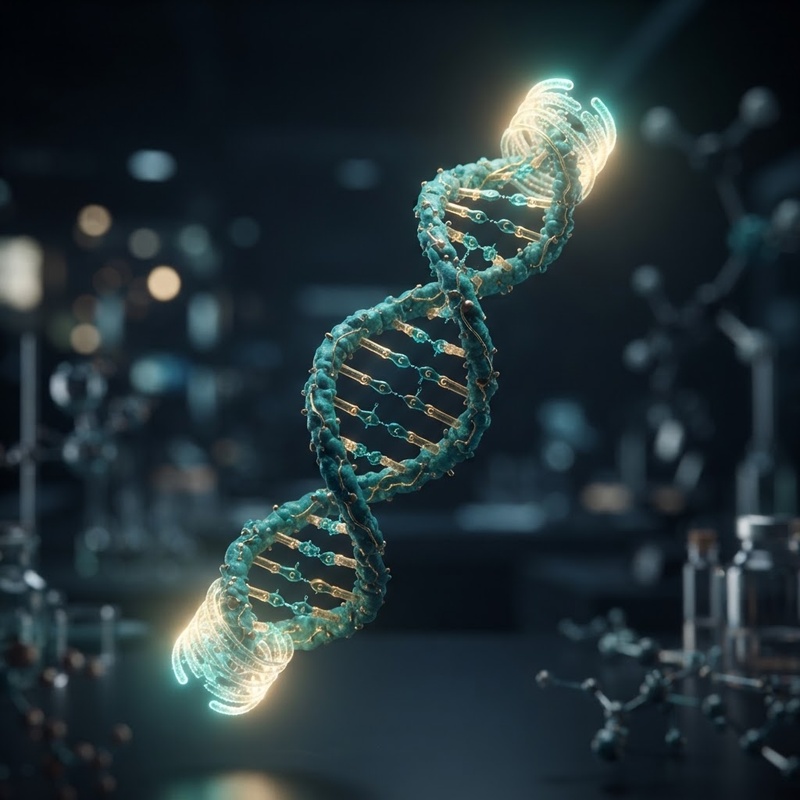
In the field of cellular genetics and longevity science, few structures have generated as much interest as telomeres. Often compared to the protective plastic aglets at the tips of shoelaces that prevent fraying, telomeres are specialized nucleoprotein complexes located at the terminal ends of linear chromosomes.
In the field of cellular genetics and longevity science, few structures have generated as much interest as telomeres. Often compared to the protective plastic aglets at the tips of shoelaces that prevent fraying, telomeres are specialized nucleoprotein complexes located at the terminal ends of linear chromosomes. Their discovery and the elucidation of how they protect genomic material earned the 2009 Nobel Prize in Physiology or Medicine, marking a milestone in our understanding of cell division, chromosome stability, and biological aging.
At EOS Health, our clinical team aims to provide clear, scientifically grounded insights into cellular biology. As public curiosity surrounding biological age markers grows, understanding what telomeres do, why they shorten with repeated cell division, and what current clinical research actually says regarding lifestyle interventions is essential. In this comprehensive guide, we unpack telomere architecture, the end-replication problem, the role of the enzyme telomerase, and the realistic boundaries of telomere testing in modern clinical context.
The Anatomy and Function of Telomeres
Human genomic DNA is packaged into 23 pairs of linear chromosomes located inside the cell nucleus. Each time a cell divides, it must replicate its entire genome accurately. Telomeres serve as non-coding protective buffers at the terminal ends of these DNA strands, preserving essential coding genetic material from degradation during replication cycles.
Repetitive Nucleotide Sequences and the Shelterin Complex
In humans and all vertebrates, telomeric DNA consists of repetitive, non-coding hexanucleotide sequences—specifically, the six-base sequence TTAGGG—repeated thousands of times. In human newborns, telomeres typically measure between 8,000 and 15,000 base pairs in length.
Bound along these repetitive DNA sequences is a specialized six-protein complex known as shelterin (comprising TRF1, TRF2, TIN2, POT1, TPP1, and RAP1). The shelterin complex bends the single-stranded terminal DNA back on itself to form a protective lasso-like structure called a T-loop (terminal loop), anchored by a D-loop (displacement loop). This structure hides the chromosome end from cellular DNA damage surveillance machinery, preventing repair enzymes from incorrectly treating the natural tip of a chromosome as a dangerous double-strand DNA break that requires end-joining fusion.
The 3' Single-Stranded Overhang and G-Quadruplex Structures
At the extreme end of telomeric DNA, the G-rich strand extends beyond the C-rich strand as a 3' single-stranded overhang measuring 50 to 300 nucleotides in length. This overhang intercalates into the double-stranded telomeric region to create the T-loop structure. Furthermore, the high density of guanine residues enables telomeric DNA to fold into higher-order secondary structures called G-quadruplexes, four-stranded DNA structures stabilized by Hoogsteen hydrogen bonding that modulate telomerase enzyme accessibility and genomic stability.
The End-Replication Problem and Natural Shortening
Why do telomeres shorten as cells age? The answer lies in the fundamental mechanics of DNA replication during cell division, a molecular limitation known as the "end-replication problem."
DNA Polymerase Mechanics During Cell Division
When a cell divides, DNA polymerase enzymes synthesize new DNA strands using existing strands as templates. However, DNA polymerase can only synthesize new DNA in one direction (5' to 3') and requires a short RNA primer to initiate synthesis. On the lagging strand during replication, Okazaki fragments are synthesized discretely. When the final terminal RNA primer is removed at the chromosome tip, a small gap remains at the extreme 3' overhang that cannot be filled by conventional DNA polymerase.
As a result, each time a somatic human cell divides, it loses approximately 50 to 200 base pairs of telomeric DNA from the ends of its chromosomes. Over many rounds of cellular division, telomeres gradually become progressively shorter.
The Hayflick Limit and Replicative Senescence
In the 1960s, microbiologist Leonard Hayflick discovered that normal human somatic cells (such as skin fibroblasts) possess a finite capacity to divide in culture—typically around 40 to 60 divisions—a phenomenon now termed the "Hayflick Limit."
When telomeres shorten to a critically minimal length (typically around 2,000 to 4,000 base pairs), the protective shelterin complex and T-loop structure can no longer form stably. The exposed chromosome tip triggers a persistent DNA damage response (DDR) mediated by p53 and p21 CIP1/WAF1 signaling pathways. This halts further cell division permanently, pushing the cell into a state known as replicative senescence, where it remains metabolically active but can no longer proliferate.
Telomerase: The Enzyme of Cellular Maintenance
While somatic cells experience gradual telomere shortening, certain specialized cells must divide continuously without losing genomic material. To achieve this, nature evolved a unique enzyme complex called telomerase.
Structure and Biological Expression of Telomerase
Telomerase is a specialized reverse transcriptase enzyme composed of two core components: a catalytic protein subunit (TERT, telomerase reverse transcriptase) and an RNA template molecule (TERC, telomerase RNA component). Telomerase uses its RNA template to synthesize new TTAGGG repeat sequences directly onto 3' chromosome ends, counteracting the end-replication loss.
In human biology, high levels of active telomerase are expressed in embryonic stem cells, germline cells (sperm and egg precursors), and certain adult somatic stem cell populations (such as hematopoietic stem cells in bone marrow and basal epithelial stem cells). In contrast, most differentiated adult somatic cells repress TERT gene expression, maintaining low or undetectable telomerase activity. This evolutionary trade-off is thought to serve as a protective tumor-suppressor mechanism, preventing unlimited cellular proliferation in mature tissues.
What Telomere Research Tells Us About Lifestyle Factors
In recent years, epidemiological and observational clinical studies have explored whether lifestyle habits, psychological stress, dietary quality, and environmental exposures influence the rate of telomere attrition in humans.
Observational Findings Across Clinical Cohorts
Large-scale population studies (such as the Framingham Heart Study and NHANES cohorts) measuring leukocyte telomere length (LTL) have identified consistent observational correlations:
- Physical Activity: Individuals engaging in regular, moderate aerobic exercise and physical movement tend to exhibit longer relative leukocyte telomere length compared to sedentary individuals of the same chronological age, potentially mediated by reduced systemic oxidative load.
- Nutritional Patterns: Adherence to Mediterranean-style dietary patterns—rich in vegetables, legumes, unrefined grains, extra virgin olive oil, and dietary antioxidants—is associated with better preservation of telomere length markers.
- Chronic Psychological Stress: High levels of chronic psychological stress and elevated cortisol markers correlate with accelerated leukocyte telomere shortening, likely mediated by increased systemic oxidative stress and inflammatory cascades.
- Sleep Duration and Quality: Consistent, restorative sleep (7 to 8 hours nightly) correlates with better maintained telomeric markers compared to chronic sleep restriction or shift work.
The Role of Dietary Antioxidants and Inflammatory Markers
Nutritional epidemiology studies highlight that dietary intake of omega-3 fatty acids (EPA and DHA) and polyphenol-rich foods correlates inversely with the rate of leukocyte telomere shortening. Researchers hypothesize that systemic anti-inflammatory effects lower circulating C-reactive protein (CRP) and interleukin-6 (IL-6) levels, reducing oxidative damage to guanine-rich telomeric DNA sequences, which are particularly susceptible to oxidative cleavage.
Interactions Between Telomeres and Epigenetic Clocks
In modern longevity science, researchers evaluate telomere length alongside DNA methylation patterns, known as epigenetic clocks (such as the Horvath and Hannum clocks). While telomere length reflects cellular replication history and cumulative oxidative stress, epigenetic clocks measure DNA methylation modifications across specific CpG sites. Studies indicate that combining telomere metrics with epigenetic age markers provides a more comprehensive picture of cellular dynamics than relying on any single biomarker in isolation.
Understanding Correlation vs. Causation
It is crucial to interpret these findings with scientific nuance. Observational correlations do not prove direct causation. While lifestyle factors clearly support general cellular health, reducing telomere dynamics to a simple "timer" oversimplifies complex biological systems. Telomere attrition is one of several intertwined hallmarks of cellular aging, interacting continuously with mitochondrial function, epigenetic modifications, nutrient sensing, and cellular repair pathways.
Honest Boundaries: What Telomere Testing Can and Cannot Tell You
With the rise of commercial direct-to-consumer health metrics, telomere length testing has become widely accessible. While measuring telomeres offers interesting research insights, understanding the clinical boundaries of these tests is vital for patients and practitioners alike.
Technical Limitations of Telomere Testing
Commercial tests typically measure average leukocyte telomere length (LTL) from a blood sample using quantitative PCR (qPCR), flow-FISH, or Southern blot assays. Important clinical caveats include:
- High Assay Variability: Laboratory measurements can vary significantly between samples and testing platforms, making precise tracking over short time intervals challenging.
- Cell Type Specificity: Leukocyte telomeres reflect immune cell population dynamics in circulating blood, which may not accurately represent telomere length in cardiac, neural, or skin tissues.
- Broad Population Overlap: Telomere length varies widely among healthy individuals of the same age. A person with shorter-than-average telomeres may remain in excellent health, while another with longer telomeres may experience metabolic challenges.
Consequently, medical consensus holds that telomere length testing should be viewed as a broad biological research metric rather than a definitive diagnostic tool for individual clinical decision-making.
Navigating Cellular Health with Clinical Guidance
Research suggests that telomeres play a fundamental role in preserving genomic stability and governing cell division limits. While direct manipulation of telomere length remains an active area of basic research, the most reliable ways to support cellular health involve evidence-based lifestyle habits—nourishing nutrition, consistent physical activity, restorative sleep, and proactive medical care.
At EOS Health, our clinical team is committed to helping you understand cellular longevity science clearly, separating proven medical guidance from preliminary hype.
Telomeres
Repetitive non-coding DNA sequences (TTAGGG) and associated proteins at chromosome tips that protect genomic stability during cellular division.
Telomerase
A specialized reverse transcriptase enzyme complex that synthesizes telomeric DNA repeats to maintain chromosome ends in stem and germ cells.
Shelterin Complex
A six-protein complex that binds to telomeric DNA, forming a protective T-loop structure that prevents chromosome ends from being recognized as DNA damage.
Replicative Senescence
A state of permanent cell cycle arrest reached when telomeres shorten to a critical threshold, preventing further cell division.
Hayflick Limit
The finite number of times a normal human somatic cell population can divide before reaching replicative senescence, typically 40 to 60 divisions.
Sources
faq
Common questions, answered.
What are telomeres in plain language?
Telomeres are protective cap-like structures made of repetitive DNA sequences and proteins located at the ends of linear chromosomes, shielding genetic data during cell division.
Why do telomeres get shorter as we get older?
Each time a cell divides, the DNA replication machinery cannot copy the extreme tips of chromosomes (the end-replication problem), causing small pieces of telomeric DNA to be lost with each division cycle.
What is the enzyme telomerase and what does it do?
Telomerase is an enzyme that can add new repetitive DNA sequences back onto telomere ends. It is active in stem cells and embryonic tissues but mostly turned off in mature body cells.
What happens when a cell's telomeres become critically short?
When telomeres become critically short, the cell triggers a permanent DNA damage response that stops further division, placing the cell into a state called replicative senescence.
Can lifestyle habits like exercise slow down telomere shortening?
Observational studies indicate that regular moderate exercise, healthy dietary patterns, and managing chronic stress correlate with better preserved leukocyte telomere length over time.
Is commercial telomere length testing accurate for predicting biological age?
Telomere testing provides a broad population-level marker, but high lab variability and tissue-specific differences mean it cannot precisely measure an individual's exact biological age or lifespan.
Are there FDA-approved drugs designed specifically to lengthen telomeres?
No. There are no FDA-approved medications or therapies specifically cleared to lengthen human telomeres for anti-aging purposes. Supporting general health habits remains the safest approach.
How do oxidative stress and inflammation affect telomere attrition?
Oxidative stress and chronic low-grade inflammation damage telomeric DNA sequences directly, which can accelerate the rate of base-pair loss during cell replication cycles.
Invest in the years ahead.™
Start free consultationwhat are you waiting for?
You're one click away from a new you.
Fill out our brief form and a licensed physician will evaluate which treatment plan is best for you.