Balance Training After 50: Why It Matters for Healthy Aging
Discover how balance training after 50 supports healthy aging, mobility, and independence. Learn simple daily exercises and science-backed benefits today.
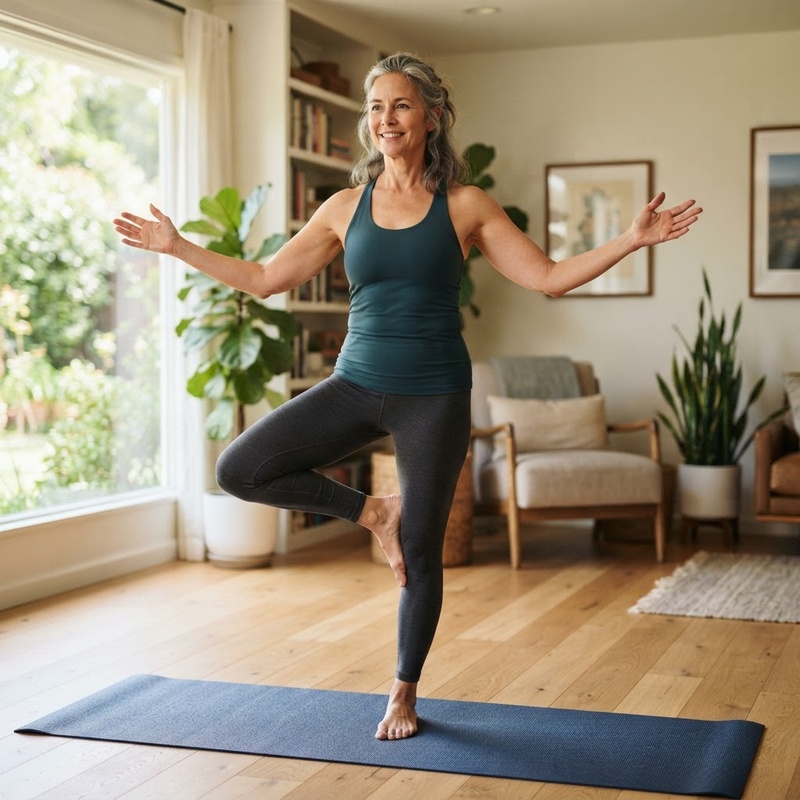
Aging brings a quiet transformation in how we interact with the physical world. While many adults in their fifties and sixties focus primary attention on cardiovascular stamina, joint flexibility, or metabolic health, there is a fundamental pillar of physical function that frequently receives less attention: balance. Balance is the silent coordinator behind every step, pivot, and spontaneous movement we make. It enables us to carry groceries across an uneven driveway, hike along winding trails, step out of a bathtub, or catch ourselves if our foot catches a rug. Yet, as the decades pass, the physiological systems that keep us upright and centered undergo subtle changes. Recognizing how balance shifts with age—and understanding how balance training after 50 supports long-term mobility—is one of the most effective strategies for promoting an active, independent life.
Aging brings a quiet transformation in how we interact with the physical world. While many adults in their fifties and sixties focus primary attention on cardiovascular stamina, joint flexibility, or metabolic health, there is a fundamental pillar of physical function that frequently receives less attention: balance. Balance is the silent coordinator behind every step, pivot, and spontaneous movement we make. It enables us to carry groceries across an uneven driveway, hike along winding trails, step out of a bathtub, or catch ourselves if our foot catches a rug. Yet, as the decades pass, the physiological systems that keep us upright and centered undergo subtle changes. Recognizing how balance shifts with age—and understanding how balance training after 50 supports long-term mobility—is one of the most effective strategies for promoting an active, independent life.
At EOS Health, our clinical philosophy centers on empowering individuals with practical, science-informed strategies that cultivate resilience across every decade. Longevity is not merely about adding years to life, but about infusing those years with function, safety, and confidence. Balance training after 50 serves as a cornerstone of this proactive health model. Far from being a niche athletic skill, stability exercise provides sensory, neuromuscular, and cognitive stimulation that helps maintain structural independence. In this guide, we explore the biology of human balance, examine why longevity researchers consider balance a key indicator of overall vitality, outline simple daily movements to incorporate at home, and discuss when unsteadiness warrants a thoughtful conversation with a licensed healthcare provider.
The Physiology of Balance: How Our Stability System Shifts Over Time
To appreciate why stability practice becomes valuable after age 50, it helps to understand the sensory orchestra that keeps the body upright. Postural control relies on a continuous feedback loop between three primary sensory pathways, coordinated by the central nervous system:
- The Vestibular System: Located within the inner ear, fluid-filled structures and microscopic hair cells sense gravitational pull, head rotation, and acceleration, sending constant positional updates to the brain.
- Proprioception: A network of specialized receptors embedded in our joints, tendons, and muscles that act as internal spatial location monitors, communicating where our limbs are without visual confirmation.
- The Visual System: Our eyes provide essential environmental context, helping the brain establish horizon lines, depth perception, and spatial boundaries relative to external objects.
In earlier decades, these three systems operate with remarkable redundancy. If one sensory input experiences temporary interference—such as walking in a dark hallway—the brain seamlessly relies more heavily on proprioceptive and vestibular feedback. However, beginning around age 50, several gradual physiological shifts begin to intersect across these pathways.
Age-Related Changes Across Sensory and Neuromuscular Pathways
Natural age-related changes occur progressively. Within the inner ear, the density of vestibular hair cells gradually declines, which can slightly slow the speed at which positional adjustments are registered. Simultaneously, nerve conduction velocity undergoes subtle slowing, and proprioceptive receptors in the feet and ankles may become less sensitive. Muscular changes also play a pivotal role. The loss of lean muscle mass and power—known clinically as sarcopenia—tends to affect fast-twitch muscle fibers first. Fast-twitch fibers are responsible for rapid, reactive corrections when stepping on an uneven surface.
Furthermore, changes in joint mobility, core muscular endurance, and visual contrast sensitivity can combine to make postural adjustments feel less automatic. When these changes accumulate unnoticed, an individual may unconsciously narrow their base of support, take shorter steps, or avoid physical activities that challenge equilibrium. Fortunately, the human nervous system retains neuroplasticity throughout life. Targeted sensory and motor drills help reinforce neural pathways and support functional stability.
Why Longevity Researchers Keep Looking at Balance
In recent years, longevity science and preventive healthcare have increasingly recognized physical performance metrics as vital signs for overall health trajectory. While aerobic fitness and grip strength receive significant attention, balance proficiency has emerged as an equally compelling window into systemic health and physiological age.
A landmark observational study published in the British Journal of Sports Medicine investigated the association between mid-life balance capacity and long-term health outcomes. Researchers followed middle-aged and older adults over several years, asking participants to complete a simple 10-second single-leg stance test. The findings revealed a striking relationship: the inability to complete a steady 10-second single-leg stand was strongly associated with higher all-cause mortality risk over the subsequent decade, even after adjusting for age, sex, and underlying health conditions. While an inability to balance on one leg does not directly cause ill health, researchers emphasize that single-leg stability serves as an integrated biomarker reflecting underlying neuromuscular health, vascular integrity, cognitive processing, and core muscular resilience.
The Multi-System Connection: Mind, Muscle, and Circulation
Why is single-leg stability such a revealing reflection of vitality? Maintaining equilibrium on one foot requires seamless real-time coordination across multiple organ systems. It demands micro-adjustments from small intrinsic foot muscles, rapid signaling through peripheral nerves, sustained engagement of pelvic and core stabilizers, and focused attentional control from the brain's motor cortex. When microvascular changes, chronic low-grade systemic inflammation, or neurodegenerative shifts affect the central nervous system, balance performance is often among the first functional markers to show subtle decline.
Moreover, robust balance capability directly correlates with sustained physical activity levels. Adults who feel stable and confident in their movements are far more likely to remain engaged in recreational walking, gardening, sport, travel, and community life. Conversely, a growing fear of falling often leads to self-imposed activity restriction. This reduced physical engagement can accelerate cardiovascular deconditioning and social isolation. By prioritizing balance training after 50, individuals help safeguard the functional foundation that makes an active lifestyle possible.
Essential Daily Balance Practices to Integrate at Home
The encouraging reality of balance training is that it requires no expensive machinery or specialized facilities. Effective stability training relies on consistent, low-intensity movement patterns that challenge postural control in safe, controlled environments. When initiating balance training after 50, safety must always remain the highest priority. Begin each exercise within arm's reach of a sturdy kitchen counter, heavy table, or wall for support whenever balance shifts.
1. The Assisted Single-Leg Stance
The single-leg stance forms the core foundation of functional balance training. Stand upright near a sturdy support surface with feet hip-width apart and posture aligned. Lightly place fingers on the counter for stability. Lift one foot two to three inches off the floor, keeping weight centered over the standing leg. Engage core muscles and fix gaze on a stationary point at eye level across the room. Hold this position for 15 to 30 seconds while breathing smoothly, then lower the foot and repeat on the opposite side. Aim for 2 to 3 repetitions per leg. As stability builds over time, progress may involve transitioning from a firm handhold to light finger contact, and eventually hovering hands an inch above the surface for safety.
2. Heel-to-Toe Tandem Stance and Walking
Tandem standing directly challenges lateral stability by narrowing the base of support. Stand near a wall or counter. Place one foot directly in front of the other so the heel of the front foot rests adjacent to the toes of the rear foot. Distribute body weight evenly across both feet, keep shoulders relaxed, and maintain upright alignment for 20 to 30 seconds. Switch foot positions and repeat. To turn this into a dynamic drill, slowly walk in a straight line placing one foot directly in front of the other in a heel-to-toe fashion for 10 to 15 steps while staying close to a wall for support.
3. Weight Shifts and Ankle Clock Drills
Dynamic stability requires controlling the center of mass while shifting position. Stand with feet slightly wider than shoulder-width apart. Slowly shift weight toward the right side, lifting the left heel gently while keeping left toes touching the ground. Hold for 3 to 5 seconds, then return to center and shift smoothly to the left. For an advanced variation, imagine standing in the center of a clock face. Standing on the left leg (with counter support nearby), tap the right foot forward to 12 o'clock, sideways to 3 o'clock, and backward to 6 o'clock before returning to center. This practice exercises multidirectional hip and ankle stabilizers.
4. Mindful Movement and Environment Optimization
In addition to discrete exercises, engaging in mindful physical disciplines such as Tai Chi, Gentle Yoga, or Pilates offers evidence-backed benefits for postural control. Tai Chi, in particular, emphasizes slow weight transfer, knee flexion, and rotational awareness, making it one of the most widely studied modalities for balance enhancement in mid-life and older adults.
Alongside exercise, optimizing the home environment creates a safer backdrop for daily mobility. Simple adjustments include ensuring adequate lighting in hallways and stairwells, removing loose throw rugs, keeping walking paths free of clutter, and installing secure handrails along staircases and grab bars in bathroom areas.
Recognizing When Unsteadiness Signals a Need for Clinical Care
While targeted practice supports physical stability, it is equally important to distinguish normal age-related balance adjustments from symptoms that warrant professional medical evaluation. Unsteadiness is sometimes an early outward signal of an underlying medical condition, a medication interaction, or a sensory disturbance that requires clinical attention.
Differentiating Mild Unsteadiness from Medical Red Flags
Occasional, minor unsteadiness on uneven surfaces is natural. However, certain symptoms indicate that a comprehensive assessment by a licensed healthcare provider is appropriate:
- True Vertigo or Spinning Sensations: Feeling as though the room is actively spinning or tilting, often accompanied by nausea. This frequently points to inner ear conditions such as Benign Paroxysmal Positional Vertigo (BPPV) or vestibular neuritis.
- Lightheadedness or Presyncope: A feeling of faintness when standing up quickly, which may indicate orthostatic hypotension, dehydration, or cardiovascular rhythm variations.
- Sudden or Rapid Onset of Instability: Any abrupt change in walking ability, coordination, or balance demands prompt medical evaluation to rule out neurological events.
- Numbness or Tingling in the Feet: Reduced tactile sensation in the soles of the feet can indicate peripheral neuropathy (often linked to metabolic conditions or vitamin deficiencies), impairing proprioceptive feedback.
- Medication-Related Balance Shifts: Many prescription medications—including blood pressure drugs, sedatives, muscle relaxants, and anticholinergic agents—can affect central nervous system signaling or blood pressure regulation. Taking multiple prescription drugs simultaneously increases the likelihood of interactions that impact balance.
A clinical evaluation allows healthcare professionals to review medication lists, test nerve function, evaluate blood pressure response, check vision and inner ear mechanics, and recommend structured physical therapy if indicated. Identifying and addressing root causes early helps preserve safe mobility.
Building a Holistic Longevity Plan with Clinical Support
Achieving sustainable vitality after age 50 involves connecting physical movement, metabolic health, cognitive wellness, and proactive medical oversight into a unified care plan. Balance exercises work best when paired with resistance training to maintain lean muscle tissue, adequate dietary protein and vitamin D intake to support musculoskeletal strength, and regular clinical monitoring of cardiovascular and neurological markers.
At EOS Health, we make preventive, physician-led care accessible through modern telehealth services. Whether seeking expert guidance on metabolic health, reviewing prescriptions that may influence daily energy and balance, or exploring clinical strategies to optimize your longevity journey, our experienced team provides convenient, evidence-based care tailored to your goals. Licensed medical evaluation ensures that any health interventions—from lifestyle modifications to prescription therapies—are personalized, medically supervised, and designed around individual health profiles.
Taking proactive care of balance today is an investment in independence, freedom of movement, and quality of life for years ahead. To explore how comprehensive telehealth care can support your healthy aging trajectory, visit EOS Health Longevity Guidance and connect with our clinical team today.
Proprioception
The body's innate sensory awareness of joint position and spatial orientation, communicated through neural receptors in muscles, tendons, and joints without relying on vision.
Vestibular System
A sensory apparatus located within the inner ear that detects motion, head position, and spatial orientation to regulate spatial awareness and equilibrium.
Sarcopenia
The age-related loss of skeletal muscle mass, strength, and fast-twitch muscle fibers, which can impact postural control and physical reaction times.
Postural Control
The continuous neuromuscular adjustment process required to maintain, achieve, or restore a state of equilibrium during resting postures or dynamic movement.
Base of Support
The area beneath an individual that includes every point of contact the feet or assistive devices make with the supporting floor surface during standing or locomotion.
Sources
faq
Common questions, answered.
Why does balance naturally decline after age 50?
Balance changes occur as the inner ear vestibular system, proprioceptive joint sensors, visual contrast sensitivity, and reaction speeds experience gradual age-related shifts. Muscle mass loss (sarcopenia) and reduced nerve conduction speed also play key roles.
How often should balance exercises be performed?
Consistency is key. Performing 5 to 10 minutes of daily balance practice—such as single-leg stands or tandem walking—helps reinforce neural pathways more effectively than longer, infrequent sessions.
Can balance exercises support fall prevention in older adults?
Yes. Clinical evidence suggests that regular balance and strength exercises support lower-body stability, joint positioning awareness, and dynamic control, helping individuals navigate uneven terrain more confidently.
Is a 10-second single-leg stand a good test of balance?
Research frequently uses the 10-second single-leg stance as an observational biomarker of functional mobility and neuromuscular coordination. Performing this exercise with counter support nearby offers a simple self-assessment tool.
What is the difference between balance problems and vertigo?
Unsteadiness refers to general instability or feeling off-balance while walking or standing. Vertigo involves a distinct spinning or whirling sensation, often caused by inner ear conditions that affect equilibrium.
Can prescription medications cause unsteadiness?
Yes. Certain medications, including blood pressure treatments, sedatives, muscle relaxants, and multi-drug regimens, may cause dizziness or blood pressure drops upon standing. Consulting a clinician helps evaluate potential drug interactions.
Does core strength play a role in maintaining balance?
Core and pelvic stabilization muscles act as the central anchor for limb movements. Strengthening the abdomen, back, and hip stabilizers helps maintain center-of-mass control during sudden position changes.
When should unsteadiness be discussed with a doctor?
Sudden balance changes, frequent dizziness, persistent room-spinning, numbness in the feet, or unsteadiness following new prescription start dates warrant prompt evaluation by a licensed healthcare provider.
Invest in the years ahead.™
Start free consultationwhat are you waiting for?
You're one click away from a new you.
Fill out our brief form and a licensed physician will evaluate which treatment plan is best for you.