Can Perimenopause Cause Hair Thinning?
Hormonal shifts during perimenopause can lead to hair thinning. Learn why it happens, what it looks like, and options to support hair health.
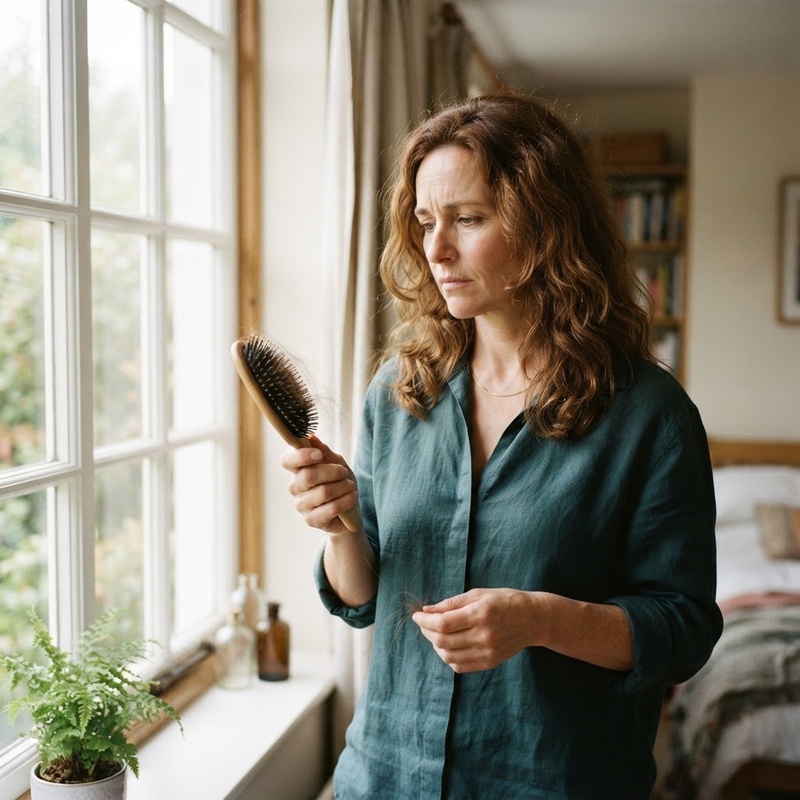
Perimenopause is a time of significant hormonal change, and for many women, those changes show up in unexpected places — including the hairbrush. If you have noticed more shedding or a widening part during this transition, you are not alone, and there are helpful answers.
Perimenopause is a time of significant hormonal change, and for many women, those changes show up in unexpected places — including the hairbrush. If you have noticed more shedding or a widening part during this transition, you are not alone, and there are helpful answers.
The Hormonal Shift Behind Hair Changes
During perimenopause, estrogen and progesterone levels fluctuate and eventually decline, while relative levels of androgens (male-pattern hormones present in all women) may become more influential. Estrogen helps support the hair growth phase, so as it drops, hair may spend less time growing and more time resting. The result for some women is gradual thinning, especially at the crown and part line. Every woman's hormonal journey is different, and hair changes vary widely in timing and degree.
How Common Is It?
Hormone-related hair changes during perimenopause are quite common, though exact figures vary by study. Many women first notice increased shedding in their 40s, often alongside other perimenopausal signs such as cycle changes, sleep disruptions, or temperature fluctuations. It is worth remembering that hair shedding can also stem from non-hormonal causes — thyroid conditions, low iron, stress, and certain medications can all play a role. That is why a proper evaluation matters before assuming hormones are the sole culprit.
What the Thinning Often Looks Like
Unlike male-pattern baldness, perimenopausal hair thinning in women is usually diffuse — hair becomes finer and sparser overall, with the widest point often visible along the mid-part. Some women also notice a shorter anagen (growth) phase, meaning strands do not grow as long as they once did. The change is typically gradual, unfolding over months to years rather than weeks. Recognizing the pattern early gives you more options for supporting hair health.
Supporting Your Hair Through the Transition
Basics matter: a protein- and iron-rich diet, gentle hair care, stress management, and treating any underlying deficiencies (like vitamin D, iron, or zinc) all support the hair you have. Some women discuss options such as topical minoxidil with a provider, as it is widely studied for female-pattern thinning. For others, addressing the broader hormonal picture is the priority, and a provider can help weigh what makes sense for your history and goals. Individual responses vary, and no single approach works for everyone.
When to Seek Guidance
If shedding is sudden, comes with scalp irritation or pain, or you notice patchy loss rather than general thinning, it is time to talk with a healthcare provider. Blood work can identify thyroid issues, iron deficiency, or other correctable contributors. A provider familiar with the perimenopausal transition can help you understand whether hormones are a likely factor and what options exist. You deserve a plan built around your full health picture, not just your hair.
Ready to explore your options? Learn more about hair health at EOS Health and connect with a licensed provider who can help you build a personalized plan.
Glossary
Perimenopause: The transitional phase before menopause when hormone levels fluctuate, often beginning in a woman's 40s and lasting several years.
Androgens: A family of hormones, including testosterone derivatives, present in both men and women that can influence hair follicle activity.
Anagen phase: The active growth stage of the hair cycle, during which the hair strand lengthens. A shorter anagen phase means shorter, finer hairs.
Diffuse thinning: Hair loss spread evenly across the scalp rather than concentrated in patches, the most common pattern in women.
Telogen effluvium: A temporary condition in which stress, illness, or hormonal shifts push large numbers of hairs into the shedding phase at once.
Sources
faq
Common questions, answered.
Here are answers to some of the most common questions women ask about hair thinning:
Can perimenopause really affect hair?
Yes, the hormonal shifts of perimenopause commonly influence hair growth cycles. Declining estrogen can shorten the growth phase of hair, leading to gradual thinning for some women. However, hair changes vary greatly between individuals.
Is perimenopausal hair thinning permanent?
It depends on the cause. Thinning driven by hormone shifts often stabilizes, and various treatments can help support hair density. Because multiple factors may contribute, an evaluation helps clarify what to expect for your situation.
How is perimenopausal hair thinning diagnosed?
There is no single test for it. Providers typically review your history, examine the scalp and hair pattern, and may order blood work to check thyroid function, iron levels, and hormones. This helps distinguish hormonal thinning from other causes like deficiencies or telogen effluvium.
Will hair treatments used for men work for me?
Not necessarily. Some options studied for men are not appropriate or well-studied for women, and others require different dosing. Women should always consult a provider before using hair loss treatments, especially during perimenopause.
Can stress during perimenopause make thinning worse?
Stress can contribute to shedding through a condition called telogen effluvium, where more hairs enter the resting phase prematurely. Since perimenopause can be a stressful time, managing sleep, movement, and stress may indirectly support hair health.
What should I eat to support my hair?
A balanced diet rich in protein, iron, zinc, vitamin D, and B vitamins supports the building blocks of healthy hair. If you suspect deficiencies, testing before supplementing is the smartest path, as excess supplementation is not always beneficial.
Does hair thinning mean my menopause will be severe?
No. Hair changes do not predict how you will experience menopause overall. Symptoms are largely independent — some women with noticeable thining have few other symptoms, and vice versa.
Should I see a dermatologist or my regular provider?
Either is a reasonable starting point. Many women begin with their primary provider for blood work and a general assessment, then see a dermatologist for specialized scalp evaluation or if the cause remains unclear.
You deserve to feel this way.™
Start free consultationwhat are you waiting for?
You're one click away from a new you.
Fill out our brief form and a licensed physician will evaluate which treatment plan is best for you.