Compounded Topical Formulas for Female Hair Thinning: How They Work
Explore how customized compounded topical formulas for female hair thinning work. Learn about tailored ingredients, hair biology, and telehealth evaluations.
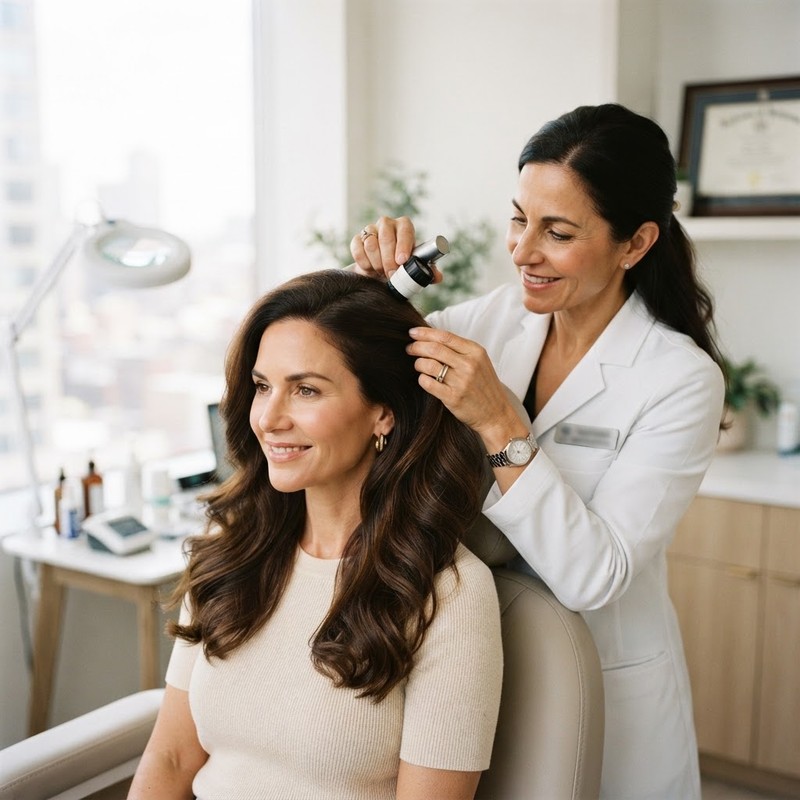
Hair thinning is a deeply personal and common experience for millions of women across the United States. Whether noticed as a widening center part, overall loss of hair density, or subtle scalp exposure under bright lighting, changes in hair volume can impact confidence and day-to-day well-being.
Hair thinning is a deeply personal and common experience for millions of women across the United States. Whether noticed as a widening center part, overall loss of hair density, or subtle scalp exposure under bright lighting, changes in hair volume can impact confidence and day-to-day well-being. Historically, women seeking support for hair thinning had limited choices: generic over-the-counter solutions that often contained scalp irritants, or oral medications originally designed for other conditions. Today, advances in clinical research and custom pharmaceutical compounding have opened up more tailored avenues for women's hair care.
Compounded topical formulas—such as customized blends like EOS AnagenRx for Women—represent a modern, individualized approach to female hair preservation and scalp health. Rather than using a single generic active ingredient, compounded formulations allow licensed healthcare providers to combine multiple science-backed active agents into a single daily topical serum or foam. These customized formulas target the complex, multi-factorial drivers of female hair thinning at the follicle level while minimizing systemic exposure. In this guide, we explore the biological mechanisms of female hair loss, how compounded topicals work, key active ingredients commonly combined in female formulations, and the crucial role of thorough clinical evaluation in establishing an effective care plan.
1. Understanding Female Hair Thinning: Patterns, Drivers, and Hair Follicle Biology
To understand why customized topical formulations are gaining traction in women's hair health, it is essential to examine how female hair thinning differs from male hair loss. While men typically experience receding hairlines and localized bald spots, female pattern hair loss (clinically referred to as androgenetic alopecia in women) presents primarily as diffuse thinning over the crown, mid-scalp, and central part, while the frontal hairline is usually preserved.
At the center of hair health is the hair follicle, a complex mini-organ that cycles continuously through three primary phases: anagen (the active growth phase, lasting 2 to 7 years), catagen (a brief transitional phase lasting a few weeks), and telogen (the resting phase lasting several months, ending with exogen, or hair shedding). In hair follicle miniaturization, sensitive hair follicles undergo progressive miniaturization under the influence of local androgens and enzymatic activity. With each successive hair cycle, the anagen phase becomes progressively shorter, and the resulting hair shaft becomes thinner, shorter, and less pigmented until the follicle produces fine, vellus-like hair.
However, female hair thinning is rarely driven by hormones alone. Women's hair follicles are particularly sensitive to systemic biological changes, nutritional shifts, and physiological stress. Common underlying factors include:
- Hormonal Shifts: Fluctuations in estrogen, progesterone, and androgens during post-partum periods, perimenopause, menopause, or conditions such as polycystic ovary syndrome (PCOS).
- Iron and Ferritin Levels: Ferritin reflects total iron stores in the body. Hair follicle matrix cells are among the fastest dividing cells in the body, requiring adequate ferritin levels for robust keratin synthesis.
- Thyroid Function: Both hypothyroidism (underactive thyroid) and hyperthyroidism (overactive thyroid) can cause diffuse hair shedding by disrupting the hair follicle cycle.
- Nutritional and Metabolic Status: Insufficient dietary protein, low vitamin D levels, zinc deficiencies, or rapid weight changes can trigger temporary hair shedding known as telogen effluvium.
- Perifollicular Inflammation: Micro-inflammation around the upper portion of the hair follicle can impair cellular signaling and accelerate miniaturization.
Because multiple biological pathways contribute to female hair thinning, a one-size-fits-all product rarely addresses every underlying variable. This is where comprehensive evaluation and personalized formulations become essential.
2. What Are Compounded Topical Formulas?
Compounded topical formulas are customized prescription medications prepared by a licensed compounding pharmacy according to a specific prescription written by a licensed clinician. Unlike mass-produced pharmaceutical products that come in fixed doses and single active ingredients, compounding allows clinicians to tailor the formula to an individual's specific clinical needs, scalp sensitivity, and hair care preferences.
It is important to understand the regulatory status of compounded formulations. Compounded medications are customized preparations tailored for individual patients; they are not FDA-approved finished drug products, although individual active pharmaceutical ingredients within them may have extensive clinical research histories and separate FDA approvals for specific indications. Compounding allows clinicians to combine complementary ingredients that are not commercially available in a single combined product, creating a convenient daily topical application.
Topical delivery offers distinct physiological advantages for women experiencing hair thinning:
- Targeted Scalp Delivery: Topical serums deliver active compounds directly to the scalp and hair dermal papilla cells, concentrating ingredients where they are needed most.
- Reduced Systemic Exposure: Transdermal absorption into the bloodstream is significantly lower with topicals compared to oral medications, helping minimize systemic side effects.
- Multi-Agent Synergy: By combining active ingredients that work through complementary mechanisms—such as combining a vasodilator with a localized anti-androgen and scalp-soothing agent—clinicians can target hair follicle health from multiple angles simultaneously.
- Customizable Vehicle Bases: Over-the-counter topical solutions often rely heavily on propylene glycol or high alcohol concentrations, which can cause scalp irritation, itching, or contact dermatitis. Compounded topicals can be formulated in non-irritating, alcohol-free, or hypoallergenic bases suitable for sensitive scalps.
3. Key Active Ingredients Commonly Combined in Female Hair Formulations
In customized hair health formulations like EOS AnagenRx for Women, clinicians select specific active ingredients based on an evaluation of scalp health and clinical background. Research indicates that combining ingredients with distinct biological actions may provide enhanced support for hair follicle vitality.
Vasodilators and Microcirculation Enhancers
Minoxidil remains one of the most thoroughly studied compounds for hair growth support. Applied topically, minoxidil functions primarily as a potassium channel opener. Research suggests it relaxes vascular smooth muscles, promoting localized microcirculation to the scalp. This increased blood flow helps deliver vital oxygen, glucose, and essential nutrients to dermal papilla cells. Additionally, minoxidil is believed to prolong the anagen growth phase and stimulate dormant follicles to transition from resting back into active growth. Individual responses to topical minoxidil vary depending on individual scalp enzyme activity.
Localized Anti-Androgens and 5-Alpha Reductase Inhibitors
In women with androgenic hair thinning, dihydrotestosterone (DHT) binds to androgen receptors in scalp follicles, triggering signals that shorten the growth cycle. Compounded topicals may include low concentrations of anti-androgenic compounds to moderate local hormone activity directly at the scalp level:
- Topical Finasteride or Dutasteride: These agents inhibit 5-alpha reductase, the enzyme responsible for converting circulating testosterone into DHT. Applying these agents topically aims to reduce scalp DHT levels while minimizing systemic hormonal disruption.
- Spironolactone: Frequently used in oral form for female hormonal acne and hair thinning, spironolactone can also be incorporated into topical solutions to block androgen receptors on hair follicle cells locally.
Anti-Inflammatory and Scalp Environment Conditioners
A healthy scalp environment is fundamental for supporting sustainable hair growth. Chronic micro-inflammation around the follicle collar can compromise follicle function. Compounded topicals may incorporate soothing ingredients such as low-dose hydrocortisone, caffeine (which research indicates may counteract DHT-induced growth suppression), or tretinoin (which may enhance absorption of active ingredients). Antioxidants may also be added to protect scalp tissue from oxidative stress.
4. The Role of Comprehensive Clinical Evaluation Before Starting Treatment
Because hair thinning can stem from diverse systemic causes, attempting to manage hair loss without proper evaluation can lead to frustration and delayed care. Clinical guidelines strongly emphasize an evaluation-first approach to female hair health.
Before prescribing any compounded topical formulation, a licensed healthcare provider conducts a clinical assessment, which typically includes a health history, discussion of symptom onset, family history, and recommended laboratory workup:
- Iron and Ferritin Testing: Ferritin levels below optimal thresholds can impair hair follicle cell proliferation. Identifying and addressing low ferritin stores with dietary changes or iron supplementation is often an essential foundation of hair care.
- Thyroid Panel: Evaluating thyroid-stimulating hormone (TSH), free T3, and free T4 helps rule out thyroid dysfunction as an underlying driver of diffuse thinning.
- Hormone Profiling: Assessing total and free testosterone, DHEA-S, sex hormone-binding globulin (SHBG), and estradiol can help determine whether androgen excess or hormonal imbalance plays a role.
- Nutritional and Metabolic Panels: Checking serum vitamin D, B vitamins, and zinc levels ensures essential cellular building blocks are available for keratin synthesis.
Through telehealth platforms like EOS Health, women can complete a comprehensive medical evaluation and consult with a licensed clinician from home, ensuring any prescribed topical formula aligns with their personal health profile.
5. Understanding the Timeline and What to Expect
Patience and consistent application are critical when utilizing topical compounded hair formulations. Because hair grows at an average rate of approximately half an inch per month, structural changes in hair density require time to manifest.
Here is a general timeline of what individuals may observe during a clinician-guided topical regimen:
- Weeks 1 to 6 (The Initial Phase): Some individuals may experience a temporary increase in hair shedding during the first few weeks of starting a topical vasodilator like minoxidil. This process, known as telogen shedding or reset, occurs as miniaturized follicles in the resting phase shed old shafts to make way for new anagen growth. Clinical literature indicates this is often a sign that the hair cycle is actively resetting.
- Months 2 to 4 (Stabilization): Excessive shedding typically subsides. Many women notice that daily hair drop returns to normal baseline levels, indicating hair cycle stabilization.
- Months 4 to 6 (Early Growth Support): Fine, new hair fibers may begin to appear along the part line or crown. These early hairs initially appear fine, but with continued compliance, they gradually thicken over subsequent cycles.
- Months 6 to 12 and Beyond (Cumulative Support): Noticeable density support and better coverage along the part line generally develop after 6 to 12 months of uninterrupted daily use. Continued maintenance is typically required to sustain hair health over time.
6. Practical Guidelines for Scalp Care and Application
To maximize benefits from a customized compounded hair serum, proper application techniques and consistent daily habits are essential:
- Apply Directly to the Scalp: Hair topicals are formulated for scalp skin, not hair shafts. Divide hair into clean sections using a comb or fingers, and apply the recommended dosage directly onto the skin in areas of thinning.
- Ensure Scalp Is Dry: Apply serum to a dry scalp unless specifically directed otherwise by your clinician. Water can dilute the formula or alter absorption rates.
- Gentle Massage: Use fingertips to gently massage the solution into the scalp for 30 to 60 seconds to aid distribution and promote local microcirculation. Wash hands thoroughly after application.
- Allow Sufficient Absorption Time: Allow formulation to dry completely (typically 2 to 4 hours) before applying styling products, going to sleep, or washing hair.
- Maintain Consistency: Hair follicles respond best to continuous stimulation. Missing doses frequently can diminish overall efficacy and disrupt the follicle growth cycle.
Navigating Your Hair Health Journey with Professional Support
Female hair thinning is a complex biological condition, but you do not have to navigate it alone or rely on trial-and-error products. Customized compounded topical formulas offer an innovative approach designed to address the specific biological drivers of female hair thinning while supporting scalp health.
By pairing personalized formulations with thorough diagnostic evaluations—including lab work for iron stores, thyroid markers, and hormone levels—clinicians can build targeted care plans that support hair goals safely and effectively. If you are experiencing changes in hair volume or density, taking the first step begins with a clinical consultation.
Explore personalized women's hair loss evaluations with EOS Health to connect with a licensed clinician and discuss customized treatment options tailored to your needs.
Androgenetic Alopecia (Female Pattern Hair Loss)
A common form of hair thinning in women characterized by diffuse density reduction across the crown and central part, driven by genetic sensitivity to localized androgen hormones and hair follicle miniaturization.
Anagen Phase
The active growth phase of the hair follicle cycle, during which matrix cells divide rapidly to produce the hair shaft. This phase typically lasts between 2 to 7 years in healthy scalp follicles.
Dihydrotestosterone (DHT)
A potent androgen hormone derived from testosterone by the action of the 5-alpha reductase enzyme. In susceptible hair follicles, DHT binds to androgen receptors, shortening the growth phase and causing progressive follicle miniaturization.
Compounded Medication
A customized pharmaceutical preparation created by a licensed compounding pharmacist to meet the specific clinical needs of an individual patient as prescribed by a healthcare provider.
Ferritin
A blood protein that stores iron in body tissues. Adequate ferritin levels are essential for healthy hair follicle matrix cell division and sustained hair follicle metabolism.
Telogen Effluvium
A form of temporary, diffuse hair shedding triggered by physiological stress, illness, hormonal shifts, or severe nutritional deficiencies that cause a large percentage of hair follicles to enter the resting (telogen) phase prematurely.
Sources
faq
Common questions, answered.
What is a compounded topical formula for female hair thinning?
A compounded topical formula is a customized medication prepared by a licensed compounding pharmacy based on a clinician's specific prescription. Unlike over-the-counter products with fixed concentrations of a single ingredient, compounded formulas can combine multiple active ingredients—such as minoxidil, topical anti-androgens, and anti-inflammatory compounds—into a single daily application tailored to an individual's scalp and health profile.
Are compounded topical hair formulations FDA-approved?
Compounded medications as finished custom preparations are not FDA-approved drug products. However, the individual active ingredients used within compounded formulas (such as minoxidil) often have extensive clinical safety and efficacy data and may hold separate FDA approvals for specific indications. Compounding allows clinicians to combine ingredients for individualized care under clinical oversight.
How long does it take to see changes from a compounded topical serum?
Because hair follicles progress through slow growth cycles, structural changes in hair density take time. Most women notice stabilization of hair shedding within 2 to 4 months of daily use, with early hair growth support and improved coverage typically visible between 4 to 6 months. Cumulative improvements generally continue over 6 to 12 months of consistent daily application.
Why might I experience increased shedding when first starting a topical hair formula?
Initial shedding, often called telogen reset, can occur during the first 2 to 6 weeks of starting a topical growth stimulant like minoxidil. This occurs because resting (telogen) follicles are stimulated to shed older hair shafts in order to initiate a new, healthier active growth (anagen) phase. Clinical evidence suggests this temporary shedding is a common response indicating follicle activation.
Why is lab work (like ferritin and thyroid testing) recommended before starting hair loss treatment?
Female hair thinning can be caused or aggravated by underlying systemic factors such as iron deficiency (low ferritin), thyroid dysfunction, or sex hormone imbalances. Identifying nutritional and metabolic deficits through comprehensive blood work ensures that underlying health issues are addressed alongside topical scalp therapy for optimal results.
Can compounded topicals be formulated for sensitive scalps?
Yes. Commercial over-the-counter hair topicals frequently contain propylene glycol or high alcohol concentrations that can cause redness, itching, and scaling. Compounded topical formulations can be customized using alcohol-free, non-irritating, or hypoallergenic bases designed specifically for sensitive scalp skin.
Do I need a prescription for a compounded topical hair formulation?
Yes. Compounded hair formulations contain active pharmaceutical ingredients and require a prescription from a licensed healthcare provider. Through telehealth platforms like EOS Health, you can complete a clinical evaluation and medical questionnaire online to determine if a customized prescription topical is appropriate for you.
How should compounded topical hair serums be applied?
Topical serums should be applied directly to a clean, dry scalp in areas experiencing thinning. Divide hair into sections to expose the scalp skin, apply the prescribed dose (typically 1 mL), and gently massage with fingertips. Allow the solution to dry completely for several hours before washing your hair or applying styling products.
You deserve to feel this way.™
Start free consultationwhat are you waiting for?
You're one click away from a new you.
Fill out our brief form and a licensed physician will evaluate which treatment plan is best for you.