Double Cleansing: What It Is and Who It Helps
Discover what double cleansing is, how the oil and water method works, and who benefits most. Learn gentle skincare tips from EOS Health clinical experts.
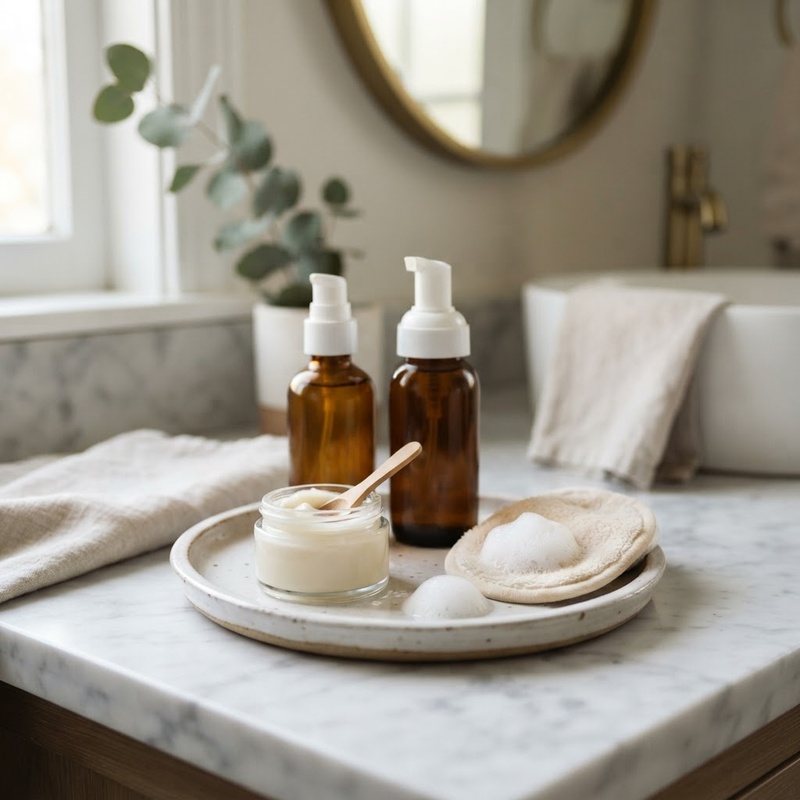
Every single day, your skin is exposed to a wide array of environmental elements, cosmetic products, and natural metabolic byproducts. From water-resistant broad-spectrum mineral sunscreens and long-wear foundations to natural sebum, urban particulate pollution, and sweat, the surface of the skin accumulates a complex mixture of debris by the time evening arrives. While traditional cleansing relied on a single pass with a basic facial wash, modern durable cosmetics and sweat-resistant sunscreens can be difficult to remove thoroughly with a single step. Attempting to wash away long-wearing formulas with one cleanser often leads to either leftover residue that clogs pores or excessive scrubbing that disrupts the delicate skin barrier.
Every single day, your skin is exposed to a wide array of environmental elements, cosmetic products, and natural metabolic byproducts. From water-resistant broad-spectrum mineral sunscreens and long-wear foundations to natural sebum, urban particulate pollution, and sweat, the surface of the skin accumulates a complex mixture of debris by the time evening arrives. While traditional cleansing relied on a single pass with a basic facial wash, modern durable cosmetics and sweat-resistant sunscreens can be difficult to remove thoroughly with a single step. Attempting to wash away long-wearing formulas with one cleanser often leads to either leftover residue that clogs pores or excessive scrubbing that disrupts the delicate skin barrier.
Double cleansing is a methodical two-step facial cleansing technique that pairs an oil-based cleanser with a water-based cleanser to thoroughly purify the skin while preserving its moisture barrier. Rooted in East Asian skincare traditions, this approach has gained widespread global popularity among dermatologists, estheticians, and clinical skincare specialists. Although double cleansing offers clear advantages for those who wear heavy makeup or water-resistant sunscreen, it is not a mandatory rule for every individual or skin type. Understanding the scientific principles behind double cleansing, knowing who benefits most, and choosing gentle formulations empowers you to tailor your daily skincare routine to your specific health and cosmetic goals.
The Science and History Behind the Two-Step Method
Although double cleansing has become a mainstream beauty practice in recent years, its historical roots trace back centuries to Japanese and Korean beauty rituals. In traditional East Asian skincare practices, women used plant-based oils, such as camellia or rice bran oil, to gently dissolve thick stage makeup and traditional white facial pigments. Because water alone could not dissolve these oil-rich formulas, the oil application was followed by a gentle water-based wash to rinse away any remaining residue, leaving skin soft, clean, and balanced.
The efficacy of double cleansing relies on a fundamental chemistry principle: "like dissolves like." Substances are categorized as lipophilic (fat-soluble or oil-loving) or hydrophilic (water-soluble or water-loving). Standard water-based cleansers excel at removing hydrophilic impurities like sweat, environmental moisture, and surface dust. However, they often struggle to break down lipophilic substances, such as silicone primers, sebum, synthetic waxes, and organic or inorganic UV filters in high-performance sunscreens.
Using a dedicated oil-based cleanser as your first step introduces lipophilic compounds that readily bind to surface oils, sebum, and heavy makeup. Rather than requiring physical friction, the oil cleanser dissolves these substances on contact. Modern cleansing oils and balms contain emulsifiers—molecules with both hydrophilic and lipophilic properties. Adding a small amount of lukewarm water transforms the oil into a milky lotion that rinses away cleanly, taking dissolved impurities with it without leaving a heavy or greasy residue.
Once the oil layer is rinsed away, the second step—a gentle water-based cleanser—directly clears the skin surface. Free from heavy surface grease and cosmetic films, the water-based cleanser removes residual sweat, dead skin cells, and hydrophilic particles. This dual action achieves deep surface purification while protecting the stratum corneum—the outermost layer of the epidermis—from the mechanical irritation and lipid depletion associated with aggressive single-phase washing.
Who Benefits Most From Double Cleansing?
Double cleansing is a targeted strategy rather than an obligatory requirement for everyone. Whether it fits your routine depends on your daily product use, environment, and skin type. Certain groups experience notable benefits from incorporating a two-step cleansing routine into their evening habits.
Regular Wearers of Mineral or Water-Resistant Sunscreens
Daily sunscreen application is essential for protecting skin against ultraviolet radiation, photoaging, and cellular damage. Modern water-resistant formulations, particularly physical mineral sunscreens containing zinc oxide or titanium dioxide, adhere firmly to skin to resist sweat and humidity. These film-forming polymers resist standard water-based washes. A preliminary oil-based cleanse easily breaks down these resilient UV filters, ensuring that sunscreen residue does not linger overnight in hair follicles or contribute to congestion.
Individuals Wearing Full-Coverage or Long-Wear Makeup
Cosmetics formulated for long wear or transfer resistance often rely on silicones, synthetic waxes, and rich pigments. Removing these products with a single standard cleanser usually requires repeated washing or heavy friction, which can cause micro-trauma and irritation to delicate facial skin. An oil cleanser dissolves long-wear cosmetics quickly and smoothly, allowing them to rinse away without irritating physical rubbing around sensitive areas like the eyes.
Those With Oily, Combination, or Congested Skin Types
A common myth is that oily skin should avoid oil-based products entirely. Because sebum is lipid-based, applying a non-comedogenic cleansing oil helps soften and dissolve hardened sebum plugs trapped inside hair follicles. Clearing these follicular pathways reduces non-inflammatory comedones (blackheads and whiteheads). Following with a gentle water-based cleanser leaves the skin feeling refreshed, clean, and balanced without triggering rebound oil production.
Urban Residents Exposed to Air Pollution
Environmental air pollutants, such as microscopic particulate matter (PM2.5), smog, and airborne hydrocarbons, collect on the skin throughout the day and attach to natural surface lipids. Research suggests that lingering atmospheric pollutants can induce surface oxidative stress and accelerate signs of skin aging. Double cleansing provides a thorough method for lifting airborne particles from the skin before sleep, supporting nighttime skin recovery and maintenance processes.
Who Can Skip Double Cleansing or Needs Caution?
Despite its popularity, double cleansing is not necessary for everyone. In several situations, a single gentle cleanser is completely sufficient, and over-cleansing could potentially disrupt delicate skin barrier function.
Minimalist Skincare Routines and Non-Makeup Wearers
If you do not wear makeup, tinted formulas, or water-resistant sunscreens, a single wash with a mild water-based cleanser is adequate for removing daily sweat and dust. For those who spend most of their day indoors or use lightweight daily moisturizers with SPF, an extra oil-cleansing step offers little extra benefit and adds unnecessary complexity to a simple routine.
Dry, Sensitive, or Rosacea-Prone Skin
Individuals with dry, hyper-reactive skin or conditions like rosacea or eczema must approach cleansing carefully. Their skin barrier often has reduced intercellular lipids and higher transepidermal water loss. While a gentle oil cleanser can be soothing, adding a second wash might strip essential surface lipids, leading to tightness, redness, or burning. In such cases, single cleansing with a hydrating, non-foaming wash or using a clean-rinsing cleansing oil alone may be better suited to support barrier integrity.
Morning Routines
Double cleansing is strictly a nighttime practice. Overnight, your skin only produces small amounts of sebum and sheds microscopic cells; it is not exposed to environmental pollution, cosmetics, or sunscreens. A single morning wash with water or a mild water-based cleanser is completely sufficient to preserve natural oils while preparing skin for daytime hydration and sun protection.
Selecting the Right Cleansers for Your Skin Type
Achieving optimal results from double cleansing requires choosing products formulated with gentle ingredients suited to your skin profile. Both steps should respect the skin's natural acid mantle, which maintains a healthy, slightly acidic pH level between 4.5 and 5.5.
Choosing Your Step 1 Cleanser: Oils, Balms, and Micellar Waters
Oil-based cleansers come in three main forms: liquid cleansing oils, solid cleansing balms, and micellar waters.
- Cleansing Oils: Liquid formulations that glide smoothly across the skin. Look for non-comedogenic plant oils like jojoba, squalane, sunflower seed oil, or caprylic/capric triglycerides that mimic natural skin lipids.
- Cleansing Balms: Solid balms that melt into a silky oil upon contact with skin warmth. Balms are travel-friendly and work exceptionally well for normal to dry skin types.
- Micellar Waters: Mild water solutions containing tiny surfactant molecules (micelles). While micellar water can act as a gentle first step for sensitive skin, it is less effective against heavy waterproof cosmetics than pure cleansing oils or balms.
Ensure your first-step cleanser contains gentle emulsifiers (such as polyglyceryl esters or polysorbates) so that it rinses clean with lukewarm water without leaving an oily film.
Choosing Your Step 2 Cleanser: Water-Based Formulations
The second cleanser should focus on mild purification without harsh detergents. Avoid products containing harsh sulfates like sodium lauryl sulfate (SLS), which can alter skin proteins and strip barrier lipids.
- For Dry or Sensitive Skin: Choose cream, lotion, or non-foaming cleansers with hydrating humectants like glycerin, hyaluronic acid, ceramides, or colloidal oatmeal to protect moisture levels.
- For Combination or Oily Skin: Select gel or soft foaming cleansers made with mild amino acid surfactants (such as sodium cocoyl glycinate) for a refreshed feel without tightness.
- For Blemish-Prone Skin: Consider water-based cleansers containing mild botanicals or gentle hydroxy acids like salicylic acid to help keep pores clear without causing flaking or irritation.
Step-by-Step Practical Technique for Optimal Barrier Health
Using proper technique during double cleansing ensures thorough purification while protecting your skin barrier from physical irritation.
- Start With Dry Hands and a Dry Face: Water prevents cleansing oils from directly binding to oil-soluble makeup and sebum. Apply 1–2 pumps of cleansing oil (or a nickel-sized amount of balm) to dry facial skin.
- Gently Massage for 30 to 60 Seconds: Use soft fingertip pads to massage the product in light circular upward motions, focusing on areas with excess oil, heavy makeup, or sunscreen. Avoid rough dragging or rubbing.
- Emulsify With Lukewarm Water: Wet your hands with lukewarm water and massage again. The oil will turn into a milky emulsion that easily rinses away from the skin surface.
- Rinse Thoroughly: Splash with lukewarm water until the milky texture is removed. Avoid hot water, which can strip natural lipids and worsen capillary redness.
- Apply Step 2 Cleanser to Damp Skin: Lather a small amount of water-based cleanser in damp hands, apply to your face, and massage gently for 30 to 45 seconds.
- Rinse and Gently Dry: Rinse thoroughly with lukewarm water and pat dry with a clean, soft microfiber or cotton towel.
- Lock In Hydration: Immediately apply your hydrating serum or moisturizer to trap surface water and maintain healthy hydration levels.
Nurturing Skin Health Through Informed, Personalized Care
Skincare is fundamentally an individual journey. While double cleansing effectively removes resilient sunscreens, long-wear makeup, and environmental debris, success lies in listening to your skin's subtle signals. If your skin feels soft, comfortable, and balanced after cleansing, your routine is working in harmony with your barrier. If you notice persistent dryness, tightness, or irritation, simplifying your routine or adjusting product choices can help restore natural comfort.
Maintaining healthy skin involves daily sun protection, appropriate cleansing, barrier-supporting moisture, and personalized guidance. Whether you are looking to refine your daily skincare regimen or address specific skin concerns, individual guidance can help you select products tailored to your unique skin profile. Explore personalized skincare options and consult with clinical specialists by visiting EOS Health Skincare Services today.
Lipophilic
Refers to substances that have an affinity for, or tend to dissolve in, lipids, fats, or oils rather than water.
Emulsification
The process of dispersing one liquid (such as oil) into another non-miscible liquid (such as water) with the aid of an emulsifying agent, transforming the mixture into a milky fluid that rinses clean.
Stratum Corneum
The outermost layer of the epidermis, composed of flattened dead skin cells and intercellular lipids, serving as the body's primary skin moisture barrier.
Surfactant
A surface-active compound that lowers surface tension between liquids or liquids and solids, allowing oils and water to mix so dirt can be washed away.
Hydrophilic
Refers to substances that readily interact with, dissolve in, or absorb water, such as sweat or water-soluble hydrators.
Sources
faq
Common questions, answered.
Should I double cleanse every single night?
Not necessarily. Double cleansing is most helpful on days when you have worn water-resistant sunscreen, full-coverage makeup, or have been exposed to significant environmental pollution. On days spent entirely indoors without heavy cosmetics or water-fast products, a single gentle wash is usually sufficient.
Can double cleansing cause breakouts or clogged pores?
When performed correctly with non-comedogenic cleansing oils that emulsify and rinse away completely, double cleansing should not clog pores. In fact, it often helps clear sebum plugs. However, using heavy mineral oils, unrefined plant oils lacking emulsifiers, or failing to rinse thoroughly can potentially leave residues that trigger breakouts.
Is double cleansing necessary if I do not wear makeup?
If you wear durable, water-resistant, or mineral-based sunscreens during the day, double cleansing can be very beneficial even without makeup. Mineral sunscreen filters like zinc oxide adhere strongly to skin lipids and are often removed much more easily with an initial oil-based cleanser.
What is the difference between a cleansing oil and a cleansing balm?
The primary difference is physical texture and packaging. Cleansing oils are liquid formulas dispensed via a pump, whereas cleansing balms are solid, buttery formulations that melt into oil upon warming between hands or against skin. Both perform the same function of dissolving oil-soluble impurities when properly emulsified.
Can people with oily or acne-prone skin safely use an oil cleanser?
Yes. The principle of "like dissolves like" means that non-comedogenic oils can effectively break down hardened excess sebum within pores. The key for oily or acne-prone skin is to select lightweight, high-linoleic oil formulas (such as jojoba or squalane) and follow up with a gentle, refreshing water-based cleanser.
Should I double cleanse in the morning?
No, double cleansing in the morning is unnecessary. Overnight, skin accumulates only minor amounts of natural sebum and dust, which do not require two steps to cleanse. Single cleansing with water or a mild water-based cleanser in the morning preserves your skin barrier and natural oils.
How do I know if I am over-cleansing or damaging my skin barrier?
Signs of over-cleansing include post-wash skin tightness, squeakiness, flaking, increased redness, heightened sensitivity, or a sudden surge in oil production as skin attempts to compensate for lost moisture. If you notice these indications, switch to milder products or reduce cleansing frequency.
What temperature water should I use during double cleansing?
You should always use lukewarm water. Water that is too hot can dissolve beneficial barrier lipids and expand superficial capillaries, leading to dryness and redness. Water that is too cold prevents proper emulsification of cleansing oils, making them harder to rinse away completely.
Great skin starts with the right protocol.™
Start free consultationwhat are you waiting for?
You're one click away from a new you.
Fill out our brief form and a licensed physician will evaluate which treatment plan is best for you.