Ferritin and Hair: The Iron Level Clinicians Often Check First
Learn how ferritin and hair growth are connected. Discover why clinicians evaluate iron stores, optimal ranges, and personalized hair care with EOS Health.
Noticing extra strands of hair in your shower drain or hairbrush can feel distressing. Hair is closely tied to self-confidence and personal wellness, making sudden or gradual thinning an understandable source of concern. When shedding increases, the immediate impulse is often to search for topical oils, specialized shampoos, or beauty supplements.
Noticing extra strands of hair in your shower drain or hairbrush can feel distressing. Hair is closely tied to self-confidence and personal wellness, making sudden or gradual thinning an understandable source of concern. When shedding increases, the immediate impulse is often to search for topical oils, specialized shampoos, or beauty supplements. However, experienced clinicians usually look deeper into systemic health first, beginning with a vital biological marker: ferritin.
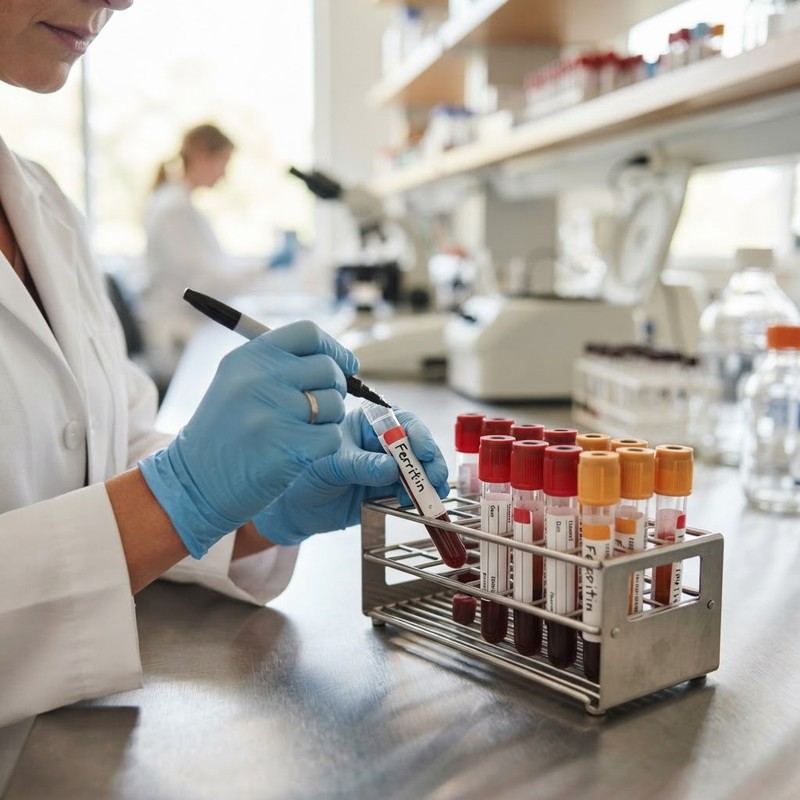
Ferritin is a protein responsible for storing iron safely inside your body's cells. While many women are familiar with basic iron tests or hemoglobin checked during routine blood work, ferritin provides a far more detailed picture of internal iron reserves. Because hair follicle cells are among the most rapidly dividing cells in the body, they rely on a steady supply of oxygen and cellular energy. When ferritin levels drop, the body prioritizes essential organs over cosmetic functions, which can cause hair follicles to shift prematurely into a shedding phase.
In this guide, the EOS Health Clinical Team explores why ferritin is frequently the first lab value evaluated during hair loss inquiries, how optimal levels differ from basic reference ranges, why testing before supplementing is critical for safety, and how a personalized, evaluation-first approach supports long-term hair wellness.
Understanding Ferritin: The Body's Biological Iron Reservoir
To appreciate why clinicians examine ferritin during hair health evaluations, it helps to understand how iron functions throughout the body. Iron is an essential mineral required to produce hemoglobin, the protein in red blood cells that transports oxygen to tissues. However, free iron floating in the bloodstream can be cellularly damaging at high levels. To safely store excess iron for future needs, the body packages it inside a specialized protein complex called ferritin.
Think of serum iron as cash—available for immediate daily transactions—and ferritin as a bank savings account. When daily dietary iron intake fluctuates, your body draws from its ferritin savings account to maintain steady hemoglobin levels. You can have a completely normal hemoglobin reading and standard serum iron level while your ferritin savings account is nearly exhausted. This state is known as non-anemic iron deficiency.
Hair follicles are extraordinarily active biological structures. Cells at the base of the hair bulb, known as matrix cells, divide rapidly to generate new hair shafts during active growth (anagen). This intense metabolic activity requires substantial energy, depending on iron-dependent enzymes and cellular oxygenation. When internal iron stores deplete and ferritin drops below a critical threshold, hair matrix cells experience diminished energy production. In response, the body conserves resources by signaling hair follicles to suspend active growth and transition into resting (telogen). Several weeks or months later, these resting hairs shed, resulting in diffuse hair thinning across the scalp—a condition known as telogen effluvium.
Research suggests that hair follicle cells may be sensitive to subtle declines in ferritin long before systemic anemia develops. By measuring ferritin, healthcare providers identify underlying nutritional strain that might otherwise remain hidden on standard blood screens.
Laboratory 'Normal' vs. Optimal Ferritin Levels for Hair Health
A frequent source of confusion for women navigating hair loss is interpreting laboratory results. A standard blood test report typically lists a broad reference range for ferritin, often spanning from 12 to 150 nanograms per milliliter (ng/mL) depending on the testing facility. If a woman's ferritin result comes back at 18 ng/mL, the lab report may label it as "normal" because it falls within statistical population boundaries.
Why Standard Lab Ranges Can Be Misleading for Hair Growth
Standard laboratory reference ranges are designed primarily to detect severe clinical conditions such as overt iron deficiency anemia or pathological iron overload. They are calculated from broad population averages. Being in the lower end of the "normal" range simply means you are not in immediate danger of severe anemia; it does not mean your body has surplus iron available to fuel rapid hair follicle cellular division.
What Clinical Literature Suggests About Optimal Target Ranges
Dermatological and clinical studies examining hair shedding suggest that optimal ferritin levels for supporting healthy hair cycles may be higher than minimum lab thresholds. While individual physiological needs vary, clinical observational research indicates the following general patterns:
- Below 30 ng/mL: Frequently associated with increased hair shedding, fragile hair structure, and a shortened active growth (anagen) phase.
- 30 to 50 ng/mL: May support basic systemic needs, but some women continue to experience diffuse shedding if other metabolic stressors are present.
- 50 to 70 ng/mL or higher: Often cited in clinical literature as a target range where hair matrix cells receive sufficient iron support to help maintain normal growth cycles and minimize excessive shedding.
It is important to emphasize that ferritin is not a static number, nor a single universal solution for hair health. Every individual's physiology is unique, and optimal targets must always be evaluated alongside clinical history, overall symptoms, dietary habits, and hormonal factors.
Recognizing Signs of Low Iron Stores Beyond Hair Shedding
Low ferritin rarely affects hair in complete isolation. Because iron plays a foundational role in cellular respiration and metabolic signaling throughout the body, depleted iron stores often manifest through subtle systemic signs long before significant hair loss becomes noticeable.
Common Systemic Indicators of Depleted Iron Stores
Women experiencing low ferritin levels may notice several physical symptoms, including:
- Persistent Fatigue: Feeling unusually drained even after adequate sleep, or noticing diminished physical endurance during everyday activities.
- Cold Sensitivity: Frequently feeling cold in your hands and feet, or struggling to maintain comfortable body temperature.
- Brittle Nails: Nails that crack easily or develop longitudinal ridges.
- Restless Legs: An uncomfortable sensation in the legs during periods of rest or before falling asleep.
- Pale Skin Tone: A subtle reduction in natural flush or warmth in skin tone.
- Brain Fog: Difficulty maintaining sharp cognitive focus or feeling lightheaded when standing up quickly.
Understanding the Delayed Timeline of Hair Shedding
Another crucial clinical concept is the timing of hair shedding. The human hair cycle moves through distinct phases: anagen (growth), catagen (transition), telogen (resting), and exogen (shedding). When a physiological stressor—such as a sharp decline in ferritin—occurs, hair follicles do not shed immediately. Instead, they prematurely enter catagen and telogen, which typically last between 2 and 4 months.
As a result, noticeable shedding today may be the downstream result of iron store depletion, severe stress, or dietary restriction that occurred several months ago. This built-in biological delay is why self-diagnosing hair loss can be tricky, and why working with a licensed clinician who reviews long-term health history is so valuable.
Why Testing Before Supplementing Is Essential for Safe Care
When women suspect low iron might be causing hair shedding, a common temptation is to purchase over-the-counter iron supplements and begin taking high doses immediately. However, clinical guidance strongly advises against unmonitored iron supplementation. Iron is fundamentally different from water-soluble vitamins like Vitamin C, which the body can easily excrete in urine when taken in excess. The human body lacks an active excretory mechanism for excess iron, meaning unneeded iron accumulates in vital organs over time.
Risks of Unmonitored Iron Intake
Taking high-dose iron without prior blood testing and professional supervision carries significant health risks, including:
- Gastrointestinal Complications: Constipation, stomach cramping, nausea, and dark stools are frequent side effects of oral iron supplements, especially when taken in inappropriate dosages.
- Oxidative Stress: Excess free iron promotes damaging free radicals, leading to cellular inflammation and tissue stress.
- Iron Overload (Hemochromatosis): In individuals with undiagnosed genetic predispositions, excessive iron can accumulate in organs, potentially causing dysfunction.
- Masking Underlying Conditions: Iron deficiency is a symptom, not a standalone diagnosis. Self-supplementing without medical evaluation can obscure underlying issues such as heavy menstrual bleeding, gastrointestinal malabsorption, or uterine fibroids.
The Value of a Comprehensive Blood Panel
A thorough clinical evaluation for women's hair loss extends beyond ferritin alone. Healthcare providers often recommend a laboratory panel to evaluate intersecting physiological pathways, including:
- Complete Blood Count (CBC): Evaluates red blood cell count and hemoglobin to rule out active anemia.
- Serum Ferritin and Total Iron-Binding Capacity (TIBC): Assesses stored iron reserves alongside transferrin saturation to evaluate iron transport dynamics.
- Thyroid Function Tests (TSH, Free T4): Thyroid imbalances frequently co-occur with low ferritin and can independently trigger hair thinning.
- Vitamin D and Vitamin B12: Micronutrients essential for cellular turnover and follicular health.
- Hormonal Panels: Evaluating androgen levels, estrogen, and progesterone when pattern thinning is present.
Nutritional Support vs. Medical Supplementation
For general health maintenance, focusing on dietary iron sources and absorption cofactors can be helpful. Heme iron—found in poultry, fish, and red meat—is absorbed significantly more efficiently by the gut than non-heme iron found in plant sources like spinach and legumes. Pairing non-heme iron foods with Vitamin C enhances absorption, while consuming calcium, tea, or coffee alongside iron-rich meals can inhibit absorption. When significant deficiency is present, however, dietary changes alone are rarely sufficient, and targeted medical supplementation under clinical supervision may be recommended.
Comprehensive Evaluation and What to Expect in Hair Care
Addressing hair shedding associated with low ferritin requires a balanced and patient approach. Restoring cellular iron stores is not an overnight process; it typically takes 3 to 6 months of consistent, monitored intervention to replenish tissue ferritin reserves and support the stabilization of hair shedding cycles.
A Multi-Faceted Clinical Strategy
In clinical practice, supporting hair vitality rarely relies on a single intervention. Instead, clinicians consider the interplay of multiple biological factors:
- Nutritional and Storage Optimization: Safely bringing ferritin into an optimal range through individualized dietary adjustments or supervised supplementation.
- Scalp Environment and Follicle Health: Supporting scalp health and reducing local follicular inflammation.
- Hormonal Balance and Genetics: Identifying whether low ferritin is compounding underlying female pattern hair loss or thyroid irregularity.
- Prescriptive and Topical Interventions: When appropriate, a licensed clinician may discuss evidence-based topical treatments or compounded formulations tailored to your specific scalp needs. Compounded medications are customized formulations designed to suit individual patient requirements; they are not FDA-approved products, and individual treatment responses naturally vary.
Patience and Progress Tracking
Because hair grows at an average rate of about half an inch per month, structural improvements in hair density take time to become visible. Initial signs of progress often include a gradual reduction in daily shedding, followed by the emergence of fine new hairs after several months. Regular follow-up lab testing ensures that iron levels remain in a safe, optimal window.
Taking the Next Step in Your Hair Health Journey
If you are experiencing unexpected hair shedding, thinning, or changes in hair texture, you do not have to navigate these concerns through guesswork. Understanding your ferritin levels is a science-backed first step toward identifying what your hair follicles need to thrive.
At EOS Health, we believe that true hair wellness starts with clinical clarity. Through professional telehealth consultations, blood testing recommendations, and personalized medical guidance, our clinical team works with you to evaluate root causes and construct a tailored care plan. Take charge of your hair health today by learning more about our evaluation-first approach and exploring personalized women's hair loss evaluations at EOS Health.
Ferritin
A major blood protein that stores iron inside cells and releases it in a controlled manner, serving as the body's primary indicator of total iron reserves.
Telogen Effluvium
A form of temporary, diffuse hair shedding that occurs when a physical stressor, nutritional deficiency, or hormonal change triggers many hair follicles to enter the resting phase simultaneously.
Anagen Phase
The active growth phase of the hair follicle cycle, during which matrix cells divide rapidly to construct the hair shaft over a period of several years.
Non-Anemic Iron Deficiency
A medical state in which stored iron reserves (ferritin) are significantly depleted despite normal hemoglobin levels and red blood cell counts.
Heme vs. Non-Heme Iron
Heme iron is the highly bioavailable form of iron found in animal proteins, whereas non-heme iron is found in plant foods and requires cofactors like Vitamin C for efficient gut absorption.
Sources
faq
Common questions, answered.
What is ferritin, and how does it differ from serum iron?
Ferritin is an intracellular protein that stores iron safely inside your body's tissues, whereas serum iron measures the mineral circulating freely in your bloodstream at a single moment. You can have normal serum iron levels while your ferritin storage reserves are depleted.
Why do clinicians check ferritin levels for women experiencing hair shedding?
Hair follicle matrix cells divide rapidly and require significant iron-dependent cellular energy. When ferritin levels drop, the body prioritizes essential organs, signaling hair follicles to prematurely transition into a resting and shedding phase known as telogen effluvium.
What is considered an optimal ferritin level for supporting hair health?
While standard lab reference ranges consider levels as low as 12 to 15 ng/mL "normal," clinical literature in hair health suggests that ferritin levels between 50 and 70 ng/mL or higher may better support active hair follicle growth cycles. However, individual requirements vary.
Can I take iron supplements for hair loss without getting tested first?
No. Unmonitored iron intake carries serious health risks, including gastrointestinal complications, cellular toxicity, and iron overload (hemochromatosis). Testing ensures supplementation is safe, appropriate, and properly dosed under medical supervision.
How long does it take for hair shedding to decrease after improving ferritin levels?
Because the hair follicle resting phase lasts approximately 2 to 4 months, shedding stabilization typically requires 3 to 6 months of consistent, monitored intervention after ferritin levels begin to recover.
Are low ferritin levels the only cause of diffuse hair loss in women?
No. Hair shedding can be triggered or exacerbated by thyroid dysfunction, hormonal shifts, severe stress, post-illness recovery, or genetic pattern hair loss. A comprehensive clinical evaluation helps identify all contributing factors.
What dietary habits support healthy iron absorption?
Consuming heme iron sources (poultry, fish, lean red meat) or non-heme plant sources (leafy greens, legumes) paired with Vitamin C boosts absorption. Avoiding tea, coffee, or calcium supplements during iron-rich meals also helps maximize absorption.
How does EOS Health evaluate women's hair loss?
EOS Health provides personalized telehealth evaluations where licensed healthcare providers review your clinical history, recommend appropriate blood panels (including ferritin and thyroid markers), and design tailored management strategies.
You deserve to feel this way.™
Start free consultationwhat are you waiting for?
You're one click away from a new you.
Fill out our brief form and a licensed physician will evaluate which treatment plan is best for you.