GHK-Cu Cream and Retinoids: Can You Use Both?
Learn how to safely combine GHK-Cu copper peptide cream and retinoids in your routine to support healthy skin aging while protecting your moisture barrier.
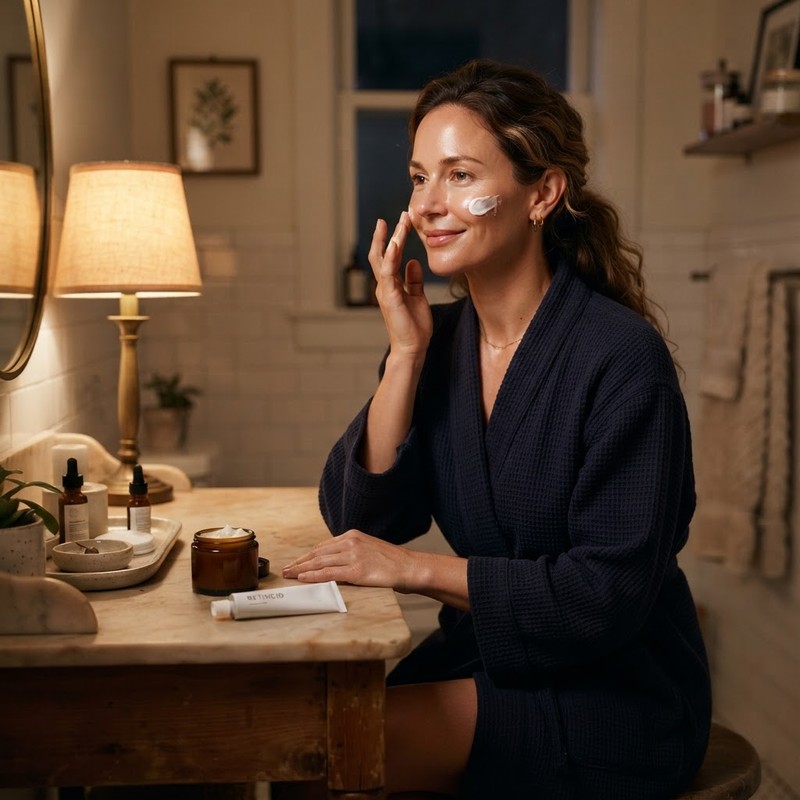
Navigating the world of advanced skincare can feel both empowering and overwhelming. As adult women navigate natural shifts in skin texture, tone, firmness, and moisture, finding an effective routine becomes a top priority. Among the most discussed topical ingredients today are retinoids—the long-standing standard for cellular renewal—and GHK-Cu copper peptides, celebrated for their barrier-friendly appeal and skin-supporting properties.
Navigating the world of advanced skincare can feel both empowering and overwhelming. As adult women navigate natural shifts in skin texture, tone, firmness, and moisture, finding an effective routine becomes a top priority. Among the most discussed topical ingredients today are retinoids—the long-standing standard for cellular renewal—and GHK-Cu copper peptides, celebrated for their barrier-friendly appeal and skin-supporting properties. But when both ingredients offer meaningful support for healthy skin aging, a crucial question arises: can you use GHK-Cu cream and retinoids together in the same skincare routine?
The short answer is yes, but success depends entirely on how and when you apply them. While retinoids work by encouraging rapid skin cell renewal, they can occasionally lead to temporary dryness, flaking, or irritation during the initial adaptation period. On the other hand, GHK-Cu cream acts as a gentle, soothing partner that supports skin barrier resilience and structural proteins. By understanding the underlying biology of both actives and adopting strategic alternating schedules, you can harness the unique strengths of copper peptides and retinoids while keeping your moisture barrier balanced and calm.
Understanding GHK-Cu and Retinoids: How Each Works
To build a harmonious routine, it helps to understand how GHK-Cu copper peptides and retinoid compounds interact with the skin at a cellular level. Both ingredients offer compelling benefits, yet their mechanisms of action are distinct.
What Is GHK-Cu Copper Peptide?
GHK-Cu (glycyl-L-histidyl-L-lysine copper) is a naturally occurring copper peptide complex found in human blood plasma, saliva, and urine. Plasma levels of GHK-Cu are highest in young adulthood and naturally decline as body chemistry changes over time. In dermatological research, GHK-Cu functions primarily as a signaling peptide that encourages extracellular matrix maintenance, collagen and elastin synthesis, and skin tissue remodeling.
Unlike aggressive exfoliants or potent cell-turnover agents, GHK-Cu is remarkably barrier-friendly. It helps soothe visible redness, supports hydration by promoting glycosaminoglycans like hyaluronic acid, and provides strong antioxidant defense against environmental stressors. In clinical settings, GHK-Cu cream is frequently offered as a custom compounded formulation. It is important to note that compounded products, including custom GHK-Cu copper peptide creams, are NOT FDA-approved as finished drug products. However, licensed healthcare providers may consider these tailored options to address individual skin profiles and barrier needs.
What Are Retinoids and How Do They Function?
Retinoids represent an overarching family of vitamin A derivatives ranging from over-the-counter retinol and retinaldehyde to prescription-strength options. Among prescription retinoids, tretinoin is an FDA-approved prescription medication approved for treating acne. In clinical practice, dermatologists also commonly prescribe tretinoin for visible signs of skin aging, such as fine lines, uneven skin tone, and loss of smoothness.
Retinoids work by binding directly to nuclear retinoic acid receptors in skin cells. This binding action accelerates cellular turnover, prompting older surface cells to shed more efficiently while stimulating collagen production in the deeper dermal layers. While this process offers significant long-term support for healthy aging, it also initiates a phase known as "retinization." During retinization, the skin barrier can temporarily experience increased transepidermal water loss, leading to redness, peeling, and mild irritation. Recognizing this balance is essential when considering pairing retinoids with other potent actives.
Can You Layer GHK-Cu and Retinoids Together? The Science of Combining Actives
A common debate in modern skincare circles is whether GHK-Cu copper peptides and retinoids can be layered directly on top of one another during the same application step. Some skincare enthusiasts worry that copper ions might oxidize retinoids or render them less effective, while others fear that chemical clashes could trigger skin inflammation. Understanding the real science helps clear up this confusion.
Chemically, GHK-Cu peptides are most stable in a neutral pH environment (around pH 5.5 to 7.0). Retinoids themselves are not strongly acidic; however, applying multiple concentrated formulas simultaneously can increase the risk of localized skin irritation. If the skin barrier is already working to adjust to retinoid-induced cellular turnover, introducing a dense layer of copper peptides immediately afterward might overpower sensitive skin or interfere with optimal product absorption.
Instead of direct simultaneous layering, skin health experts frequently recommend a concept known as "tolerance stacking." Tolerance stacking involves introducing potent active ingredients systematically over time or dividing their application into distinct times of day. This method allows the skin to benefit from both GHK-Cu's barrier support and the cellular renewal of retinoids without overwhelming the stratum corneum. By pacing product application, individuals can maintain a calm, hydrated moisture barrier while pursuing their broader skincare goals.
Strategic Scheduling: How to Alternate GHK-Cu Cream and Retinoids
The key to successfully incorporating both GHK-Cu cream and retinoids into your weekly regimen is strategic timing. Separating these two powerful ingredients prevents potential formulation friction and minimizes skin sensitivity. Below are two proven scheduling approaches recommended by skincare clinicians.
Option 1: The AM/PM Split Routine
Dividing your active ingredients between morning and evening is one of the most straightforward and effective methods to utilize both GHK-Cu and retinoids daily.
- Morning Routine (AM): Cleanse with a gentle, non-stripping cleanser. Apply your GHK-Cu copper peptide cream to slightly damp skin to lock in moisture and provide soothing antioxidant defense against daytime environmental exposure. Follow with a lightweight barrier moisturizer and a broad-spectrum sunscreen with SPF 30 or higher.
- Evening Routine (PM): Cleanse thoroughly to remove daily debris and sunscreen. Pat skin completely dry, as applying retinoids to damp skin can increase absorption speed and potential irritation. Apply your prescribed retinoid (such as FDA-approved tretinoin) or OTC retinol, allowing it to absorb for a few minutes before sealing with a comforting, lipid-rich night cream.
This split routine ensures that GHK-Cu works during the day to support hydration and barrier resilience, while your retinoid works undisturbed overnight to support cellular renewal.
Option 2: Alternating Evenings (Skin Cycling Method)
For individuals with sensitive skin, rosacea tendencies, or those who are completely new to retinoids, alternating evenings provides an even gentler approach to tolerance stacking.
- Night 1 (Retinoid Focus): Cleanse, dry skin, apply retinoid, and follow with a basic moisturizer.
- Night 2 (GHK-Cu Recovery Focus): Cleanse, apply GHK-Cu cream, and layer with a barrier-repair moisturizer containing ceramides or fatty acids.
- Night 3 (Pure Hydration & Rest): Cleanse and apply simple hydrating serums and rich moisturizers without active treatment ingredients.
By giving the skin dedicated recovery nights focused on GHK-Cu, the skin barrier receives targeted structural support, allowing you to build retinoid tolerance without persistent redness or peeling.
The Synergy of Barrier Support: Balancing Retinoid Irritation with Copper Peptides
Adult women experiencing age-related skin changes often encounter shifting hormonal levels. During perimenopause and menopause, declining estrogen levels can lead to decreased natural sebum production, reduced dermal thickness, and heightened skin sensitivity. In this context, aggressive single-active routines can sometimes cause more harm than good by compromising the moisture barrier.
This is precisely where GHK-Cu copper peptides shine as a complementary agent. While retinoids prompt dermal renewal, GHK-Cu provides essential barrier-friendly support. Research indicates that GHK-Cu helps stimulate collagen and elastin synthesis while promoting tissue repair signaling pathways. By supplying the skin with amino acid building blocks and copper complexes, GHK-Cu aids in maintaining skin density and elasticity, creating an optimal environment for retinoid adaptation.
When considering comprehensive skin care protocols, clinicians may evaluate both single-agent FDA-approved medications and custom compounded formulas based on individual health needs. For example, spironolactone is an FDA-approved prescription diuretic that clinicians commonly prescribe off-label to manage adult hormonal acne in women. For hyperpigmentation or persistent texture issues, customized compounded options—such as hydroquinone/tranexamic/azelaic custom blends or tretinoin+clindamycin custom blends—may be evaluated. Note that hydroquinone is prescription-only in the United States, and all compounded formulations are NOT FDA-approved. A licensed healthcare provider can evaluate your skin history to determine which combination of FDA-approved prescription therapies or compounded formulas is appropriate for your unique profile.
Step-by-Step Guidance for Building Your Dual-Active Routine
Integrating GHK-Cu cream and retinoids into your daily life requires patience, consistency, and mindful observation. Following a few practical steps helps ensure your skin remains comfortable throughout the process.
1. Patch Testing and Gradual Introduction
Before introducing any new topical active, perform a patch test on a small area of skin, such as behind the ear or on the inner forearm, for 48 hours to check for allergic contact dermatitis. When starting both GHK-Cu cream and a retinoid, never begin both on the exact same day. Establish tolerance to one product for two to three weeks before introducing the second.
2. The "Sandwich Technique" for Sensitive Areas
If you experience flaking or stinging when applying retinoids, consider using the buffer or "sandwich" technique. Apply a thin layer of basic moisturizer first, allow it to absorb, apply your retinoid, and finish with a second layer of moisturizer. Once your skin adjusts, you can introduce your GHK-Cu cream in the morning as part of your standard routine.
3. Professional Evaluation Over Self-Diagnosis
Skin concerns such as melasma, post-inflammatory hyperpigmentation, adult acne, and sun-induced dark spots can look remarkably similar, but they require distinct clinical management strategies. Readers should never attempt to self-diagnose melasma or complex skin conditions. Attempting to manage misdiagnosed pigmentation with high-strength actives without clinical supervision can sometimes exacerbate inflammation. Seeking a professional evaluation from a licensed dermatologist or medical practitioner ensures an accurate diagnosis and a safe, tailored treatment plan.
Navigating Your Personalized Skincare Journey with Expert Support
Achieving healthy, radiant skin is a personal journey that evolves alongside your body's changing needs. Both GHK-Cu copper peptide cream and retinoids offer scientifically supported mechanisms to encourage skin resilience, support healthy aging, and promote a smooth, even texture. By separating their application through alternating schedules or an AM/PM split, you can enjoy the structural benefits of copper peptides while leveraging the cellular renewal power of retinoids.
Because every individual's skin barrier, medical history, and aesthetic goals are unique, working alongside a knowledgeable healthcare provider makes all the difference. At the EOS Health telehealth platform, licensed clinicians offer personalized online consultations to help you navigate prescription options, evaluate compounded formulations, and design an evidence-informed skincare routine tailored specifically to you.
GHK-Cu (Copper Tripeptide-1)
A naturally occurring copper peptide complex in human plasma that acts as a signaling molecule to support collagen synthesis, extracellular matrix remodeling, antioxidant defense, and skin barrier health.
Retinoids
A class of vitamin A-derived topical compounds (including OTC retinol and prescription tretinoin) that bind to retinoic acid receptors to accelerate skin cell turnover and promote dermal structural support.
Retinization
The temporary adjustment phase occurring when starting a retinoid, characterized by accelerated cellular turnover that may lead to mild dryness, redness, or peeling as the skin barrier adapts.
Stratum Corneum (Skin Barrier)
The outermost layer of the epidermis, composed of corneocytes and lipids, which protects underlying tissue from environmental stressors, pathogens, and excessive transepidermal water loss.
Compounded Formulation
A customized medication or topical cream prepared by a licensed compounding pharmacy to meet specific individual patient needs; compounded products are NOT FDA-approved finished drug products.
Sources
faq
Common questions, answered.
Can I apply GHK-Cu cream and tretinoin at the exact same moment?
While layering GHK-Cu cream and tretinoin simultaneously is not strictly hazardous, applying them at the exact same moment may increase the likelihood of skin irritation or interfere with product absorption. Dermatologists generally recommend separating application—such as using GHK-Cu cream in the morning and tretinoin at night—to protect the skin barrier and optimize results.
Why is GHK-Cu copper peptide considered barrier-friendly?
GHK-Cu is considered barrier-friendly because it works as a gentle signaling peptide rather than an exfoliant. It supports the synthesis of collagen, elastin, and skin glycosaminoglycans like hyaluronic acid, helping calm redness and nourish hydration without causing surface peeling or moisture loss.
What is tolerance stacking in skincare?
Tolerance stacking is the process of gradually introducing potent active ingredients into a skincare regimen over time or alternating their use across different times of day. This approach allows the skin barrier to adapt to active ingredients like retinoids while minimizing side effects such as redness, dryness, or flaking.
Are GHK-Cu creams FDA-approved?
No. Compounded GHK-Cu creams and custom peptide formulations are NOT FDA-approved as finished drug products. Clinicians may consider compounded options tailored to individual skin needs, but they operate under distinct compounding guidelines rather than FDA drug approvals.
Is tretinoin FDA-approved for skin concerns?
Yes. Tretinoin is an FDA-approved prescription medication indicated for the treatment of acne. In addition to its approved acne indication, licensed clinicians frequently prescribe tretinoin off-label to support healthy skin aging and improve visible skin texture.
Is spironolactone FDA-approved for acne?
Spironolactone is an FDA-approved prescription diuretic medication. In dermatological care, clinicians commonly prescribe spironolactone off-label to manage adult hormonal acne in women by addressing systemic androgenic activity.
How can GHK-Cu cream help during the retinoid adaptation phase?
During the initial retinization phase, retinoids can temporarily compromise skin barrier function, causing dryness and shedding. GHK-Cu cream supports extracellular matrix components and hydration, helping soothe skin discomfort and support overall barrier resilience during this transition.
Should I self-diagnose skin discoloration like melasma before using retinoids or peptides?
No. Readers should never attempt to self-diagnose melasma, post-inflammatory hyperpigmentation, or other pigmentary conditions. Pigmentary issues have distinct root causes, and professional evaluation by a licensed healthcare provider is essential to receive an accurate diagnosis and appropriate clinical guidance.
Great skin starts with the right protocol.™
Start free consultationwhat are you waiting for?
You're one click away from a new you.
Fill out our brief form and a licensed physician will evaluate which treatment plan is best for you.