Hair Transplants Explained: How the Procedures Work
Learn how hair transplants work, including FUE and FUT techniques, graft survival, recovery expectations, and evidence-based hair restoration strategies.
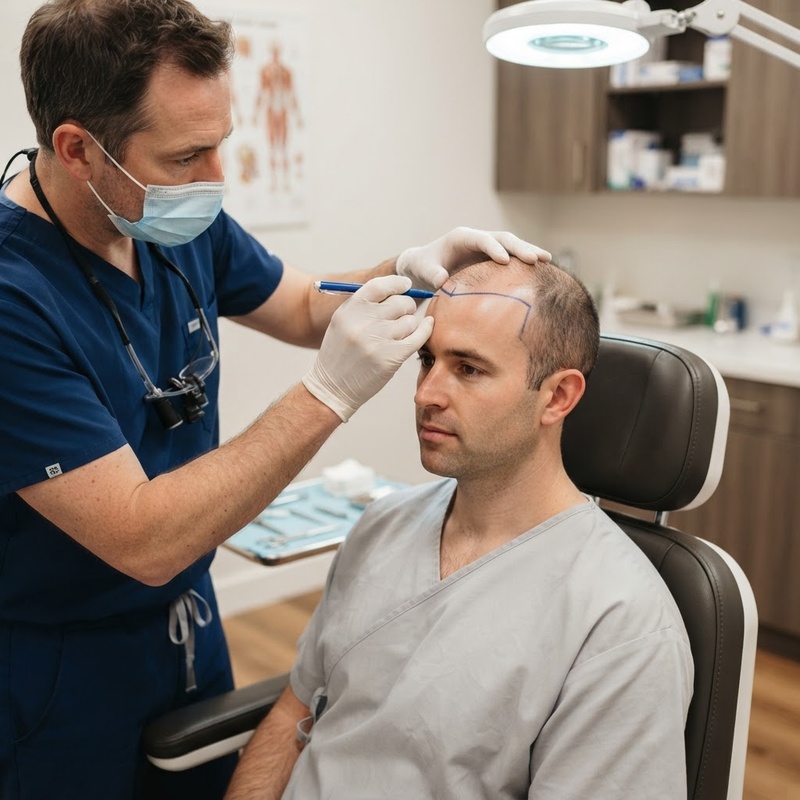
Hair loss affects millions of men across the globe, with androgenetic alopecia—commonly known as male pattern baldness—accounting for the vast majority of cases. Characterized by a receding hairline, thinning at the crown, or a combination of both, male pattern hair loss can significantly impact self-image, confidence, and daily well-being. For many years, individuals experiencing progressive hair thinning felt limited to temporary cosmetic concealers or caps. However, advancements in surgical hair restoration over recent decades have transformed hair transplantation into a widely recognized, refined clinical option for long-term hair density management.
Hair loss affects millions of men across the globe, with androgenetic alopecia—commonly known as male pattern baldness—accounting for the vast majority of cases. Characterized by a receding hairline, thinning at the crown, or a combination of both, male pattern hair loss can significantly impact self-image, confidence, and daily well-being. For many years, individuals experiencing progressive hair thinning felt limited to temporary cosmetic concealers or caps. However, advancements in surgical hair restoration over recent decades have transformed hair transplantation into a widely recognized, refined clinical option for long-term hair density management.
At its core, a hair transplant is a specialized surgical procedure designed to relocate healthy, genetically resistant hair follicles from one part of the scalp to areas experiencing thinning or baldness. While the concept sounds straightforward, the underlying biology and surgical techniques require meticulous precision, clinical skill, and an individualized approach to medical evaluation. Understanding how these procedures operate, what the primary techniques entail, and how transplanted follicles behave over time empowers men to make informed choices alongside qualified healthcare professionals.
This comprehensive clinical guide explores the scientific principles behind hair transplantation, compares the most common surgical methods—Follicular Unit Extraction (FUE) and Follicular Unit Transplantation (FUT)—outlines the step-by-step surgical process, and discusses recovery expectations and long-term hair preservation strategies.
The Biological Basis of Hair Transplantation
To appreciate how hair transplantation works, it is essential to understand the biological mechanisms driving male pattern hair loss. Male pattern baldness occurs primarily due to a genetic sensitivity in hair follicles to dihydrotestosterone (DHT), a potent androgenic hormone derived from testosterone. In susceptible scalp regions—typically the temples, hairline, and vertex crown—DHT binds to androgen receptors within hair follicles. Over time, this interaction shortens the active growth phase (anagen) of the hair cycle and triggers follicular miniaturization. Miniaturized follicles produce progressively thinner, shorter, and lighter hair shafts until hair production eventually halts altogether.
Fortunately, not all hair on the human scalp shares this genetic vulnerability to DHT. Hair follicles situated along the back and sides of the head—known medically as the donor zone or occipital and temporal scalp—are genetically programmed to resist DHT-mediated miniaturization. These follicles tend to remain robust and produce healthy hair throughout a person's life, even in men with advanced androgenetic alopecia.
Hair transplantation relies on a fundamental dermatological principle known as donor dominance. First established in the mid-20th century, donor dominance dictates that when hair follicles are harvested from a DHT-resistant donor site and transplanted into a DHT-susceptible recipient site, they retain their inherent genetic resistance to DHT. Once successfully re-established in their new location with an active blood supply, these transplanted follicles continue their natural growth cycle indefinitely.
Modern hair restoration procedures focus on transplanting naturally occurring groupings of hair known as follicular units. Rather than growing as single individual strands, human scalp hair naturally emerges in small clusters containing one to four hair follicles, complete with supporting microvessels, nerve fibers, sebaceous glands, and small arrector pili muscles. By preserving these microscopic anatomical structures intact during extraction and implantation, surgeons are able to achieve natural-looking hair patterns and high graft survival rates.
FUE vs. FUT: Comparing the Primary Surgical Techniques
When considering surgical hair restoration, clinical discussions typically center on two principal harvesting methods: Follicular Unit Extraction (FUE) and Follicular Unit Transplantation (FUT). While both techniques aim to relocate healthy donor hair follicles to thinning areas, they differ significantly in how the donor tissue is harvested, the resulting donor site scarring, and the initial post-operative recovery experience.
Follicular Unit Extraction (FUE): Micro-Punch Harvesting
Follicular Unit Extraction (FUE) has become an increasingly popular method due to its minimally invasive harvesting approach. In an FUE procedure, the clinician or surgical team uses a specialized micro-punch tool—ranging from 0.7 to 1.0 millimeters in diameter—to individually isolate and extract single follicular units directly from the donor area of the scalp.
The FUE process involves making a tiny circular incision around the perimeter of each follicular unit, extending into the dermis to free the graft from surrounding connective tissue. The individual unit is then gently lifted from the scalp using microscopic forceps. Because each graft is removed independently, FUE leaves behind tiny circular micro-wounds distributed across the donor region. These small wounds typically heal within a few days, forming microscopic dot-like scars that are generally undetectable, even with short haircuts.
Key clinical aspects of FUE include:
- Minimal Visible Scarring: Avoids a single linear surgical scar, making it well-suited for men who prefer short hairstyles.
- Donor Preservation: Allows surgeons to select specific high-density follicular units across a broad donor zone.
- Comfort and Recovery: Typically associated with minimal post-operative discomfort and a relatively fast return to light daily activities.
- Session Limitations: Harvesting individual grafts takes considerable time, which can limit the maximum number of grafts harvested in a single day compared to FUT.
Follicular Unit Transplantation (FUT): Strip Harvesting
Follicular Unit Transplantation (FUT), often referred to as the "strip method," is a traditional and highly established surgical approach. During an FUT procedure, the surgeon removes a single, narrow horizontal strip of hair-bearing scalp tissue from the donor zone at the back of the head. The resulting wound is then carefully closed using advanced suturing techniques, such as trichophytic closure, which allows hair to grow through the scar line to minimize visibility.
Once the donor strip is excised, it is immediately placed under high-powered stereoscopic microscopes, where a dedicated team of technicians meticulously dissects the tissue into individual, intact follicular units. This stereoscopic dissection ensures that follicles are isolated with optimal surrounding protective tissue, minimizing follicle transection (accidental damage to the hair bulb).
Key clinical aspects of FUT include:
- High Graft Yield: Enables the extraction of a large number of follicular units (often 3,000 to 4,000+ grafts) in a single surgical session, making it effective for extensive hair restoration needs.
- Intact Graft Quality: Microscopic dissection allows precise visualization of individual hair structures, maintaining high graft viability.
- Linear Donor Scar: Leaves a linear scar across the donor region, which is usually covered by surrounding hair but may be noticeable if the hair is shaved very short.
- Surgical Healing: Requires suture removal after 10 to 14 days and may involve a slightly longer initial healing period in the donor region compared to FUE.
Step-by-Step: What Happens During a Hair Transplant Procedure
Although the specific harvesting method varies between FUE and FUT, the overall structure of a hair transplant surgical day follows a series of standardized clinical stages designed to maximize patient comfort and graft survival.
1. Pre-Operative Assessment and Hairline Design
The procedure begins with a thorough pre-operative evaluation and planning session. The surgeon assesses the recipient area, evaluates scalp laxity, and calculates the density of available donor hair. A critical component of this phase is designing a natural hairline tailored to the individual's age, facial anatomy, and projected future hair loss pattern. Creating an age-appropriate, soft, macro- and micro-irregular hairline prevents an artificial "plug-like" appearance and ensures that the cosmetic results mature naturally over time.
2. Local Anesthesia Administration
Hair transplantation is performed on an outpatient basis under local anesthesia. Local anesthetics are carefully injected into both the donor and recipient areas to numb the scalp completely. In many clinical settings, mild oral sedatives may also be offered to support patient relaxation throughout the multi-hour session.
3. Donor Graft Harvesting and Preservation
Once the donor area is fully anesthetized, graft extraction commences using either FUE or FUT. As grafts are harvested, they are immediately transferred into chilled, sterile holding solutions containing nutrient-enriched physiological fluids. Temperature control and hydration are paramount during this stage; keeping grafts cool and moist protects cellular integrity and optimizes graft survival prior to implantation.
4. Recipient Site Preparation (Incisions)
The surgeon uses microscopic blades or custom needles to create hundreds or thousands of microscopic recipient slits in the thinning or bald areas of the scalp. The angle, depth, direction, and distribution of these recipient sites require exceptional artistic judgment and anatomical knowledge. The surgeon must align each incision to match the natural growth angle of existing hair—typically 10 to 45 degrees relative to the scalp—to ensure a seamless, natural growth flow.
5. Graft Implantation
In the final phase, individual follicular units are carefully placed into the recipient sites using specialized atraumatic forceps or implanter pens. Single-hair grafts are placed along the leading edge of the hairline to form a delicate, feathering transition, while multi-hair grafts (2 to 4 hairs) are placed further back to build density across the mid-scalp and crown. This phase requires meticulous handling to prevent mechanical trauma to the hair bulbs.
The Recovery Timeline and Graft Growth Cycle
Understanding the post-operative recovery timeline helps patients manage expectations and care for their newly transplanted hair properly. Hair restoration is a gradual process that relies on natural physiological healing and follicular growth cycles.
Initial Healing Phase (Days 1 to 14)
During the first few days following surgery, mild swelling around the forehead and eyes, mild redness, and light discomfort may occur. Tiny crusts or scabs form around each graft site as the scalp heals. Patients receive detailed post-care instructions, which typically include gently misting the scalp with saline solution, avoiding direct shower spray, sleeping with the head elevated, and refraining from strenuous physical activity, heavy lifting, or direct sunlight exposure.
By days 7 to 10, the newly implanted grafts become anchored within the scalp's vascular bed. Between days 10 and 14, crusting typically flushes away naturally during gentle washing.
The "Shock Loss" and Telogen Phase (Weeks 2 to 12)
A common phenomenon that occurs around 2 to 8 weeks post-transplant is temporary hair shedding, often referred to as "shock loss." Patients may observe the transplanted hair shafts shedding from the scalp. It is crucial to understand that this shedding is a normal physiological response to surgical trauma. The external hair shaft sheds, but the underlying hair follicle bulb remains secure, healthy, and dormant within the scalp tissue, transitioning into a resting phase (telogen).
Early Growth and Maturation (Months 3 to 18)
New hair growth typically begins around months 3 to 4 as follicles transition back into the active growth phase (anagen). Initially, emerging hairs may appear fine, thin, or slightly texture-altered. Over subsequent months, these hairs gradually thicken, gain color pigment, and mature.
Noticeable cosmetic improvement often becomes apparent around months 6 to 9, with continued density gains and textural refinement occurring up to 12 to 18 months post-procedure. Final mature density and coverage are generally evaluated at the 12-to-18-month mark.
Candidate Evaluation and Comprehensive Hair Preservation
While hair transplantation offers an effective surgical option for relocating hair, not every individual with hair loss is an immediate candidate for surgery. A thorough clinical evaluation by a qualified medical specialist is essential to determine suitability.
Factors influencing candidate suitability include:
- Donor Supply vs. Recipient Demand: Adequate donor hair density and good scalp elasticity are necessary to cover areas of loss effectively.
- Stability of Hair Loss: Men with rapidly progressing or unstable hair loss may require non-surgical stabilization prior to surgery to avoid uneven, patchy outcomes as native hair continues to recede.
- Type and Underlying Cause of Hair Loss: Hair transplants are designed primarily for androgenetic alopecia. Diffuse unpatterned alopecia (DUPA) or autoimmune hair conditions (such as alopecia areata or scarring alopecias) generally do not respond well to surgical transplantation.
- Realistic Expectations: A hair transplant relocates existing hair; it does not create new hair follicles. Clinical goals focus on achieving natural coverage and density within the constraints of available donor hair.
Integrating Medical Hair Therapy with Surgical Care
A critical aspect of long-term hair preservation is recognizing that a hair transplant does not alter the genetic predisposition of non-transplanted native hair. While transplanted grafts resist DHT, adjacent native hair in DHT-susceptible areas can continue to undergo progressive miniaturization over time.
For this reason, clinicians frequently recommend combining surgical hair restoration with medical hair management strategies. Evidence-based non-surgical interventions—such as topical minoxidil, oral or topical 5-alpha reductase inhibitors (such as finasteride), or prescription therapy—can help maintain existing native hair density and support overall scalp health. If compounded prescription formulations are discussed, patients should note that compounded medications are formulated for individual patient needs and are not FDA-approved, although their active ingredients have established clinical histories. Any prescription treatment plan requires a formal clinical evaluation by a licensed healthcare provider to assess medical appropriateness, potential side effects, and health history.
Partnering with Clinical Specialists for Optimal Scalp Health
Achieving healthy hair outcomes requires a thoughtful, comprehensive approach that addresses both surgical possibilities and ongoing medical scalp care. Hair restoration is not a single event, but rather part of a lifelong strategy to support hair retention, scalp vitality, and personal confidence.
Whether you are considering surgical options like FUE or FUT, or seeking to evaluate medical therapies to preserve native hair density, working directly with experienced clinical specialists ensures your treatment plan is tailored to your unique anatomy, hair loss stage, and long-term health goals.
To explore evidence-based hair loss evaluation and connect with a licensed clinical team, visit EOS Health Men's Hair Loss Support today.
Follicular Unit Extraction (FUE)
A minimally invasive hair transplant technique where individual follicular units are harvested directly from the donor area using a micro-punch instrument.
Follicular Unit Transplantation (FUT)
A surgical hair transplant technique where a strip of scalp tissue is harvested from the donor site and dissected under microscopes into individual follicular units.
Donor Zone
The area along the back and sides of the scalp where hair follicles are genetically resistant to dihydrotestosterone (DHT) miniaturization.
Dihydrotestosterone (DHT)
An androgenic hormone derived from testosterone that contributes to male pattern hair loss by binding to hair follicles in genetically susceptible scalp regions.
Follicular Unit
A naturally occurring microscopic cluster of 1 to 4 hair follicles, along with supporting sebaceous glands, nerve fibers, and microvessels.
Sources
faq
Common questions, answered.
What is the main difference between FUE and FUT hair transplants?
The primary difference lies in how donor hair is harvested. Follicular Unit Extraction (FUE) isolates and extracts individual follicular units micro-punched across the donor scalp, leaving tiny dot-like micro-scars. Follicular Unit Transplantation (FUT) excises a thin strip of donor scalp tissue, which is then dissected under microscopes into grafts, leaving a single linear donor scar.
Are hair transplant results permanent?
Transplanted hair follicles are harvested from the donor zone, which is genetically resistant to dihydrotestosterone (DHT). Because grafts retain their inherent genetic resistance when moved to thinning areas, transplanted hair typically continues to grow indefinitely throughout a person's life.
How long does recovery take after a hair transplant?
Initial surface healing generally takes about 7 to 14 days, during which minor redness, swelling, and scabbing resolve. Most individuals return to non-strenuous work within a few days to a week. Full graft anchoring occurs within 10 to 14 days, though new visible hair growth unfolds gradually over 3 to 12 months.
Why does transplanted hair shed a few weeks after surgery?
Temporary shedding—often called "shock loss"—is a standard physiological reaction to surgical transplantation. The hair follicle bulb remains securely anchored in the scalp tissue and transitions into a resting phase before producing new hair shafts starting around month 3 or 4.
Can a hair transplant stop non-transplanted native hair from thinning?
No. Surgical hair transplantation relocates follicles to thin areas but does not alter the ongoing genetic progression of male pattern hair loss in non-transplanted native hair. Medical therapies evaluated by a clinician are often recommended alongside surgery to help preserve native hair density.
Who is considered a good candidate for a hair transplant?
Ideal candidates generally have stable male pattern hair loss, sufficient donor hair density along the back and sides of the scalp, realistic goals regarding cosmetic density, and good general health. A thorough clinical assessment is required to determine suitability.
Is a hair transplant procedure painful?
The procedure is conducted under local anesthesia, which numbs the treatment areas so patients remain comfortable throughout harvesting and placement. Mild post-operative soreness or tightness can occur in the first few days and is typically managed with mild analgesics or physician recommendations.
How soon after a hair transplant can exercise be resumed?
Light activities such as walking can usually be resumed after a few days. Strenuous exercise, heavy weightlifting, swimming, and activities causing excessive sweating should typically be avoided for 10 to 14 days post-procedure to prevent dislodging grafts or increasing swelling.
Take your health off the back burner.™
Start free consultationwhat are you waiting for?
You're one click away from a new you.
Fill out our brief form and a licensed physician will evaluate which treatment plan is best for you.