Heart Rate Variability: What HRV Can and Can't Tell You
Explore what heart rate variability (HRV) measures, what wearable trends can and cannot reveal about recovery, and when to discuss your data with a clinician.
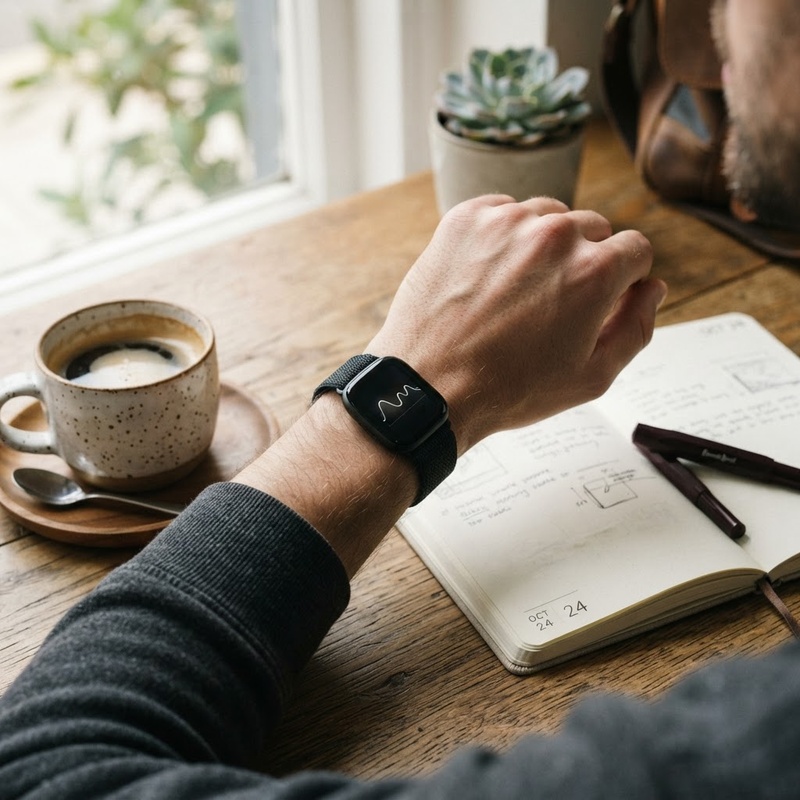
In recent years, consumer health technology has fundamentally transformed how individuals engage with their personal wellness and long-term vitality. Smartwatches, ring sensors, and specialized fitness bands now provide daily metrics on everything from sleep architecture to resting heart rate and skin temperature. Among these metrics, heart rate variability—commonly known as HRV—has emerged as one of the most widely discussed indicators of physical recovery, stress resilience, and physiological adaptability. Users often awaken to a single numerical score that promises to summarize their body's readiness for the day ahead.
In recent years, consumer health technology has fundamentally transformed how individuals engage with their personal wellness and long-term vitality. Smartwatches, ring sensors, and specialized fitness bands now provide daily metrics on everything from sleep architecture to resting heart rate and skin temperature. Among these metrics, heart rate variability—commonly known as HRV—has emerged as one of the most widely discussed indicators of physical recovery, stress resilience, and physiological adaptability. Users often awaken to a single numerical score that promises to summarize their body's readiness for the day ahead.
However, interpreting heart rate variability is far more complex than simply reading a higher or lower number on a digital screen. While tracking HRV offers fascinating, real-time insights into how the body responds to everyday physical, emotional, and environmental demands, understanding what this metric truly measures—and what it cannot tell you—is essential for using it constructively. Misinterpreting normal physiological fluctuations can lead to unnecessary health anxiety, misinformed training decisions, or over-reliance on consumer algorithms. This clinical guide explores the biological science behind HRV, examines what wearable trends can and cannot reveal, highlights key lifestyle factors that nudge daily readings, explains why individual baselines matter far more than population averages, and outlines when to share your data with a licensed healthcare provider.
Understanding Heart Rate Variability: The Physiology of Autonomic Balance
To appreciate what heart rate variability reflects, it is helpful to look at how the cardiovascular system interacts continuously with the nervous system. Although a resting heart rate might be reported on a monitor as 60 beats per minute, the heart does not beat with metronomic, clockwork regularity. Instead, the exact time interval between consecutive heartbeats—measured in milliseconds and known technically as R-R intervals or interbeat intervals—fluctuates constantly. One interval might last 0.95 seconds, the next 1.05 seconds, and the following 0.98 seconds. This continuous, millisecond-by-millisecond beat-to-beat variation is what clinicians define as heart rate variability.
Sympathetic vs. Parasympathetic Control
These subtle variations in time intervals are governed entirely by the autonomic nervous system (ANS), the master control network responsible for regulating involuntary physiological processes throughout the body, including digestion, respiration, blood pressure, and cardiac rhythm. The ANS operates primarily through two main opposing branches that continuously balance each other to maintain internal homeostasis:
- The Sympathetic Nervous System (SNS): Often referred to as the "fight or flight" branch, the SNS prepares the body for physical action, exertion, or acute stress. When activated, it triggers the release of stress hormones such as adrenaline and cortisol, increases heart rate, and causes the time intervals between heartbeats to become more uniform and predictable. Consequently, elevated sympathetic activation leads to lower heart rate variability.
- The Parasympathetic Nervous System (PNS): Frequently termed the "rest and digest" or "feed and breed" branch, the PNS promotes relaxation, digestion, tissue repair, cellular restoration, and physiological recovery. Operating largely through the vagus nerve, parasympathetic activity acts as a cardiac brake, slowing the heart rate and introducing rich, healthy variations between heartbeats. Elevated parasympathetic tone leads to higher heart rate variability.
Why Beat-to-Beat Variation Matters for Health
From a biological standpoint, a flexible, highly variable cardiovascular system signifies an adaptable autonomic nervous system. Higher variability indicates that the parasympathetic nervous system is active and that the body possesses the physiological elasticity to shift smoothly between states of rest and exertion. Conversely, lower variability indicates that the sympathetic system is dominating the autonomic balance. This occurs naturally when the body is managing acute stress, undergoing intense physical exertion, processing alcohol, or directing metabolic resources toward immune defense. Rather than viewing low HRV as inherently alarming, clinical research suggests viewing it as a real-time reflection of autonomic prioritization during times of demand.
What Wearable HRV Trends Can—and Cannot—Tell You
The proliferation of consumer fitness monitors has made HRV tracking accessible to millions of individuals outside clinical research facilities. While these devices offer valuable self-awareness, recognizing their practical boundaries helps maintain a balanced perspective on personal health tracking.
Daily Readiness Scores vs. Biological Reality
Most commercial wearables capture HRV measurements during sleep, when conscious thoughts, physical movement, and environmental distractions are minimized. Proprietary algorithms then combine overnight millisecond measurements with resting heart rate and sleep duration to generate daily "readiness," "recovery," or "energy" scores. These scores can serve as helpful educational tools for spotting broad patterns over weeks or months. However, single-day scores do not capture the full, dynamic complexity of human biology.
A consumer algorithm cannot distinguish between different forms of physiological stress. A dip in your recovery score might stem from a strenuous resistance workout, a late-night heavy meal, emotional strain from work, mild dehydration, or the early stages of a viral infection. Expecting a single wearable score to dictate whether you should engage in physical activity or stay in bed can sometimes create a counterproductive feedback loop where score anxiety artificially elevates stress hormone levels.
Optical Sensors and Measurement Precision
It is also important to understand how consumer wearables collect cardiovascular data. Unlike clinical electro-cardiograms (ECGs) that directly measure electrical impulses across the heart muscle using multi-lead chest sensors, most consumer wristwatches and smart rings utilize photoplethysmography (PPG). PPG sensors shine LED light into the microvasculature of the skin to detect tiny volumetric blood flow changes with each heartbeat.
While modern PPG algorithms have advanced remarkably, minor environmental factors such as cold ambient temperature, loose band fit, dark skin pigmentation, or involuntary movement during REM sleep can introduce signal noise. Consequently, focusing on rolling 7-day or 30-day baseline averages provides a far more reliable physiological picture than obsessing over an isolated single-night drop.
Key Lifestyle Factors That Nudge Your HRV Readings
Because heart rate variability serves as a sensitive mirror of overall autonomic balance, numerous daily lifestyle habits and environmental factors influence your numbers. Recognizing these influences allows you to contextualize daily variations without unnecessary concern.
Sleep Architecture and Restfulness
Restorative sleep is fundamental for parasympathetic recovery. During deep slow-wave sleep and rapid eye movement (REM) cycles, parasympathetic tone increases significantly, allowing heart rate variability to reach its nightly peak. Disruptions in sleep architecture, frequent nocturnal awakenings, or irregular bedtimes reduce parasympathetic dominance, resulting in noticeably lower overnight HRV readings.
Alcohol Consumption and Late Meals
Alcohol intake before sleep represents one of the most potent triggers for suppressed heart rate variability. Even moderate alcohol consumption requires hepatic metabolic processing overnight, keeping the sympathetic nervous system elevated, elevating resting heart rate, and fragmenting deep sleep stages. Consequently, HRV remains markedly suppressed throughout the night. Similarly, consuming heavy, high-fat, or late-night meals forces the digestive tract to work intensively, shifting autonomic balance toward sympathetic dominance during sleeping hours.
Physical Training Load and Overreaching
Exercise exerts intentional physiological stress on the cardiovascular system. High-intensity interval training or heavy resistance sessions temporarily increase sympathetic drive and lower HRV during the immediate post-workout and recovery window. With appropriate sleep and nutrition, the body adapts, which can support healthier baseline HRV trends over time. However, persistent downward trends in baseline HRV over consecutive weeks may signal cumulative overreaching or inadequate recovery between workouts.
Psychological Stress, Hydration, and Immune Activation
Psychological stress—such as work deadlines, financial worries, or personal loss—activates the exact same autonomic pathways as physical exertion. Chronic mental stress can keep sympathetic tone elevated even during quiet evening hours. In addition, mild dehydration decreases plasma blood volume, forcing the heart to beat faster to maintain cardiac output and lowering HRV. Furthermore, when the immune system detects a pathogen, circulating inflammatory cytokines stimulate sympathetic tone, frequently causing a noticeable drop in HRV hours or days before physical illness symptoms manifest.
The Individual Baseline: Why Comparing HRV to Others Is Unhelpful
A frequent pitfall among users of health wearables is comparing their personal HRV score to that of a partner, friend, or colleague. A person with an average overnight HRV of 38 milliseconds might feel disheartened if a training partner boasts a baseline of 85 milliseconds, assuming higher is universally superior. In clinical reality, absolute HRV values are deeply individual and cannot be evaluated like standard blood pressure or blood glucose reference ranges.
Genetic and Physiological Diversity
Baseline heart rate variability is determined by a complex combination of non-modifiable biological factors that differ substantially from person to person. These include:
- Age: Heart rate variability naturally decreases in a gradual, linear fashion across the lifespan, reflecting expected age-related shifts in autonomic nervous system responsiveness.
- Genetics and Cardiac Pacemaker Anatomy: Intrinsic sinoatrial node sensitivity and autonomic nerve density vary genetically, influencing baseline interbeat intervals regardless of fitness level.
- Biological Sex and Hormonal Cycles: Variations in estrogen, progesterone, and androgen levels influence vagal nerve tone and produce distinct HRV patterns between sexes and across hormonal cycles.
- Resting Heart Rate and Heart Size: Individuals with naturally lower resting heart rates or larger cardiac stroke volumes experience longer time gaps between beats, yielding higher raw millisecond variability without necessarily indicating better overall health.
Tracking Personal Trends Over Time
Because normal baseline ranges span a wide spectrum—from 20 milliseconds to well above 100 milliseconds depending on age and individual genetics—comparing numbers across individuals offers no meaningful clinical insight. The true utility of heart rate variability lies in comparing your current data against your own long-term baseline. Establishing a personal baseline over three to four weeks allows you to identify what a normal, well-recovered night looks like for your unique physiology. From there, identifying meaningful deviations from your normal baseline provides actionable feedback regarding recovery and lifestyle stress.
Integrating HRV Data Into a Comprehensive Longevity Strategy
Heart rate variability is a valuable piece of a much larger physiological puzzle. When interpreted alongside other foundational health indicators—such as resting heart rate, blood pressure trends, lipid panels, metabolic biomarkers, and sleep metrics—HRV data can enrich your understanding of overall vitality and healthy aging.
When to Share Your Data with a Healthcare Provider
While consumer health wearables empower proactive self-awareness, wearable metrics are educational tools rather than diagnostic medical devices. Persistent, unexplained downward trends in your personal HRV baseline over several weeks—especially when accompanied by persistent fatigue, dizziness, exercise intolerance, chest discomfort, heart palpitations, or severe sleep disturbances—warrant professional medical evaluation.
A licensed healthcare clinician can evaluate your autonomic trends within the broader context of comprehensive diagnostic evaluations, laboratory blood tests, thyroid assessment, and cardiovascular screening. Rather than attempting to self-diagnose or make drastic changes based on a digital score, sharing long-term wearable trends with your medical provider encourages a collaborative, evidence-based approach to health management.
Building Sustainable Longevity Habits with EOS Health
At EOS Health, we believe that sustainable longevity is built upon evidence-based medical care, personalized physiological insights, and supportive daily habits. Rather than chasing isolated numerical targets or temporary wellness trends, supporting long-term health span requires a holistic perspective that integrates cardiovascular resilience, metabolic health, balanced nutrition, and expert clinical oversight.
Exploring comprehensive pathways to support healthy aging and foster long-term vitality begins with a personalized medical consultation. Connect with the clinical team at EOS Health Longevity Care to discover how structured health insights and tailored clinical consultations can support your personal journey toward lasting health and vitality.
Autonomic Nervous System (ANS)
The part of the nervous system responsible for regulating involuntary bodily functions, including heart rate, digestion, respiratory rate, and pupillary response.
Sympathetic Nervous System (SNS)
A division of the autonomic nervous system that prepares the body for action and stress responses, increasing heart rate and suppressing beat-to-beat variability.
Parasympathetic Nervous System (PNS)
A division of the autonomic nervous system that governs rest, digestion, and physiological recovery, slowing heart rate and increasing beat-to-beat variability.
Photoplethysmography (PPG)
An optical measurement technology used by consumer health wearables to detect microvascular blood volume changes with each cardiac beat.
R-R Interval
The precise time elapsed between two successive R-waves (heartbeats) on an electrocardiogram, measured in milliseconds to determine heart rate variability.
Sources
faq
Common questions, answered.
What is a normal heart rate variability score?
There is no single "normal" HRV score that applies to everyone. Normal baseline readings vary significantly based on age, genetics, resting heart rate, biological sex, and individual autonomic tone. For some healthy adults, a normal baseline may sit between 25 and 45 milliseconds, while for others it may rest between 65 and 100 milliseconds or higher. The most meaningful benchmark is always your own historical average.
Is a higher HRV always better for overall health?
While higher HRV generally reflects strong parasympathetic tone and healthy cardiovascular adaptability, higher is not universally better in every context. Exceptionally high or erratic HRV readings can occasionally occur due to cardiac arrhythmias or specific autonomic irregularities. What matters most is maintaining a consistent, stable baseline that responds appropriately to rest and exertion.
Why does my HRV drop significantly after drinking alcohol?
Alcohol metabolism places substantial physiological demand on the body overnight. Ethanol processing activates the sympathetic nervous system, increases resting heart rate, and suppresses deep restorative sleep stages. This shifts autonomic balance away from parasympathetic restoration, resulting in a pronounced drop in overnight HRV.
How accurate are consumer wearables for measuring HRV compared to medical ECGs?
Medical ECGs measure direct electrical signals from the heart muscle with multi-lead accuracy, whereas consumer wearables typically rely on optical photoplethysmography (PPG) to detect blood pulse volume at the wrist or finger. While high-quality wearables provide reliable trend tracking during sleep, they can be affected by movement, sensor positioning, or skin temperature changes.
How long does it take to see positive changes in baseline HRV?
Shifting your baseline HRV is a gradual physiological process that reflects long-term cardiovascular conditioning, stress management, balanced nutrition, and restorative sleep habits. While acute improvements can appear after restful days, lasting changes in baseline autonomic tone typically require several weeks to months of consistent lifestyle habits.
Should I skip my workout if my wearable shows a low HRV score?
A single day of lower HRV does not automatically mean you must cancel physical activity. It serves as a gentle cue to pay attention to how your body feels. On days with lower HRV readings, you might choose lighter movement, active recovery, or lower-intensity training rather than maximum exertion, depending on your overall energy levels.
Can chronic psychological stress lower heart rate variability over time?
Chronic psychological stress can suppress HRV over extended periods by maintaining elevated sympathetic nervous system activation. However, incorporating structured stress management practices, prioritizing restorative sleep, engaging in regular cardiovascular exercise, and working with healthcare professionals can support autonomic recovery and help foster healthier HRV patterns over time.
When should I consult a clinician about my wearable HRV data?
You should consult a licensed healthcare provider if you notice persistent, unexplained drops in your baseline HRV over several consecutive weeks, or if low readings are accompanied by symptoms such as dizziness, shortness of breath, chest discomfort, chronic exhaustion, or irregular heart rhythms.
Invest in the years ahead.™
Start free consultationwhat are you waiting for?
You're one click away from a new you.
Fill out our brief form and a licensed physician will evaluate which treatment plan is best for you.