How Does DHT Affect Male Hair Loss?
Learn how DHT drives male pattern hair loss, why genetics decide which follicles are affected, and how treatments target this hormone.
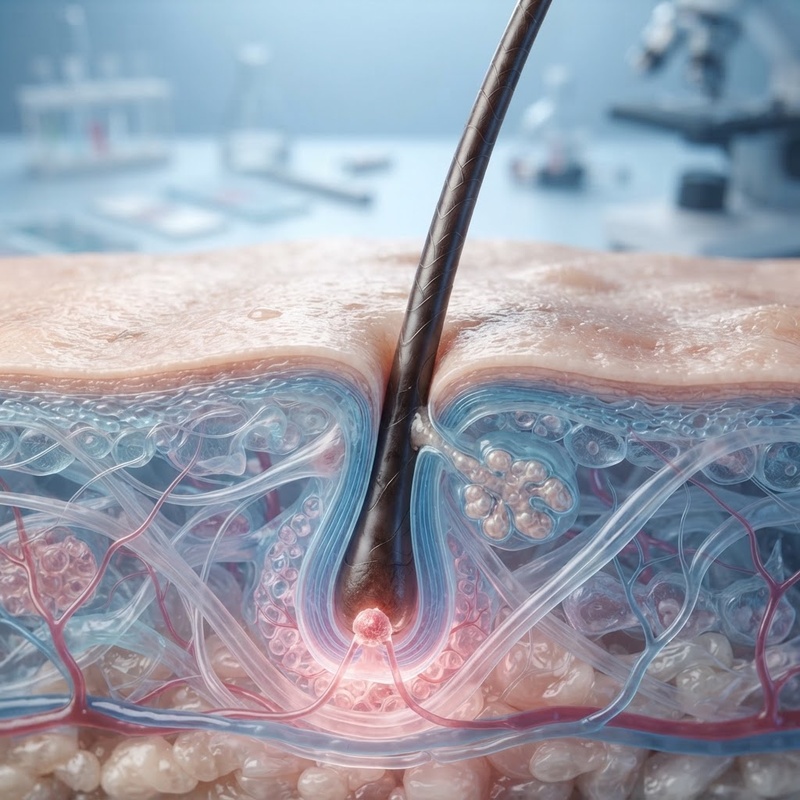
If you have researched male hair loss at all, you have encountered three letters: DHT. This hormone is the central player in male pattern hair loss, and understanding how it works explains why certain treatments target it. Here is a clear explanation of the DHT-hair connection.
If you have researched male hair loss at all, you have encountered three letters: DHT. This hormone is the central player in male pattern hair loss, and understanding how it works explains why certain treatments target it. Here is a clear explanation of the DHT-hair connection.
What DHT Is
DHT (dihydrotestosterone) is a hormone converted from testosterone by an enzyme called 5-alpha reductase. It is more potent than testosterone and plays important roles in development, including during puberty. Everyone produces DHT — it is a normal part of male biology.
DHT circulates through the body and interacts with tissues that have receptors for it. The prostate and the hair follicles on the scalp are two key targets. This is why the same hormone influences both prostate growth and hair — and why some medications affect both.
Importantly, DHT is not inherently harmful. Problems arise only in hair follicles that are genetically sensitive to it.
How DHT Damages Hair Follicles
In men with male pattern hair loss, follicles at the temples, hairline, and crown carry genes that make them sensitive to DHT. When DHT binds to receptors on these follicles, it triggers a process called miniaturization.
Miniaturization is a gradual shrinking: each growth cycle, the affected follicle produces a thinner, shorter, lighter-colored hair. The growth phase shortens too. Over years, healthy terminal hairs become wispy vellus hairs — the fine, barely visible peach fuzz that remains in bald areas.
This process takes time, which is why pattern loss unfolds over years rather than weeks. It also explains the pattern: follicles at the back and sides of the head typically lack DHT sensitivity, which is why those areas are preserved and why they serve as donor sites for transplants.
Why DHT Explains the Genetics of Hair Loss
The sensitivity to DHT is inherited. This is why hair loss runs in families — though the inheritance pattern is complex and can come from either side of the family. Having a father or maternal grandfather with hair loss raises your likelihood, but it does not guarantee it.
Your total DHT level matters less than your follicles' sensitivity. Men with high DHT and insensitive follicles keep their hair; men with lower DHT and sensitive follicles can lose it. This is why simply having 'more testosterone' does not predict balding.
It also explains why hair loss can progress even when lifestyle is healthy. Exercise, diet, and stress management support overall health, but they do not change follicle genetics.
How Treatments Target DHT
Finasteride works by blocking the 5-alpha reductase enzyme, reducing DHT production. It is FDA-approved for male pattern hair loss in appropriate candidates and, by lowering DHT at the follicle, slows or halts miniaturization in many men. Potential side effects exist and should be discussed with a prescriber.
Topical treatments like minoxidil do not affect DHT directly — they work by extending the growth phase of follicles, which is why combining a DHT blocker with minoxidil addresses the problem from two angles.
If you are concerned about DHT-related hair loss, the key step is a professional evaluation. A provider can confirm that your loss is pattern loss, discuss whether DHT-targeting medication is appropriate for you, and monitor your results over time.
When to Talk to a Healthcare Provider
Understanding your hair loss is the first step to addressing it. If you want to know whether DHT-driven pattern loss explains your thinning, visit EOS Health to connect with a licensed provider.
Glossary
DHT (Dihydrotestosterone): A potent hormone converted from testosterone that drives miniaturization in genetically susceptible hair follicles.
5-Alpha Reductase: The enzyme that converts testosterone into DHT. It is the target of finasteride.
Miniaturization: The progressive shrinking of hair follicles exposed to DHT, producing thinner hairs each cycle until they barely grow.
Vellus Hair: The fine, short, nearly invisible hair that miniaturized follicles eventually produce — the remaining 'peach fuzz' in bald areas.
Sources
faq
Common questions, answered.
What is DHT?
Dihydrotestosterone — a potent hormone converted from testosterone. It drives male pattern hair loss in genetically susceptible follicles.
Does DHT cause all male hair loss?
DHT is the driver of male pattern hair loss specifically. Other causes — stress shedding, thyroid issues, scalp conditions — work through different mechanisms.
Does high testosterone mean more hair loss?
Not necessarily. Hair loss depends more on your follicles' genetic sensitivity to DHT than on your total hormone levels.
Does blocking DHT regrow hair?
DHT blockers like finasteride can slow loss and, for some men, allow partial regrowth by halting miniaturization. Results vary, and ongoing use is typically required to maintain benefits.
Is DHT bad for you?
No. DHT is a normal hormone with important roles in development. It only causes problems for follicles that are genetically sensitive to it.
Why does hair loss affect the crown and hairline but not the sides?
Follicles at the crown, hairline, and temples carry genes that make them sensitive to DHT. Follicles at the back and sides typically do not — which is why they persist and are used as donor areas for transplants.
Can I lower DHT naturally?
Some foods and supplements are marketed as natural DHT blockers, but evidence is limited. Prescription medications are the well-studied approach and require a provider's evaluation.
Do DHT blockers have side effects?
Finasteride has potential side effects a prescriber will review with you, including effects some men report on sexual function. Deciding whether it is right for you is a conversation with a provider who knows your history.
Take your health off the back burner.™
Start free consultationwhat are you waiting for?
You're one click away from a new you.
Fill out our brief form and a licensed physician will evaluate which treatment plan is best for you.