How Peptides Support Skin Elasticity and Collagen Density
Learn how peptides support skin elasticity and collagen density. Explore signal peptides, copper peptides, and barrier care for healthy skin aging support.
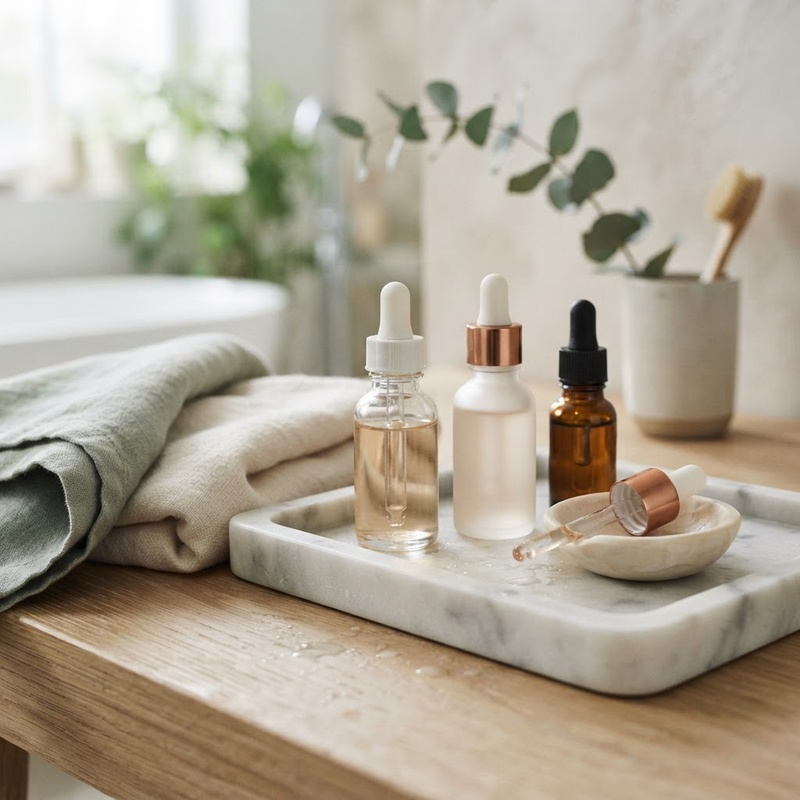
Skincare science has advanced significantly over recent decades, evolving from simple surface moisturizers to sophisticated formulations designed to work in harmony with the skin's natural biological processes. Among the most widely researched and respected ingredients in modern formulation science are topical peptides. These short chains of amino acids function as cellular communicators, offering targeted support for dermal architecture, skin resilience, and overall surface vitality.
Skincare science has advanced significantly over recent decades, evolving from simple surface moisturizers to sophisticated formulations designed to work in harmony with the skin's natural biological processes. Among the most widely researched and respected ingredients in modern formulation science are topical peptides. These short chains of amino acids function as cellular communicators, offering targeted support for dermal architecture, skin resilience, and overall surface vitality.
As time passes, natural biological shifts alter the structural foundation of the skin. Collagen synthesis naturally declines, elastin fibers gradually lose their spring-like resilience, and the skin's capacity to maintain optimal moisture levels shifts. Understanding how signal peptides and copper peptides function alongside proper moisture barrier care allows individuals to make informed, science-backed decisions to support firm, smooth, and healthy-looking skin throughout every decade of life.
Understanding Skin Architecture: Collagen, Elastin, and the Extracellular Matrix
To fully appreciate the role of topical peptides in skincare, it is helpful to explore the complex architecture of the dermal layer. The dermis acts as the skin's structural engine, supported by a dense matrix of structural proteins, carbohydrates, and specialized cells. This network is collectively known as the extracellular matrix (ECM). Within this matrix, two primary structural proteins determine how firm, plump, and elastic the skin appears over time:
- Collagen: Making up roughly 75% to 80% of the skin's dry weight, collagen provides essential tensile strength and structural support. Type I collagen forms dense, supportive fibers that maintain skin volume, while Type III collagen provides supple flexibility in youthful tissue.
- Elastin: Although present in smaller quantities than collagen, elastin fibers give skin its remarkable ability to stretch and recoil. This elasticity allows tissue to bounce back smoothly after facial expressions, mechanical movement, or environmental stress.
Fibroblasts are the specialized cells located within the dermis that are responsible for synthesizing collagen, elastin, and extracellular matrix components. In early adulthood, fibroblast activity operates at peak efficiency. However, intrinsic biological timelines, coupled with external environmental factors such as ultraviolet exposure, urban pollution, and oxidative stress, gradually diminish fibroblast output. Clinical research indicates that structural collagen levels decrease by approximately 1% per year after early adulthood, leading to progressive changes in skin density, surface texture, and elastic bounce.
What Are Peptides? Molecular Communicators in Topical Skincare
Peptides are organic compounds created by linking two or more amino acids together through peptide bonds. While structural proteins like collagen and elastin consist of long, intricate molecular chains containing hundreds of amino acids, peptides are shorter fragments, typically comprising between two and fifty amino acids. In skincare formulation chemistry, this smaller molecular size is advantageous because it facilitates better topical absorption into the upper layers of the epidermis compared to large, intact protein molecules.
When applied topically, peptides act as biochemical signals. The skin naturally interprets specific peptide sequences as natural breakdown products of structural proteins, which gently prompts dermal cells to initiate ongoing maintenance and repair responses. Cosmetic scientists classify topical peptides into four primary functional categories based on their primary mechanism of action:
- Signal Peptides: Short amino acid sequences that encourage fibroblasts to synthesize collagen, elastin, and extracellular matrix proteins.
- Carrier Peptides: Specialized molecules that transport essential trace minerals, such as copper and manganese, directly to enzymatic pathways within skin cells.
- Enzyme-Inhibitor Peptides: Formulations engineered to slow down the natural breakdown of collagen by modulating matrix metalloproteinases (MMPs).
- Neurotransmitter-Inhibiting Peptides: Topical compounds formulated to soothe facial micro-contractions on the skin's surface.
Among these functional groups, signal peptides and copper peptides have garnered the greatest attention in clinical research for their ability to support structural collagen density and skin firmness.
Signal Peptides and Copper Peptides: Dermal Signaling and Remodeling
Signal peptides and carrier peptides like copper peptides represent the cornerstone of peptide-based skincare formulations. While both work to support skin density and resilience, they utilize distinct biological pathways within the extracellular matrix.
Signal Peptides: Encouraging Structural Support from Within
Signal peptides are specifically engineered to replicate amino acid sequences that naturally occur when extracellular matrix proteins undergo routine breakdown. When collagen naturally degrades during cellular turnover, the resulting peptide fragments bind to specific surface receptors on fibroblasts. This binding action communicates to the cell that matrix maintenance is required, encouraging the synthesis of fresh structural proteins.
Topical skincare formulations utilize several thoroughly documented signal peptides to support dermal structure without causing surface irritation:
- Palmitoyl Pentapeptide-4 (Matrixyl): A widely studied signal peptide linked to a fatty acid chain to enhance lipid solubility and epidermal penetration. Research indicates it supports Type I and Type IV collagen synthesis, helping reinforce dermal volume and smooth fine lines.
- Palmitoyl Tripeptide-1 and Palmitoyl Tetrapeptide-7: Frequently combined in synergistic peptide complexes, these molecules work together to support matrix stability, promote an even skin texture, and reinforce skin firmness over time.
- Hexapeptide-11: A bio-derived signal peptide known for supporting skin tone, firmness, and cellular activity pathways within dermal tissue.
Copper Peptides (GHK-Cu): Remodeling Support and Antioxidant Balance
Copper peptides, specifically glycyl-L-histidyl-L-lysine copper (GHK-Cu), represent a unique convergence of carrier and signal peptide technology. Discovered in human plasma during the early 1970s, GHK-Cu is a naturally occurring tripeptide with a strong affinity for copper ions. Although natural plasma concentrations of GHK-Cu decline with age, topical application offers significant supportive benefits for mature or stress-exposed skin.
Copper is an indispensable trace mineral required by lysyl oxidase, an enzyme essential for cross-linking collagen and elastin fibers into durable, resilient dermal networks. GHK-Cu effectively delivers bioavailable copper directly to enzymatic pathways while simultaneously functioning as a signal peptide. Clinical and laboratory research highlights several key contributions of GHK-Cu to skin health:
- Extracellular Matrix Remodeling: GHK-Cu helps maintain a healthy equilibrium between new collagen synthesis and the natural clearing of degraded matrix components, supporting overall tissue quality.
- Glycosaminoglycan Support: Studies indicate copper peptides encourage the synthesis of glycosaminoglycans, including hyaluronic acid, which are vital for maintaining deep dermal hydration and volume.
- Antioxidant and Soothing Action: GHK-Cu exhibits inherent antioxidant characteristics, helping neutralize free radicals generated by environmental stressors while calming surface redness and mild irritation.
Synergy in Action: Combining Peptides with Moisture Barrier Care
While topical peptides deliver targeted communication to dermal fibroblasts, their performance is optimized when supported by a healthy, resilient moisture barrier. The skin's outermost layer, known as the stratum corneum, acts as a lipid-rich protective shield that seals in vital moisture and shields delicate deeper layers from environmental stressors.
The Vital Link Between Barrier Integrity and Skin Firmness
When the moisture barrier becomes compromised—whether through over-cleansing, harsh climate exposure, or inadequate hydration—the skin experiences elevated transepidermal water loss (TEWL). Dehydrated skin often appears dull, showing temporary fine lines and compromised elasticity regardless of how much signaling activity is taking place in the underlying dermis.
To maximize the structural benefits of signal and copper peptides, skincare routines should incorporate complementary barrier-strengthening ingredients:
- Ceramides: Essential lipid molecules that fill cellular spaces within the stratum corneum, restoring barrier continuity and minimizing moisture loss.
- Hyaluronic Acid and Glycerin: Potent humectants that draw water into the epidermal layers, providing immediate surface plumping that complements long-term peptide signaling.
- Niacinamide (Vitamin B3): A versatile nutrient that supports natural ceramide production, calms surface redness, and refines skin texture alongside peptide applications.
Adopting a dual-action strategy—combining topically applied peptides for dermal communication with barrier-reinforcing lipids for surface hydration—creates an ideal environment for maintaining firm, supple, and radiant skin.
Building a Thoughtful Skincare Routine for Healthy Aging
Successfully integrating peptide formulations into a daily skincare routine involves understanding product compatibility, application sequence, and realistic timelines for skin support. Because peptides are bio-active molecules, proper application ensures optimal contact time and cellular uptake.
Layering, Application Order, and Consistency
Peptide serums are typically lightweight and water-based, making them ideal for application directly after cleansing and toning. Applying peptides to clean, slightly damp skin facilitates absorption before thicker creams or facial oils are applied. When building a routine, consider these core formulation principles:
- Serums and Essences: Leave-on formulations provide the longest contact time, allowing active peptide sequences to absorb efficiently into the upper epidermal layers.
- Product Compatibility: Peptides combine exceptionally well with hydrating humectants like hyaluronic acid and barrier lipids like ceramides. However, high concentrations of direct acids or strong pure ascorbic acid may alter the delicate pH environment required for optimal peptide stability.
- Daily Sun Protection: Protecting the skin daily with a broad-spectrum sunscreen remains the single most important step in shielding existing collagen from ultraviolet degradation, allowing peptide formulations to work effectively.
Integrating peptide formulations into a daily skincare regimen requires consistency, patience, and realistic expectations. Unlike immediate chemical exfoliants or temporary surface plumpers, peptides work gradually by supporting natural cellular pathways over time. Noticeable enhancements in skin density, texture, and firmness typically unfold after 8 to 12 weeks of continuous daily use.
Because every individual's skin profile and physiological needs are unique, consulting a licensed clinician or skincare professional offers personalized guidance for tailored results. Discover expert insights and personalized skincare solutions at EOS Health Skincare Guidance to support your skin health journey with science-backed care.
Glossary
Collagen
The principal structural protein found in the extracellular matrix of skin, providing essential volume, firmness, and tensile strength.
Elastin
A highly flexible structural protein in the dermis that enables skin tissue to stretch, recoil, and maintain natural elasticity.
Signal Peptides
Specific amino acid sequences that bind to cell receptors, encouraging fibroblasts to produce collagen, elastin, and extracellular matrix proteins.
Copper Peptides (GHK-Cu)
A naturally occurring complex of tripeptide GHK bound to bioavailable copper, supporting matrix remodeling, antioxidant defense, and tissue quality.
Extracellular Matrix (ECM)
The intricate structural network of proteins, glycosaminoglycans, and cellular components in the dermis that supports skin health and resilience.
Transepidermal Water Loss (TEWL)
The natural movement and evaporation of water from the internal layers of skin through the stratum corneum into the surrounding air.
Sources
faq
Common questions, answered.
What are topical peptides in skincare?
Topical peptides are short chains of amino acids designed to communicate with skin cells. In skincare formulations, they act as cellular messengers that support natural collagen synthesis, elastin maintenance, and overall dermal firmness.
How do signal peptides differ from copper peptides?
Signal peptides mimic protein fragments to encourage fibroblasts to produce new collagen and matrix components. Copper peptides (GHK-Cu) combine signal activity with carrier functions, delivering essential copper to enzymes that cross-link collagen while providing antioxidant support.
Can peptides replace sunscreen or retinoid treatments?
No. Peptides perform complementary roles rather than replacing other key ingredients. Sunscreen protects existing collagen from UV damage, retinoids accelerate surface cell turnover, and peptides offer gentle signaling support for structural protein production.
How long does it take to notice benefits from peptide formulations?
Because peptides work by supporting underlying biological pathways, consistent daily application for 8 to 12 weeks is typically required to notice visible support in skin smoothness, firmness, and overall texture.
Are topical peptides suitable for sensitive skin?
Yes. Peptide formulations are generally mild and well-tolerated across various skin types, including sensitive skin. They work alongside the skin's natural pathways without stripping essential lipids or causing surface irritation.
Can copper peptides be combined with direct acids or Vitamin C?
Formulators often suggest applying copper peptides at a different time of day from strong direct acids (like AHAs or BHAs) or high-concentration L-ascorbic acid, as high acidity can compromise peptide stability or copper binding efficiency.
Why is moisture barrier health important when using peptides?
A healthy moisture barrier limits transepidermal water loss and protects underlying dermal structures. Combining peptides with barrier-building ceramides and humectants ensures surface hydration complements long-term dermal support.
Who can benefit from incorporating peptides into their skincare routine?
Topical peptides suit individuals at various adult life stages. In younger skin, they help maintain structural resilience and barrier health, while in mature skin, they support firmness, density, and elastic bounce as natural collagen production slows down.
Great skin starts with the right protocol.™
Start free consultationwhat are you waiting for?
You're one click away from a new you.
Fill out our brief form and a licensed physician will evaluate which treatment plan is best for you.