Hyaluronic Acid Explained: How It Holds Water
Learn how hyaluronic acid attracts and binds water in the skin, how molecular weights impact hydration, and how to layer it properly for healthy skin.
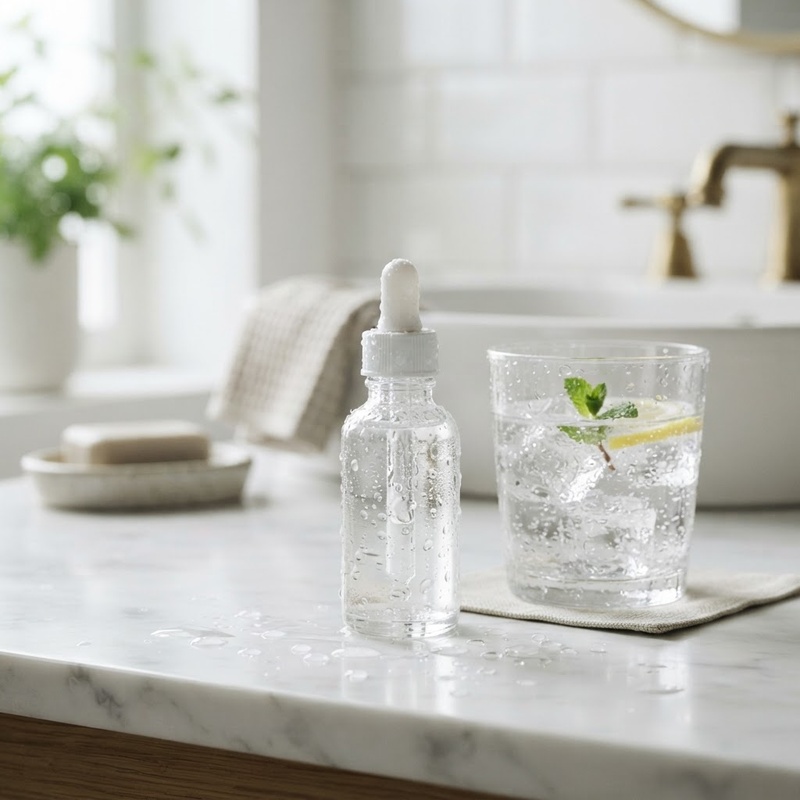
Maintaining optimal skin hydration is one of the foundational principles of dermatologist-recommended skincare. Among the vast array of ingredients available today, hyaluronic acid has earned a central position in serums, creams, and clinical formulations. Frequently celebrated for its extraordinary water-binding capacity, hyaluronic acid plays a critical role in preserving skin elasticity, smooth texture, and comfort across all ages and skin types.
Maintaining optimal skin hydration is one of the foundational principles of dermatologist-recommended skincare. Among the vast array of ingredients available today, hyaluronic acid has earned a central position in serums, creams, and clinical formulations. Frequently celebrated for its extraordinary water-binding capacity, hyaluronic acid plays a critical role in preserving skin elasticity, smooth texture, and comfort across all ages and skin types.
However, despite its widespread popularity, misconceptions remain regarding how hyaluronic acid functions on a cellular and molecular level. Is it a simple surface moisturizer, or does it operate differently from traditional oils and emollients? How do environmental conditions, such as atmospheric humidity, affect its ability to keep the skin hydrated? By examining the biological mechanisms, molecular variations, and practical application strategies of hyaluronic acid, individuals can make informed decisions that support healthy aging and optimal skin health.
This comprehensive guide explores the physiological science behind hyaluronic acid, detailing how it attracts and holds water, why formulation details matter, and how to seamlessly integrate this powerful humectant into a daily skincare routine. Educational research underscores that understanding ingredient chemistry allows for more effective personal care, supporting skin barrier integrity and long-term vitality.
What Is Hyaluronic Acid and How Does It Bind Water?
To appreciate how hyaluronic acid benefits the skin, it is helpful to understand what this compound is and where it exists within the human body. Hyaluronic acid—also known as hyaluronan or hyaluronate—is a naturally occurring glycosaminoglycan, a class of long, unbranched polysaccharides composed of repeating disaccharide units of D-glucuronic acid and N-acetyl-D-glucosamine. It is widely distributed throughout human tissues, with the highest concentrations located within skin tissue, joint fluids, and the eyes.
The Biological Role in Human Skin
In human skin, hyaluronic acid serves as a fundamental structural constituent of the extracellular matrix across both the dermis and epidermis. Approximately 50 percent of the body's total hyaluronic acid is localized within skin tissue. Within the dermal layer, hyaluronan molecules form an interconnected gel-like matrix alongside collagen and elastin fibers, providing mechanical support, cushioning, and an ideal medium for cellular nutrient transport.
As individuals age, endogenous production of hyaluronic acid gradually declines due to natural metabolic shifts, intrinsic aging, and external environmental stressors like ultraviolet radiation. This reduction contributes to decreased skin turgor and heightened susceptibility to fine lines and dryness. Understanding this physiological baseline explains why topical supplementation has become a cornerstone of modern skin care routines designed to support healthy aging.
The Molecular Chemistry of Water Attraction
The defining characteristic of hyaluronic acid is its unparalleled hydrophilic—or water-attracting—capacity. On a molecular level, the polysaccharide chain contains numerous polar hydroxyl and carboxylate functional groups carrying negative electrical charges under physiological pH conditions. These groups readily form strong hydrogen bonds with polar water molecules.
When exposed to aqueous environments, hyaluronic acid acts like a microscopic sponge. A single gram of hyaluronic acid can hold up to six liters of water, representing an extraordinary water-binding ratio of up to 1,000 times its own molecular weight. As water molecules cluster around the polymer backbone, the molecule expands into a viscoelastic gel network that cushions cellular structures and imparts a visibly plumper surface appearance.
Molecular Weights and Formulation Dynamics
Not all hyaluronic acid formulations operate identically. One of the most important factors influencing the efficacy of topical hyaluronic acid is molecular weight, measured in Daltons (Da) or kilodaltons (kDa). Natural hyaluronan polymers produced by human cells exceed 1,000 to 2,000 kDa, but dermatological formulations utilize various molecular weight fractions to target specific layers of the skin.
High Molecular Weight Hyaluronic Acid
High molecular weight hyaluronic acid typically ranges from 1,000 kDa to 1,800 kDa. Due to its large physical size, high molecular weight HA cannot penetrate through the tightly packed lipid bi-layer of the stratum corneum. Instead, these molecules remain on the surface layer of the epidermis, forming a breathable, non-occlusive film that attracts ambient moisture and smooths surface texture while reducing immediate water evaporation.
Low Molecular Weight and Hydrolyzed Hyaluronic Acid
To reach beneath the outermost skin surface, formulation scientists developed low molecular weight hyaluronic acid (typically 20 to 300 kDa) and hydrolyzed hyaluronic acid (under 10 kDa). These smaller polymer fragments possess a reduced hydrodynamic radius, enabling them to penetrate into the upper epidermal layers to provide hydration to subsurface keratinocytes.
Multi-Weight Formulations and Derivative Synergies
Modern advanced serums frequently incorporate multi-molecular weight complexes that blend high, medium, and low molecular weight hyaluronic acid, alongside derivatives like sodium hyaluronate. Sodium hyaluronate is a salt form with smaller molecular size and greater chemical stability. Combining multiple molecular weights allows a single serum to simultaneously offer surface film hydration, mid-depth moisture retention, and deeper epidermal support.
Environmental Factors: Why Ambient Humidity Matters
While hyaluronic acid is an exceptional humectant, its real-world performance is strongly influenced by ambient environmental conditions, particularly atmospheric humidity. Understanding how humectants interact with surrounding air explains why application methods must adapt to climate changes and indoor heating.
The Mechanism of Humectant Moisture Attraction
Humectants operate on thermodynamic principles, drawing water from areas of higher water potential to areas of lower water potential. In humid conditions where ambient relative humidity exceeds 50 percent, hyaluronic acid easily absorbs water vapor directly from surrounding air, holding moisture against the skin surface throughout the day.
Preventing Transepidermal Water Loss in Dry Climates
In dry or indoor climate-controlled environments where relative humidity drops significantly, very little moisture exists in external air. Under these conditions, an unsealed humectant applied to bare skin may draw moisture upward from deeper dermal layers toward the drier surface. Without a protective sealing layer, that water can rapidly evaporate into dry air, accelerating transepidermal water loss (TEWL) and leaving skin feeling tight or dry. Recognizing this phenomenon underscores the necessity of proper product layering.
How to Properly Layer Hyaluronic Acid with Moisturizers
To maximize the hydrating benefits of hyaluronic acid and prevent unwanted evaporation, application technique and product order are essential. Strategic layering ensures that hyaluronic acid functions as an effective hydration reservoir.
Step 1: Apply to Clean, Damp Skin
A crucial practice when using hyaluronic acid serums is applying the product to slightly damp skin immediately after cleansing or misting. Damp application provides abundant external water molecules for the humectant to bind immediately, preventing the polymer from pulling moisture from deeper tissue layers.
Step 2: Seal Moisture with Emollients and Occlusives
Immediately following serum application, applying a moisturizer containing emollients and occlusives traps bound hydration. Emollients like ceramides smooth cellular spaces, while occlusives such as plant oils or dimethicone create a protective seal over the skin surface. This layer prevents transepidermal water loss regardless of dry ambient weather.
Integrating Hyaluronic Acid with Active Ingredients
Hyaluronic acid is highly versatile and pairs safely with major skincare actives. Combining HA with vitamin C antioxidants helps soothe skin while enhancing radiance, while pairing HA with retinoids or exfoliating acids provides necessary moisture support to offset potential dryness. Consulting a licensed clinician helps tailor active routines to specific individual needs.
Topical Hyaluronic Acid vs. Collagen: Clearing Up Common Myths
Considerable confusion surrounds the distinct roles of hyaluronic acid and collagen in skincare. Clarifying these differences helps set realistic expectations for non-invasive topical care.
Myth 1: Topical Hyaluronic Acid Rebuilds Dermal Collagen
A common misconception is that applying hyaluronic acid topically directly builds new structural collagen fibers. Collagen is a fibrous structural protein, whereas hyaluronic acid is a fluid-retaining carbohydrate polymer. Topical HA hydrates upper epidermal layers and creates temporary volume through moisture absorption, but it does not synthesize collagen proteins directly.
Myth 2: Serums Offer Permanent Wrinkle Elimination
Another myth suggests that topical humectants permanently eliminate deep structural wrinkles. The fine line smoothing observed after applying hyaluronic acid stems from temporary skin plumping as cells absorb water. While this effect improves surface smoothness, addressing deep volume loss involves broader clinical care and healthy lifestyle practices.
Supporting Healthy Aging Through Science
Dermatological science emphasizes supporting healthy aging—nurturing the skin barrier, maintaining physiological moisture balance, and protecting against environmental stress over time rather than relying on exaggerated cosmetic claims.
How Humidity and Weather Shape Hyaluronic Acid's Behavior
One of the more interesting quirks of hyaluronic acid is that its behavior depends partly on the environment around it. In humid conditions, hyaluronic acid can pull moisture from the air, adding to the water it draws from deeper skin layers. In very dry climates or during winter months when indoor heating strips moisture from the air, there is less ambient water available, so the molecule may rely more heavily on drawing moisture from within the skin. This is why many skin care experts suggest pairing hyaluronic acid with a richer moisturizer or occlusive layer, especially in dry weather. The moisturizer helps seal the water that hyaluronic acid has attracted, supporting the skin's own moisture retention rather than leaving hydration to evaporate. Seasonal adjustments like this are a simple, practical way to keep a routine working year-round.
Choosing a Hyaluronic Acid Product: A Practical Checklist
With so many serums on shelves, a few practical details can help you compare options. Look for a concentration that feels comfortable for your skin rather than assuming more is always better. Check whether the formula lists multiple molecular weights, which some manufacturers use to target water at different depths of the skin's surface layers. Consider the texture: lighter serums layer well under sunscreen and makeup, while richer creams may suit dry or mature skin. Finally, note where hyaluronic acid appears in the ingredient list; ingredients higher on the list generally indicate a larger proportion in the formula. As always, patch testing a new product and giving it a few weeks of consistent use is the most reliable way to learn how your skin responds.
Practical Takeaways for Your Skincare Journey
Hyaluronic acid remains a premier hydrating ingredient supported by extensive scientific research. Its ability to attract and bind up to 1,000 times its weight in water makes it an essential component of a balanced skincare routine. Key principles include applying serums to damp skin, choosing multi-molecular formulations, and sealing hydration with an effective moisturizer.
Explore Personalized Clinical Care with EOS Health
If you have questions about designing a tailored skincare regimen, managing skin dryness, or selecting prescription-grade formulations suited to your health profile, professional guidance is available. At EOS Health, our clinical team provides comprehensive telehealth consultations to evaluate your unique skin health needs and guide your treatment path safely.
Learn more about clinical skincare evaluations and personalized support by visiting EOS Health Skincare Solutions today.
Humectant
A hygroscopic substance used to keep products moist or attract water molecules from the surrounding environment and deeper tissue layers directly to the skin surface.
Transepidermal Water Loss (TEWL)
The continuous passive evaporation of water from inside the body through the epidermal layers into the surrounding atmosphere, which increases when the skin barrier is dry or compromised.
Glycosaminoglycan
A class of long, unbranched complex carbohydrates (polysaccharides) that support and lubricate connective tissues, collagen, and elastin fibers throughout the human extracellular matrix.
Stratum Corneum
The outermost layer of the epidermis, consisting of flattened, dead keratinized cells surrounded by intercellular lipids, serving as the body's primary protective physical barrier.
Sodium Hyaluronate
The sodium salt of hyaluronic acid, widely used in skincare formulations due to its lower molecular weight, enhanced chemical stability, and deep stratum corneum hydration capabilities.
Sources
faq
Common questions, answered.
Can hyaluronic acid be used every day?
Yes, hyaluronic acid is suitable for daily use both morning and evening. Because it is a naturally occurring compound in human tissue, it is exceptionally gentle and well-tolerated by virtually all skin types, including sensitive and acne-prone skin.
Why does my skin feel dry after applying hyaluronic acid?
If hyaluronic acid is applied to dry skin in an arid environment without being sealed with a moisturizer, it can draw moisture from deeper skin layers toward the surface where it evaporates. Always apply HA to damp skin and follow with a moisturizer.
What is the difference between sodium hyaluronate and hyaluronic acid?
Sodium hyaluronate is the salt form of hyaluronic acid. It has a smaller molecular size, making it more stable in cosmetic formulations and capable of penetrating slightly deeper into the skin surface compared to high molecular weight pure hyaluronic acid.
Can hyaluronic acid cause breakouts or clogged pores?
Hyaluronic acid itself is non-comedogenic, meaning it does not clog pores. However, other heavy oils or ingredients in a specific product formulation might cause breakouts for oily skin types. Looking for non-comedogenic, oil-free serum formulations helps minimize this risk.
How does hyaluronic acid compare to glycerin as a humectant?
Both hyaluronic acid and glycerin are effective humectants. Hyaluronic acid holds a larger volume of water per molecular weight and creates a light film on the skin, while glycerin has a lower molecular weight that penetrates easily. Multi-ingredient serums combining both humectants often yield superior hydration.
At what age should someone start using hyaluronic acid?
There is no specific age requirement to start using hyaluronic acid. Because its primary function is surface and epidermal hydration, individuals of any age dealing with dehydration, environmental exposure, or skin barrier dryness can benefit from adding it to their routine.
Does topical hyaluronic acid replace prescription skincare treatments?
No, topical hyaluronic acid is a non-prescription hydrating agent. While it supports skin hydration and barrier function, it does not treat dermatological diseases or replace medical treatments. Clinical conditions like eczema, rosacea, or severe acne require professional evaluation by a licensed healthcare clinician.
Is hyaluronic acid safe to use during pregnancy or breastfeeding?
Topical hyaluronic acid is generally considered safe during pregnancy and breastfeeding because it is non-systemic and naturally present in human tissues. However, consulting your primary care provider or obstetrician before introducing new skincare products during pregnancy is always recommended.
Great skin starts with the right protocol.™
Start free consultationwhat are you waiting for?
You're one click away from a new you.
Fill out our brief form and a licensed physician will evaluate which treatment plan is best for you.