Kegel Exercises for Men: What the Evidence Shows
Discover what clinical evidence reveals about Kegel exercises for men. Learn how pelvic floor training supports urinary control and male sexual wellness.
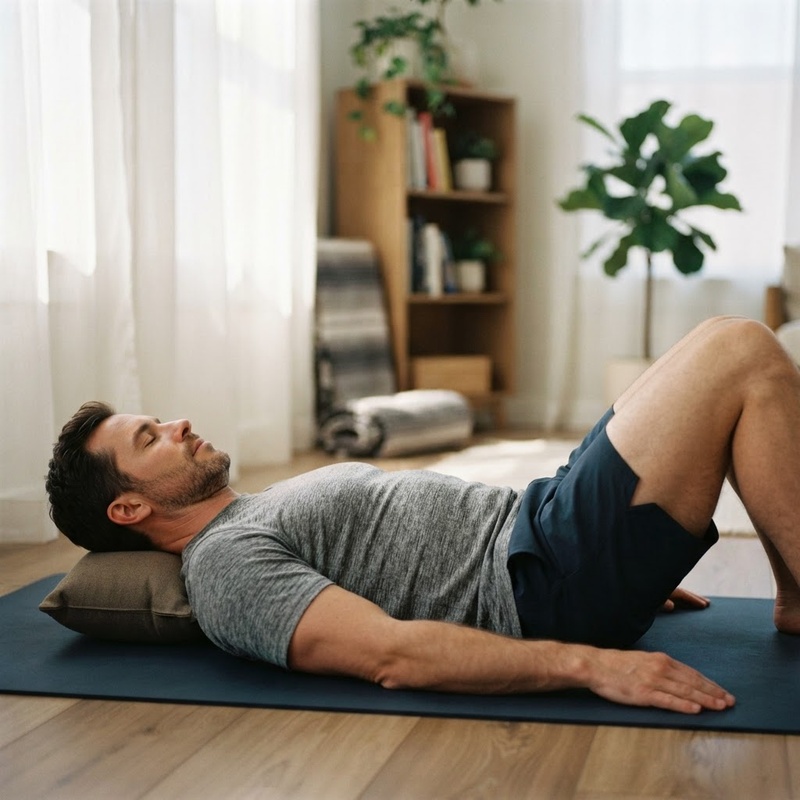
Pelvic floor health is frequently discussed in the context of women's healthcare, particularly surrounding pregnancy and postpartum recovery. However, the pelvic floor is an equally crucial anatomical structure in male physiology. For decades, clinical research has examined how targeted pelvic floor muscle training—commonly known as Kegel exercises—can support urinary control, core stability, and sexual health in men. Despite growing public awareness, misconceptions persist regarding how these exercises work, who can benefit from them, and what results are supported by scientific literature.
Pelvic floor health is frequently discussed in the context of women's healthcare, particularly surrounding pregnancy and postpartum recovery. However, the pelvic floor is an equally crucial anatomical structure in male physiology. For decades, clinical research has examined how targeted pelvic floor muscle training—commonly known as Kegel exercises—can support urinary control, core stability, and sexual health in men. Despite growing public awareness, misconceptions persist regarding how these exercises work, who can benefit from them, and what results are supported by scientific literature.
Understanding the physiological role of the pelvic floor and reviewing clinical evidence provides a clear, practical perspective on male pelvic health. While pelvic floor exercises are not a quick solution for every urological or sexual health concern, high-quality research demonstrates that structured muscle training offers meaningful support for many men. This guide explores the anatomy of the male pelvic floor, analyzes current clinical evidence, outlines proper exercise techniques, and provides realistic guidelines for integrating pelvic floor training into a comprehensive wellness routine.
Understanding the Male Pelvic Floor Architecture
The male pelvic floor consists of a complex network of muscles, ligaments, and connective tissue that forms a supportive hammock across the base of the pelvis. This muscular bowl spans from the pubic bone at the front to the tailbone (coccyx) at the back, and between the sit bones (ischial tuberosities) laterally. These muscles perform several vital physiological functions simultaneously, supporting pelvic organs, assisting in urinary and bowel continence, and actively contributing to sexual response.
The pelvic floor musculature is broadly divided into deep and superficial layers, each playing distinct roles in male health:
- The Levator Ani Group: This deep layer includes the pubococcygeus, puborectalis, and iliococcygeus muscles. Together, they support the bladder, prostate, and rectum. The puborectalis creates a muscular sling around the junction of the rectum, helping maintain bowel control, while the pubococcygeus supports the bladder neck and prostate.
- The Sphincteric Mechanism: The external urethral sphincter works in coordination with the deep pelvic floor muscles to maintain urinary continence. When intra-abdominal pressure increases—such as during a cough, sneeze, or heavy lifting—these muscles contract reflexively to compress the urethra and prevent involuntary urine leakage.
- Superficial Perineal Muscles: This layer includes the bulbospongiosus and ischiocavernosus muscles. The bulbospongiosus surrounds the base of the penis and plays a key role during sexual arousal and ejaculation. It helps compress the deep dorsal vein of the penis, impeding blood outflow to help maintain erectile rigidity, and rhythmically contracts during ejaculation. The ischiocavernosus muscle anchors the erectile tissue to the pelvic bone and assists in stabilizing an erection.
Over time, various factors can weaken or strain these pelvic muscles. Age-related muscle loss, prostate surgery (such as radical prostatectomy), chronic coughing, persistent constipation requiring straining, heavy weightlifting without proper breath support, and prolonged sedentary behavior can all contribute to reduced muscle tone or coordination. Understanding this underlying anatomical structure helps explain why targeted exercise can be beneficial when weakness occurs.
What Clinical Research Reveals About Male Pelvic Floor Training
Scientific interest in male pelvic floor muscle training (PFMT) has expanded significantly over the past two decades. Clinical trials and systematic reviews have evaluated pelvic floor exercises across several clinical domains, providing valuable insight into their efficacy and practical limitations.
1. Support for Erectile Function and Rigidity
One of the most widely cited clinical trials regarding male pelvic floor exercises was conducted by researchers at the University of the West of England (Dorey et al., published in the BJU International). The study evaluated men aged 20 and older who were experiencing mild-to-moderate erectile dysfunction. Participants were divided into groups receiving structured pelvic floor muscle exercises paired with biofeedback and lifestyle guidance, or lifestyle modifications alone.
After six months, the group performing pelvic floor exercises demonstrated significant improvements in erectile firmness and maintenance compared to the control group. Researchers concluded that strengthening the bulbospongiosus and ischiocavernosus muscles helped improve vascular entrapment during arousal. Systematic reviews have supported these findings, indicating that pelvic floor muscle training can serve as a beneficial first-line approach or adjunctive strategy for men experiencing age-related or neuromuscular reductions in erectile quality.
2. Recovery of Post-Prostatectomy Urinary Continence
Prostate surgery, particularly radical prostatectomy for prostate cancer, often affects surrounding nerve pathways and sphincteric structures, leading to temporary post-operative urinary incontinence. Extensive clinical research shows that perioperative pelvic floor rehabilitation—initiating exercises both prior to surgery and during recovery—accelerates the return of urinary control.
Clinical guidelines published by major urological associations consistently recommend pelvic floor muscle training for post-prostatectomy recovery. Controlled trials indicate that men who participate in structured pelvic exercise programs under physical therapy guidance regain continence faster and report better overall quality of life outcomes than those who do not undergo training.
3. Management of Ejaculatory Timing and Control
Emerging research has also investigated the role of pelvic floor training in ejaculatory control. Because the bulbospongiosus muscle contracts rhythmically during ejaculation, gaining voluntary control and awareness over this region may assist men who experience premature ejaculation. Clinical studies evaluating men enrolled in multi-week pelvic floor physical therapy programs observed measurable increases in ejaculatory latency time and reported improved conscious control during intimacy.
While research continues to evolve, current clinical consensus emphasizes that pelvic floor exercises are most effective when neuromuscular weakness or lack of motor awareness is a contributing factor. For conditions rooted in primary hormonal, advanced vascular, or psychological factors, pelvic floor training works best as part of a broader, comprehensive clinical care strategy.
How to Locate and Engage the Correct Pelvic Floor Muscles
The single most common challenge men face when beginning Kegel exercises is identifying the correct muscle group. Studies show that up to half of individuals performing pelvic floor exercises independently initially contract the wrong muscles—often engaging their abdominal wall, gluteal muscles, or inner thighs instead, or inadvertently straining downward rather than pulling upward.
To ensure proper engagement, men can utilize several reliable techniques to isolate the pelvic floor:
- The Urinary Stream Technique (For Identification Only): While urinating, attempt to slow or temporarily stop the flow of urine mid-stream. The muscles engaged during this action are your pelvic floor muscles. It is critical to note that this technique should only be used once or twice to identify the sensation. Stopping urine flow regularly during voiding is not recommended, as it can disrupt normal bladder reflexes.
- The Internal Lift Cue: Imagine trying to pull your testicles inward and upward toward your abdomen, or contract the anus as if holding back gas without squeezing your buttocks or thighs. You should feel a distinct lifting sensation around the base of the penis and rectum.
- Mirror Observation: Standing in front of a mirror without clothing, contract your pelvic muscles. If performed correctly, you may observe the base of the penis move slightly inward toward the abdomen and the scrotum rise subtly.
Common Execution Mistakes to Avoid
Achieving proper technique requires mindful execution. Avoid these frequent errors during practice:
- Holding Your Breath: Breath-holding increases intra-abdominal pressure, pushing down on the pelvic floor rather than lifting it. Maintain steady, rhythmic breathing throughout every contraction.
- Squeezing Surrounding Muscles: Placing a hand gently on your stomach, thighs, or buttocks can help verify that these areas remain relaxed while your pelvic floor engages.
- Bearing Down: Straining or pushing downward as if having a bowel movement puts unnecessary stress on the pelvic tissue. Focus exclusively on an inward and upward lifting motion.
If you find it difficult to identify or contract these muscles, consulting a licensed clinician or specialized pelvic floor physical therapist can be highly valuable. Professionals can utilize biofeedback or targeted guidance to help master correct motor control.
Designing a Safe, Progressive, and Sustainable Routine
Like any muscular conditioning program, pelvic floor training requires consistency, appropriate progression, and adequate rest. The pelvic floor comprises both slow-twitch muscle fibers (responsible for continuous endurance) and fast-twitch muscle fibers (responsible for rapid contraction during sudden pressure changes). A comprehensive routine trains both fiber types.
Sample Evidence-Based Exercise Protocol
A standard clinical pelvic floor training program incorporates two main contraction types performed daily or every other day:
- Sustained Contractions (Endurance Training):
- Gently contract and lift your pelvic floor muscles.
- Hold the contraction for 3 to 5 seconds while breathing naturally.
- Fully release and relax the muscles for 3 to 5 seconds. Relaxation between contractions is just as important as the squeeze.
- Repeat for 10 repetitions per set.
- Quick Contractions (Power Training):
- Contract your pelvic floor muscles quickly and firmly for 1 second.
- Immediately release the contraction fully for 1 second.
- Repeat for 10 rapid repetitions.
Progressing Your Routine Over Time
When starting out, perform these exercises while lying flat on your back or sitting comfortably in a supportive chair. In these positions, gravity places minimal stress on the pelvic floor, making it easier to isolate the correct muscles. As endurance and strength improve over several weeks, you can progress to performing contractions while standing or walking.
Aim for 2 to 3 sets per day. A typical progression gradually increases the duration of sustained holds from 5 seconds up to 10 seconds, always maintaining a 1:1 or 1:2 ratio between contraction and rest.
Recognizing the Importance of Relaxation and Rest
More is not always better when it comes to muscle conditioning. Over-exercising the pelvic floor or failing to relax completely between contractions can lead to a hypertonic (overly tight) pelvic floor. A hypertonic pelvic floor can cause pelvic discomfort, urinary frequency, hesitancy, or pain during intimacy. If you experience aching or difficulty urinating, pause the exercises and consult a healthcare provider for an evaluation.
Realistic Timelines, Limitations, and When to Consult a Doctor
Patience and consistency are key when undertaking pelvic floor muscle training. Neuromuscular adaptations take time. Clinical studies consistently indicate that most men begin noticing measurable improvements in urinary control or muscle tone after 6 to 12 weeks of regular practice. Results vary among individuals based on baseline health, age, adherence, and underlying anatomy.
It is equally important to understand the scope and limitations of exercise therapy. While pelvic floor exercises provide substantial support for neuromuscular weakness, they are not a universal solution for all sexual or urinary health conditions. For example, erectile difficulties stemming from arterial disease, low testosterone, or medication side effects require targeted medical diagnosis and management.
Prior to starting any new exercise routine for urinary or sexual health, scheduling a formal assessment with a qualified healthcare provider is strongly recommended. A licensed clinician can help identify root causes, rule out underlying medical conditions, and determine whether pelvic floor training or complementary clinical options are best suited to your health goals.
Taking a Proactive Approach to Your Sexual and Urinary Health
Pelvic floor health is a vital component of overall male wellness that deserves attentive, evidence-based care. By understanding how these muscles function and practicing proper contraction techniques, men can take an active, informed role in supporting their long-term urinary continence and sexual vitality.
Every individual's health profile is unique. Integrating daily pelvic floor exercises alongside professional clinical guidance ensures tailored care designed for optimal outcomes. To explore comprehensive care options, discuss personal health goals, or learn more about personalized treatment plans, visit EOS Health Men's Sexual Health Care to connect with a licensed healthcare provider today.
Glossary of Pelvic Health Terms
Bulbospongiosus Muscle
A superficial muscle of the male perineum that surrounds the base of the penis, aiding in maintaining erectile rigidity and contracting rhythmically during ejaculation.
Levator Ani
A broad muscle group forming the primary portion of the pelvic floor, consisting of the pubococcygeus, puborectalis, and iliococcygeus muscles that support pelvic organs and maintain continence.
Pelvic Floor Muscle Training (PFMT)
A structured regimen of repetitive voluntary contractions and relaxations of the pelvic floor muscles designed to improve muscle tone, strength, endurance, and neuromuscular coordination.
Hypertonic Pelvic Floor
A condition in which the pelvic floor muscles remain in a state of continuous or excessive tension, unable to fully relax, which can cause discomfort, urinary hesitancy, or pelvic pain.
Post-Prostatectomy Incontinence
Involuntary loss of urine following surgical removal of the prostate gland, often resulting from temporary weakness or trauma to the sphincteric structures and surrounding pelvic tissue.
Sources
faq
Common questions, answered.
How long does it take to see results from male Kegel exercises?
Most clinical studies indicate that noticeable improvements in urinary control or pelvic floor strength typically take 6 to 12 weeks of regular, daily practice. Consistency and correct technique are key factors in achieving optimal outcomes.
Can Kegel exercises help with erectile dysfunction?
Research suggests that strengthening the pelvic floor muscles—specifically the bulbospongiosus and ischiocavernosus—can help support erectile maintenance by helping trap blood within the erectile tissue during arousal. However, Kegels are most effective for cases involving muscular or mild neuromuscular weakness rather than severe vascular or hormonal issues.
How often should men perform Kegel exercises each day?
A standard clinical recommendation is performing 2 to 3 sets per day, with each set consisting of about 10 sustained contractions (holding 3 to 10 seconds) and 10 quick contractions. It is important to avoid overtraining and allow muscles time to rest between sessions.
Can doing too many Kegel exercises cause harm or muscle tightness?
Yes. Over-exercising the pelvic floor or failing to relax muscles completely between squeezes can lead to a hypertonic (overly tight) pelvic floor. Symptoms of a hypertonic pelvic floor include pelvic aching, urinary frequency, hesitancy, or discomfort during intimacy.
How do I know if I am engaging the correct pelvic floor muscles?
You can identify the correct muscles by attempting to stop your urine stream mid-flow (for identification only, not as a daily exercise) or by imagining drawing your testicles inward and upward toward your pelvis without squeezing your buttocks, thighs, or abdominal muscles.
Should I do Kegel exercises while urinating?
No. Stopping your urine stream mid-flow should only be done once or twice to identify the muscle feeling. Routinely doing Kegels while urinating can disrupt natural bladder reflexes and lead to incomplete bladder emptying or urinary tract complications.
Are Kegel exercises recommended after prostate surgery?
Yes. Clinical urology guidelines frequently recommend pelvic floor muscle training both before and after prostate surgery (such as radical prostatectomy) to help accelerate the recovery of urinary continence under professional guidance.
Can pelvic floor exercises assist with ejaculatory control?
Clinical studies indicate that gaining voluntary control over the bulbospongiosus muscle through pelvic floor training can help some men improve conscious control during intimacy and support ejaculatory timing.
Take your health off the back burner.™
Start free consultationwhat are you waiting for?
You're one click away from a new you.
Fill out our brief form and a licensed physician will evaluate which treatment plan is best for you.