Lubricants Explained: Water-, Silicone-, and Oil-Based Options
Discover lubricants explained: water-, silicone-, and oil-based options. Learn about pH, osmolality, barrier safety, and personal comfort with EOS Health.
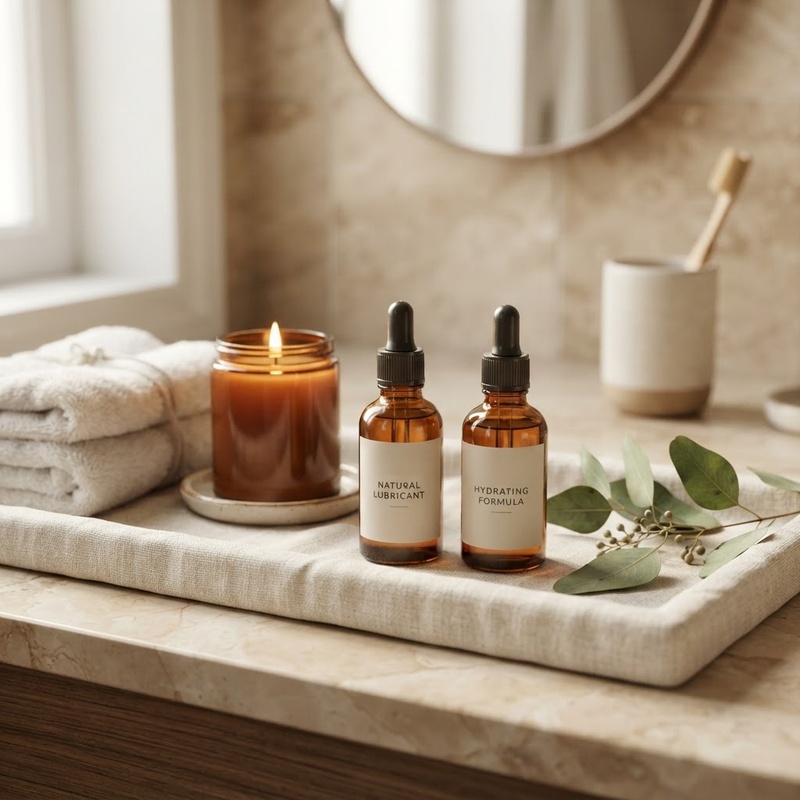
Intimate comfort is a foundational component of overall sexual health, yet many women feel uncertain when selecting a personal lubricant. Whether you are seeking to enhance pleasure, ease friction during intimacy, or manage changes in natural lubrication due to hormonal shifts, personal lubricants offer valuable support. However, with dozens of products lining store shelves, understanding which option best suits your body can feel overwhelming. Personal lubricants are generally classified into three primary categories based on their core formulation: water-based, silicone-based, and oil-based. Each type possesses distinct characteristics regarding longevity, feel, barrier compatibility, and clean-up.
Intimate comfort is a foundational component of overall sexual health, yet many women feel uncertain when selecting a personal lubricant. Whether you are seeking to enhance pleasure, ease friction during intimacy, or manage changes in natural lubrication due to hormonal shifts, personal lubricants offer valuable support. However, with dozens of products lining store shelves, understanding which option best suits your body can feel overwhelming. Personal lubricants are generally classified into three primary categories based on their core formulation: water-based, silicone-based, and oil-based. Each type possesses distinct characteristics regarding longevity, feel, barrier compatibility, and clean-up.
Beyond basic feel and texture, subtle biochemical properties like osmolality and pH balance play a critical role in tissue safety and vaginal microbial health. Furthermore, while lubricants provide immediate topical comfort, they are intended to complement—rather than substitute—a comprehensive medical evaluation when underlying factors like hormonal imbalances or pelvic floor tension are present. In this guide, the clinical team at EOS Health breaks down the science of personal lubricant bases, key ingredient considerations, physiological safety flags, and how to know when it is time to consult a healthcare provider for personalized sexual wellness support.
1. Understanding the Three Core Lubricant Bases
Selecting the right lubricant base depends on your personal preferences, the type of sexual activity, your choice of barrier protection, and whether you are using intimate toys. Understanding how each base behaves on the skin and interacts with materials ensures both safety and comfort.
Water-Based Lubricants: Versatile, Accessible, and Easy to Clean
Water-based lubricants are the most widely recommended and used personal lubricants in clinical practice. They are formulated by suspending water-soluble polymers, such as hydroxyethylcellulose or xanthan gum, in a purified water base to mimic natural physiological secretions.
Key Advantages: Water-based formulas are universally compatible with all barrier methods, including latex, polyisoprene, and polyurethane condoms, as well as dental dams. They are also safe to use with all adult toys, regardless of material—including silicone, glass, metal, or elastomer. Cleaning up after intimacy is simple, as water-based formulas rinse off easily with warm water and do not stain bed linens or clothing.
Considerations: Because water naturally evaporates when exposed to air and body heat, water-based lubricants absorb into skin over time and may require periodic reapplication during extended intimacy. Additionally, some commercially available water-based products contain additives, preservatives, or high concentrations of glycerin that may trigger sensitivity in individuals with reactive vaginal tissue.
Silicone-Based Lubricants: Long-Lasting and Waterproof Comfort
Silicone-based lubricants consist of silicone polymers, such as dimethicone, cyclomethicone, or cyclopentasiloxane. Unlike water-based products, silicone formulas do not contain water and do not absorb into skin or mucosal membranes.
Key Advantages: Because silicone does not evaporate or absorb, it provides exceptional longevity and a ultra-slick texture. A small amount goes a long way, making it ideal for women who experience significant vaginal dryness or who participate in prolonged intimate sessions without needing constant reapplication. Silicone is also completely water-resistant, making it a popular option for intimacy in the shower or bath.
Considerations: Silicone lubricants are completely safe to use with latex and polyisoprene condoms. However, they should never be paired with silicone intimate toys. Because like dissolves like, silicone lubricant can bond with and permanently degrade the smooth surface of silicone toys, creating micro-pores that harbor bacteria. Furthermore, removing silicone lubricant requires thorough washing with mild soap and warm water, as plain water will not break down the silicone layer.
Oil-Based Lubricants: Rich Texture with Crucial Safety Warnings
Oil-based lubricants utilize natural plant oils (such as coconut, sweet almond, or jojoba oil) or synthetic petroleum-derived substances (such as mineral oil or petroleum jelly). While they offer a rich, cushiony glide, they come with significant safety caveats that every user should understand.
Key Advantages: Oils break down very slowly, providing long-lasting friction reduction. Many individuals appreciate natural plant oils for external vulvar massage or outer labial hydration due to their rich moisturizing feel.
Crucial Safety Warnings: The primary danger of oil-based lubricants is their destructive interaction with latex and polyisoprene condoms. Studies demonstrate that exposure to mineral oil or petroleum jelly can weaken latex structural integrity in as little as 60 seconds, leading to microscopic tears, condom failure, and an increased risk of unintended pregnancy or STI transmission. Additionally, oil-based substances are difficult to wash out of the vaginal canal, which can trap bacteria, disrupt normal self-cleaning mechanisms, and increase the risk of bacterial vaginosis (BV) or fungal infections.
2. The Science of Mucosal Health: Osmolality and pH Balance
The vaginal tissue is a delicate, highly permeable mucous membrane that responds dynamically to its local chemical environment. When evaluating a personal lubricant, checking the formulation's osmolality and pH balance is essential for preserving mucosal health and preventing tissue irritation.
Why Osmolality Matters for Intimate Tissues
Osmolality refers to the concentration of solute particles (such as salts, sugars, and humectants) dissolved in a liquid. Human vaginal secretions naturally maintain an osmolality ranging between 260 and 290 milliosmoles per kilogram (mOsm/kg), representing an isotonic environment.
When a lubricant with high osmolality (hyperosmolar) is applied to vaginal tissue, an osmotic gradient is created. Water is rapidly drawn out of the surrounding vaginal epithelial cells into the lubricant mixture in an attempt to balance solute concentrations. This process causes mucosal cells to shrink, dehydrate, and break down.
Clinical research indicates that hyperosmolar lubricants—often those containing high levels of glycerin or propylene glycol, with osmolalities exceeding 2,000 mOsm/kg—can strip the epithelial lining, cause localized burning or irritation, and compromise mucosal defense barriers. The World Health Organization (WHO) explicitly recommends that personal lubricants intended for intimate use should ideally maintain an osmolality below 1,200 mOsm/kg, with optimal iso-osmolar formulations matching natural physiological fluids (~300–400 mOsm/kg).
Maintaining the Acidic Vaginal Microbiome
A healthy reproductive-age vaginal environment is naturally acidic, maintaining a pH between 3.8 and 4.5. This protective acidity is produced and maintained by beneficial Lactobacillus species, which generate lactic acid to create a hostile environment for pathogenic bacteria and fungi.
Applying lubricants with an elevated pH (above 4.5 or neutral/alkaline levels) can temporarily neutralize vaginal acidity. Disruption of the acidic baseline can suppress beneficial lactobacilli, creating an environment where opportunistic pathogens like Gardnerella vaginalis or yeast organisms proliferate. When choosing a lubricant, selecting products clearly labeled as pH-balanced for vaginal health (pH 3.8–4.5) supports your body's natural microbial defenses.
3. Ingredient Considerations: What to Look For and What to Avoid
Reading ingredient labels on personal lubricants is just as important as reading labels on skincare products. Fragile mucosal tissue absorbs chemical compounds far more readily than keratinized skin elsewhere on the body.
Ingredients to Approach with Caution
- Glycerin: A sugar alcohol used as a humectant to retain moisture. While glycerin provides a smooth texture, high concentrations increase product osmolality. Furthermore, in individuals prone to recurrent yeast infections, residual glycerin broken down into simple sugars may encourage Candida overgrowth.
- Propylene Glycol: A synthetic solvent and humectant commonly found in water-based formulas. It is a well-documented contact sensitizer that can cause tissue stinging, redness, or burning in sensitive individuals.
- Parabens (Methylparaben, Propylparaben): Synthetic preservatives used to prevent bacterial contamination in water-based formulas. Parabens can trigger allergic contact dermatitis in sensitive tissue.
- Chlorhexidine: An antibacterial agent included in certain surgical glides and lubricating gels that can disrupt the beneficial vaginal flora when used regularly for personal intimacy.
- Synthetic Fragrances and Flavorings: Added scents or sweet flavorings often contain complex alcohol compounds, phthalates, or allergens that cause mucosal inflammation and allergic reactions.
- Warming or Tingling Agents: Ingredients such as menthol, capsaicin, or L-arginine added for sensation enhancement can cause severe mucosal burning, tissue hyper-reactivity, and painful inflammation.
Nourishing and Clean Ingredient Choices
When reviewing lubricant labels, look for minimalistic, clean formulations. Highly compatible ingredients include plant-derived cellulose gums (such as hydroxyethylcellulose) for smooth glide, organic aloe vera gel, sodium hyaluronate (hyaluronic acid) for deep tissue hydration, and lactic acid to ensure proper pH buffering.
4. When Lubricants Are Not Enough: Addressing Underlying Causes of Dryness
While personal lubricants provide instantaneous mechanical reduction of friction, they are surface-level solutions. Persistent vaginal dryness, discomfort, or dyspareunia (painful intercourse) often stems from underlying physiological, hormonal, or structural factors that require clinical evaluation.
Hormonal Shifts Across the Lifespan
Estrogen is the primary hormone responsible for maintaining vaginal tissue elasticity, mucosal thickness, blood flow, and natural lubrication. When estrogen levels drop, vaginal tissues can become thin, dry, fragile, and prone to inflammation—a condition clinically known as vulvovaginal atrophy or genitourinary syndrome of menopause (GSM).
Common scenarios involving hormonal fluctuation include:
- Perimenopause and Menopause: Declining ovarian estrogen production leads to progressive tissue thinning and reduced baseline lubrication.
- Postpartum and Breastfeeding: Elevated prolactin levels during lactation suppress estrogen production, creating temporary menopausal-like dryness in young mothers.
- Hormonal Contraceptive Use: Low-dose combined oral contraceptives or progestin-only birth control methods can reduce circulating bioavailable estrogen, altering lubrication quality.
- Cancer Therapies: Treatments such as chemotherapy, pelvic radiation, or aromatase inhibitors for hormone-receptor-positive breast cancer abruptly lower systemic estrogen.
Non-Hormonal Causes of Intimate Discomfort
Discomfort during intimacy is not solely a matter of moisture. Other contributing factors include:
- Systemic Medications: Antihistamines, decongestants, certain antidepressants (SSRIs), and blood pressure medications can reduce systemic fluid secretions, including vaginal lubrication.
- Pelvic Floor Dysfunction: Overactive or hypertonic pelvic floor muscles can cause involuntary muscle guarding and deep pelvic pain during penetration, which lubricant alone cannot relieve.
- Skin and Infectious Conditions: Dermatological conditions like lichen sclerosus, eczema, or active subclinical infections require precise diagnosis and targeted medical therapy.
5. Partnering with Your Healthcare Provider for Comprehensive Care
It is important to view sexual wellness as an integral component of your overall healthcare. Experiencing pain or severe dryness during intimacy is not something you must accept as a normal part of aging or life transitions. Clinical research emphasizes that early medical evaluation allows women to access effective treatments that restore tissue integrity and comfortable intimacy.
A comprehensive clinical evaluation by a healthcare provider can identify the root cause of discomfort and explore evidence-based medical options. Depending on your individual health profile, clinical solutions may include targeted low-dose localized vaginal estrogen therapy, non-hormonal prescription vaginal moisturizers, pelvic floor physical therapy referrals, or adjustments to existing medications.
If you are experiencing persistent vaginal dryness, discomfort during intimacy, or hormonal changes affecting your sexual wellness, you do not have to navigate it alone. The compassionate clinical team at EOS Health is dedicated to offering personalized, evidence-based care in a supportive environment. Explore our comprehensive Women's Sexual Health services to connect with a licensed medical provider and receive a tailored evaluation designed for your unique body and needs.
Osmolality
The measure of solute concentration in a fluid, expressed as milliosmoles per kilogram (mOsm/kg); iso-osmolar lubricants match natural body fluid concentrations to protect tissue hydration.
Vaginal Microbiome
The complex ecosystem of microorganisms residing in the vaginal canal, predominantly composed of lactic-acid-producing Lactobacillus species that maintain an acidic defense barrier.
Vulvovaginal Atrophy
The thinning, drying, and inflammation of vaginal and vulvar tissues caused by reduced estrogen levels, commonly occurring during perimenopause, menopause, or postpartum lactation.
Dyspareunia
The clinical term for persistent or recurrent genital pain that occurs just before, during, or after sexual intercourse.
Iso-osmolar
Describing a solution that possesses the same osmotic pressure and solute concentration as biological tissue fluids (~260–290 mOsm/kg), preventing cellular shrinkage or swelling.
Humectant
A substance used in cosmetics and intimate lubricants (such as glycerin or aloe vera) to attract and retain moisture from the surrounding environment.
Sources
faq
Common questions, answered.
Can I use water-based lubricant with silicone adult toys and latex condoms?
Yes. Water-based lubricants are universally compatible with all barrier materials, including latex, polyisoprene, and polyurethane condoms, as well as intimate toys made from silicone, glass, or plastic.
Why does some personal lubricant cause a burning or stinging sensation upon application?
A stinging sensation usually indicates that the lubricant has a high osmolality (hyperosmolar formula) or contains irritating additives such as propylene glycol, synthetic fragrances, or warming agents. Hyperosmolar products draw water out of fragile mucosal cells, leading to localized dehydration and burning.
Is coconut oil safe to use as an intimate lubricant?
While some women use organic coconut oil for external labial moisture, it carries significant risks. Coconut oil will degrade latex and polyisoprene condoms within seconds, leading to condom rupture. Furthermore, oil is difficult to cleanse from the vaginal canal and may disrupt internal flora in yeast-prone individuals.
What does osmolality mean, and why is it important when choosing a lubricant?
Osmolality measures the concentration of dissolved solutes in a liquid. Lubricants with osmolality levels close to natural vaginal fluids (~260–290 mOsm/kg) protect cellular integrity. The World Health Organization recommends choosing lubricants with an osmolality below 1,200 mOsm/kg to prevent mucosal damage and irritation.
How does vaginal pH affect my choice of personal lubricant?
A healthy vaginal environment is naturally acidic, maintaining a pH between 3.8 and 4.5 to nurture beneficial Lactobacillus bacteria. Using lubricants with higher, non-buffered pH levels can disrupt the microbial balance and increase susceptibility to bacterial vaginosis or yeast overgrowth.
Can personal lubricants treat vaginal dryness caused by menopause?
Personal lubricants offer temporary friction reduction during sexual activity, but they do not alter or restore dry, thinned vaginal tissue. Menopausal tissue changes (vulvovaginal atrophy) respond best to medical evaluation, which may include localized hormone therapies or non-hormonal clinical treatments prescribed by a healthcare provider.
Will using a personal lubricant affect my chances of getting pregnant?
Certain conventional lubricants with high osmolality, low pH, or sperm-toxic preservatives (like parabens) can slow sperm motility or reduce viability. If you are actively trying to conceive, look for specialized fertility-friendly lubricants designed with sperm-neutral pH and isotonic osmolality.
When should I consult a doctor about intimacy discomfort or dryness?
You should consult a healthcare provider if dryness is persistent, if intimacy is painful (dyspareunia), or if you experience associated symptoms such as burning, itching, unusual discharge, or bleeding after intercourse. A provider can evaluate underlying hormonal, dermatological, or pelvic floor causes and provide targeted treatments.
You deserve to feel this way.™
Start free consultationwhat are you waiting for?
You're one click away from a new you.
Fill out our brief form and a licensed physician will evaluate which treatment plan is best for you.