Retinoids Around the Eyes: Approaching Delicate Skin
Learn how to safely apply retinoids around the eyes. Discover buffering techniques, frequency guidelines, and gentle alternatives for your delicate skin.
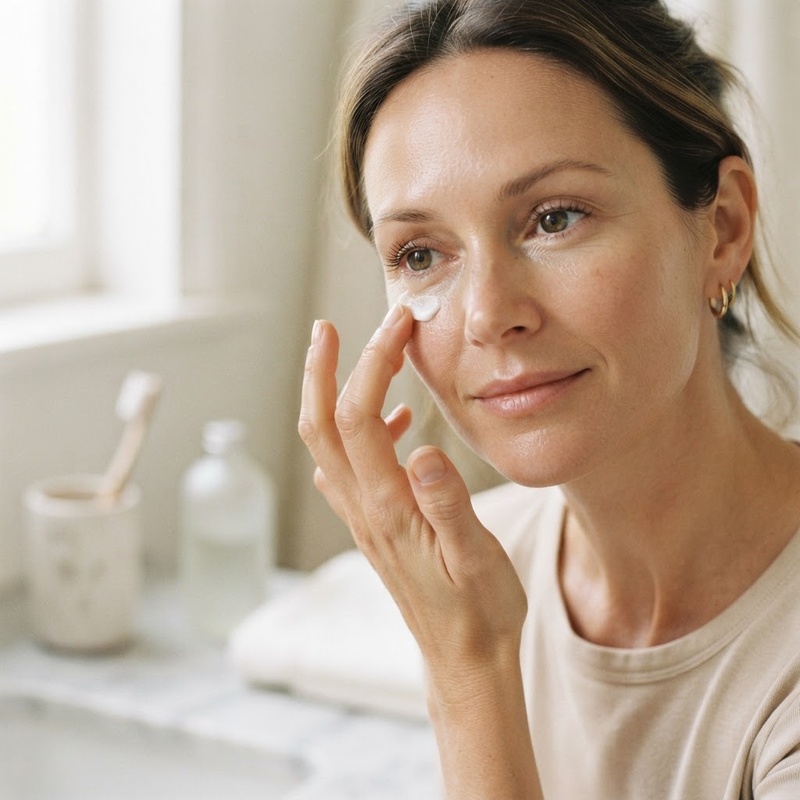
Navigating topical skincare requires a nuanced understanding of facial anatomy, particularly when introducing active ingredients to distinct skin zones. Among the various topical agents in dermatological science, vitamin A derivatives—collectively known as retinoids—are recognized for their ability to support cellular turnover and promote collagen structure. However, when application moves toward the periocular region—the delicate tissue surrounding the eyes—the margin for error narrows. The skin in this region possesses unique physiological characteristics that render it far more susceptible to irritation, dryness, and barrier disruption than the skin on the cheeks, forehead, or chin.
Navigating topical skincare requires a nuanced understanding of facial anatomy, particularly when introducing active ingredients to distinct skin zones. Among the various topical agents in dermatological science, vitamin A derivatives—collectively known as retinoids—are recognized for their ability to support cellular turnover and promote collagen structure. However, when application moves toward the periocular region—the delicate tissue surrounding the eyes—the margin for error narrows. The skin in this region possesses unique physiological characteristics that render it far more susceptible to irritation, dryness, and barrier disruption than the skin on the cheeks, forehead, or chin.
For many individuals seeking to support healthy skin aging, addressing fine lines, texture, and elasticity around the eyes is a primary wellness goal. Yet, applying potent topical retinoids directly to thin periocular skin can trigger inflammatory responses, including redness, flaking, and severe localized dryness. Understanding how retinoids interact with the cutaneous barrier and how periocular anatomical structure differs from other facial regions allows for a more balanced approach. By combining cautious titration, proper moisture buffering, and clinical guidance, individuals can thoughtfully incorporate topical therapies into their skincare routine while respecting delicate periocular tissue.
Understanding the Anatomy of Periocular Skin
To appreciate why retinoid application near the eyes demands heightened caution, one must examine the specialized anatomy of periocular skin. Cutaneous tissue across the human body varies in thickness, vascularity, and follicular density. The skin covering the eyelids is officially recognized as the thinnest epidermal layer on the human body, often measuring less than 0.5 millimeters in thickness. In contrast, facial skin in regions such as the cheeks or forehead typically measures between 1.0 and 2.0 millimeters. This structural variance fundamentally alters how topical compounds penetrate and affect underlying tissue.
In addition to reduced thickness, periocular skin contains significantly fewer sebaceous (oil-producing) glands compared to the central face. Sebaceous glands secrete sebum, a lipid mixture essential for maintaining the natural skin barrier. Sebum coats the stratum corneum, locking in hydration and protecting tissue against external irritants and transepidermal water loss (TEWL). Because the area surrounding the eyes produces less protective lipid content, its barrier is inherently fragile. Consequently, topically applied active compounds diffuse rapidly through thin skin, leading to higher localized concentrations and elevated irritation risks.
The Role of the Orbital Rim and Meibomian Glands
Beyond epidermal thinness, the placement of underlying anatomical structures plays a pivotal role in safety. The periocular zone overlies the orbicularis oculi muscle and sits adjacent to the ocular surface. Along the eyelid margins reside specialized sebaceous glands known as meibomian glands. These glands secrete essential lipids into the tear film, preventing rapid evaporation of lacrimal fluid and maintaining eye lubrication.
Dermatological observations suggest active retinoid compounds can migrate across the skin surface through facial movements and lipid spreading. If potent retinoids migrate too close to eyelid margins, they may affect meibomian gland function, leading to temporary dryness or irritation on the eye surface. Therefore, respecting anatomical boundaries—specifically remaining along the bony orbital rim rather than moving onto mobile eyelid skin—serves as a critical guideline for safe application.
The Science of Retinoids and Healthy Aging Support
Retinoids represent a class of synthetic and naturally derived vitamin A compounds that bind to specific nuclear receptors within keratinocytes and fibroblasts. When absorbed into the skin, retinoids bind to Retinoic Acid Receptors (RAR) and Retinoid X Receptors (RXR). This interaction influences gene expression, encouraging cellular renewal and supporting structural proteins, including collagen.
In the context of supporting healthy skin aging, retinoids help maintain structural resilience, improve texture, and minimize the appearance of fine lines caused by environmental exposure and natural chronological changes. Clinical literature indicates that consistent use of topical retinoids supports collagen preservation over time. However, achieving these supportive benefits requires sustained cellular adaptation rather than aggressive, high-dose exposure.
Understanding Retinoid Strengths and Conversions
Not all retinoids behave identically on the skin surface. The potency of a retinoid depends on the number of metabolic conversion steps required for the compound to transform into retinoic acid—the bioactive form utilized by skin cells:
- Prescription Tretinoin (Retinoic Acid): Direct bioactive form; binds directly to cellular receptors. Highly active with the highest potential for local skin irritation, requiring professional medical prescription and clinical oversight.
- Retinaldehyde (Retinal): Requires a single enzymatic conversion step into retinoic acid. Offers strong bioactivity with moderate potential for local sensitivity.
- Retinol: Requires two metabolic conversion steps. Popular in over-the-counter preparations due to a balanced profile of efficacy and tolerability.
- Retinyl Esters (e.g., Retinyl Palmitate): Require three conversion steps. Mild with minimal irritation risk, yielding subtle support for skin vitality.
When approaching delicate areas like the periocular zone, selecting an appropriate strength is vital. Using high-potency prescription formulations around the eyes without clinical guidance often leads to compromised barrier function, characterized by redness, peeling, and persistent burning sensations.
Cautious Application: Navigating Retinoid Use Near the Eyes
Integrating retinoids into an eye-care routine requires a deliberate strategy built on restraint, precision, and barrier reinforcement. Rather than treating the eye area with the same concentration used on the rest of the face, clinicians recommend adopting specific anatomical guidelines to safeguard sensitive tissue.
The primary guideline involves establishing clear physical boundaries for application. Dermatological best practices emphasize applying topical retinoid products along the orbital bone—the outer structural rim surrounding the eye socket. This area can be located by feeling the firm bone beneath the cheekbone and brow line. Applying product along this outer perimeter allows active ingredients to diffuse naturally toward the eye area through micro-migration without exposing vulnerable eyelid tissue to excessive concentration.
Step-by-Step Application Protocol
To reduce the likelihood of localized irritation, individuals choosing to apply retinoids near the orbital zone may consider the following structured approach:
- Thorough Cleansing: Begin with a mild, non-stripping cleanser. Ensure skin is completely dry before introducing active topical compounds, as damp skin increases cutaneous permeability and can heighten irritation risks.
- Barrier Shielding: Apply a small amount of a rich emollient moisturizer directly to sensitive zones—such as the inner corners of the eyes and upper eyelids—to create a protective barrier against ingredient drift.
- Micro-Quantity Measurement: Use a minimal amount of retinoid product. A pea-sized amount is sufficient for the whole face; for the orbital perimeter, a fraction of a drop shared between both eyes is adequate.
- Precise Placement: Gently tap product along the lower orbital bone and outer orbital rim using the ring finger. Avoid direct application to upper eyelids or immediate lash lines.
- Moisture Sealing: Follow with a nourishing moisturizer containing ingredients like ceramides, fatty acids, and hyaluronic acid to support lipid restoration.
The Buffering Method and Frequency Guidelines
For individuals with sensitive skin or those introducing retinoids near the eye area for the first time, direct application can prove challenging for the skin barrier. Dermatologists frequently recommend the "buffering method"—also known as "sandwiching"—to moderate the absorption rate and mitigate potential side effects.
The buffering method involves applying a layer of soothing moisturizer prior to retinoid application, allowing it to absorb, and then applying a light layer of retinoid on top. In a full "sandwiching" routine, a second layer of moisturizer is applied over the retinoid. This lipid layer slows down the penetration rate of the active ingredient through the stratum corneum, allowing tissue to adapt gradually while maintaining hydration levels. Studies indicate that buffering does not eliminate retinoid bioactivity, but smooths out the delivery curve, resulting in superior tolerance.
Establishing a Progressive Titration Schedule
Cutaneous adaptation to retinoids—known as retinization—typically requires four to eight weeks. During this period, skin cells adjust their receptor expression and enzyme production. Attempting to use retinoid products daily right from the start around the eye area frequently results in irritant contact dermatitis.
A structured titration schedule provides a safe pathway for testing tolerance:
- Weeks 1 to 2: Apply buffered retinoid once per week along the outer orbital rim. Observe skin carefully over the subsequent 48 hours for signs of persistent redness or flaking.
- Weeks 3 to 4: If skin shows good tolerance without irritation, increase application frequency to twice per week, spacing applications evenly.
- Weeks 5 and Beyond: If the barrier remains intact, frequency may be slowly increased to every other night. Daily application around the eyes is rarely necessary and should only be undertaken if recommended by a healthcare provider.
If at any point during this schedule the periocular skin exhibits stinging or noticeable dryness, application should be suspended immediately until the skin barrier recovers.
Gentle Alternatives and Supporting Hydration
While retinoids offer substantial support for skin structure, they are not the sole effective option for nurturing delicate periocular skin. For individuals who experience recurrent sensitivity, have conditions like rosacea or eczema, or prefer non-retinoid routines, several alternative botanical and peptide-based compounds offer valuable benefits.
Combining non-irritating active ingredients with comprehensive barrier support creates a resilient skincare foundation that fosters smoothness and hydration without compromising delicate eye tissue.
Promising Non-Retinoid Actives
Several gentle ingredients have gained prominence in clinical skincare for their ability to support skin vitality around the eyes:
- Bakuchiol: A botanical compound derived from the seeds of the Psoralea corylifolia plant. Research indicates that bakuchiol functions through similar cellular pathways as retinol to support collagen maintenance and skin firming, while exhibiting lower incidence of erythema and scaling.
- Peptides: Short chains of amino acids that serve as cellular signaling molecules. Specific signal peptides support matrix synthesis and encourage skin elasticity, making them gentle choices for sensitive periocular tissue.
- Niacinamide (Vitamin B3): A multifunctional ingredient that strengthens the skin barrier by stimulating ceramide synthesis, soothing localized inflammation, and reducing transepidermal water loss.
- Hyaluronic Acid & Ceramides: Fundamental hydrating agents. Hyaluronic acid attracts water to plump superficial skin layers, while ceramides restore the intercellular lipid matrix.
Personalized Care and Clinical Guidance
Skincare is deeply individual, and what works effectively for one person may cause irritation for another. Factors such as baseline barrier integrity, underlying dermatological conditions, environmental factors, and hormonal variations all influence how periocular skin responds to active ingredients. Because the eye area is uniquely sensitive, navigating topical options with clinical oversight ensures that your routine remains safe, effective, and tailored to your specific physiological needs.
If you are considering incorporating prescription-strength topical therapies or need guidance on selecting the right formulations for delicate skin, consulting with a qualified healthcare professional is an invaluable step. At EOS Health, our clinical team provides personalized consultations to help you navigate skincare choices safely and confidently. Learn more about our specialized approach to dermatological care and discover tailored treatment options by visiting EOS Health Skincare Services.
Stratum Corneum
The outermost layer of the epidermis, composed of dead skin cells (corneocytes) and lipids, which acts as the primary barrier protecting underlying tissues from dehydration and environmental irritants.
Periocular Region
The anatomical area immediately surrounding the eye, including the upper and lower eyelids, the skin over the orbital bone, and the outer eye corners.
Meibomian Glands
Specialized sebaceous glands located along the margins of the eyelids that secrete lipids to coat the surface of the eye and prevent tear evaporation.
Transepidermal Water Loss (TEWL)
The passive evaporation of water from the inside of the body through the epidermal layers into the surrounding atmosphere, used as a key indicator of skin barrier integrity.
Bakuchiol
A natural botanical extract derived from the Psoralea corylifolia plant that offers antioxidant and skin-supporting properties similar to retinol with reduced risk of skin irritation.
Buffering Method
A skincare technique where a moisturizing layer is applied before or mixed with a potent active ingredient (like a retinoid) to slow absorption and minimize potential irritation.
Sources
faq
Common questions, answered.
Can I apply regular retinol cream under my eyes?
While some general facial retinol products can be used near the eyes, caution is essential. Facial retinoids often contain higher concentrations or formulations designed for thicker skin. When using regular retinol, it is best to apply a very small amount along the outer orbital bone rather than directly beneath the eyes or on the eyelids, and to use the buffering method with a rich moisturizer.
What should I do if retinoid product gets directly into my eye?
If topical retinoid comes into contact with your eye, flush the eye immediately and thoroughly with clean, lukewarm water or sterile saline solution for several minutes. Avoid rubbing the eye. If irritation, redness, pain, or changes in vision persist after flushing, seek evaluation from an eye care professional or healthcare provider immediately.
How does buffering with a moisturizer affect how retinoids work?
Buffering—applying moisturizer before or alongside a retinoid—slows down the rate at which the active ingredient penetrates the skin. This reduces localized irritation and supports barrier function while allowing the compound to deliver supportive benefits to the tissue over time.
Is bakuchiol a safe alternative to retinol around the eyes?
Yes, research indicates that bakuchiol is a gentle, plant-derived compound that supports skin elasticity and smoothness without the characteristic peeling or redness associated with traditional retinoids, making it an excellent option for delicate eye skin.
How often should I apply retinoids around the eye area?
Begin slowly by applying a buffered retinoid once per week along the orbital rim. If your skin demonstrates good tolerance over several weeks, you may gradually increase frequency to twice per week or every other night, monitoring closely for any signs of dryness or redness.
Can retinoids cause dry eyes?
If applied too close to the eyelid margins, retinoids can potentially migrate toward the meibomian glands along the edge of the eyelids, which may lead to temporary eye dryness or irritation. To prevent this, keep application confined to the bony orbital rim away from the lash line.
Can I use prescription tretinoin around my eyes?
Prescription tretinoin is significantly more potent than over-the-counter retinol and carries a higher risk of irritation, particularly on thin periocular skin. Tretinoin should only be used around the eye area under the explicit direction and guidance of a licensed healthcare clinician.
Great skin starts with the right protocol.™
Start free consultationwhat are you waiting for?
You're one click away from a new you.
Fill out our brief form and a licensed physician will evaluate which treatment plan is best for you.