Starting Tretinoin: What the Retinization Period Looks Like
Learn what to expect during the tretinoin retinization period, including managing dryness, skin purging, and tips for a smooth adjustment to topical retinoids.
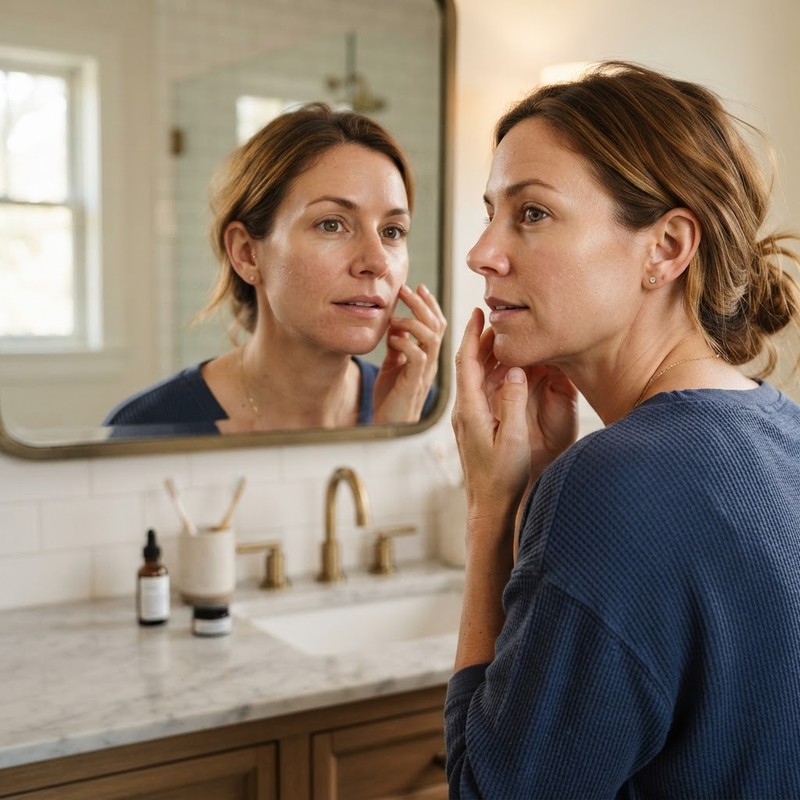
Navigating changes in your skin as an adult woman can feel like a complex journey. Whether you are managing persistent breakouts, working through texture changes, or seeking to support healthy skin aging, taking a proactive approach to your skincare routine is an empowering choice.
Navigating changes in your skin as an adult woman can feel like a complex journey. Whether you are managing persistent breakouts, working through texture changes, or seeking to support healthy skin aging, taking a proactive approach to your skincare routine is an empowering choice. Among clinical options, topical tretinoin stands out as one of the most researched and established ingredients in dermatology. Tretinoin is an FDA-approved prescription topical retinoid with a long history of clinical use. While FDA-approved primarily for the treatment of acne vulgaris, licensed clinicians frequently prescribe tretinoin off-label or in custom formulations to support healthy aging and address visible signs of photoaging, including fine lines and uneven surface texture.
When introducing a potent prescription retinoid into your routine, your skin undergoes an initial adaptation process known as the retinization period. This adjustment phase can bring temporary skin changes, such as dryness, minor flaking, or heightened sensitivity. Understanding the biological mechanisms behind retinization, knowing what to anticipate over the first few weeks, and adopting practical application techniques can help you navigate this transition with confidence and ease.
The Biology of Retinization: What Happens at the Cellular Level
To understand why skin temporarily shifts when starting tretinoin, it helps to look beneath the surface. Tretinoin works at the cellular level by binding to specific nuclear retinoic acid receptors (RARs) in skin cells. This binding signals the skin to accelerate its natural cellular renewal process, encouraging older epidermal cells to shed while fresh cells move upward to the surface.
During this accelerated turnover, the outermost protective layer of skin—the stratum corneum—undergoes rapid reorganization. In typical skin cycles, epidermal renewal takes approximately 28 to 40 days. Under the influence of tretinoin, this cycle speeds up significantly. As new cells push upward before old cells fully disconnect, temporary surface disruption occurs, which can manifest as visible flaking or peeling.
Accelerated Epidermal Renewal
The speed at which cells proliferate during early tretinoin use exceeds the skin's immediate capacity to shed surface debris evenly. This rapid turnover is precisely how tretinoin helps unclog pores and refine texture over time. However, in the initial weeks, this accelerated renewal may cause temporary surface roughness as shedding catches up with production.
Temporary Moisture Barrier Permeability
Along with cell turnover, the lipid matrix that forms your skin's natural moisture barrier experiences a brief transitional period. Lipids such as ceramides, cholesterol, and free fatty acids are temporarily rearranged, which can lead to increased transepidermal water loss (TEWL). Higher TEWL allows moisture to evaporate more quickly from the skin, leading to tight, dry sensations. Research indicates that this barrier alteration is temporary; as skin acclimates over several weeks, barrier integrity restores and lipid synthesis normalizes.
Navigating Common Retinization Symptoms and Timelines
Every individual’s skin response during the retinization phase varies based on factors such as baseline moisture levels, ambient climate, application frequency, and the vehicle formula (cream or gel). Nevertheless, several common experiences are widely reported during the initial adjustment phase.
Dryness and Localized Flaking: Because cell shedding is accelerated, mild to moderate peeling often occurs, particularly around areas with higher movement or delicate skin, such as near the mouth, nose, and jawline.
Mild Redness and Sensitivity: As cellular activity increases and the moisture barrier temporarily thins, the skin may feel warm, appear slightly flush, or feel sensitive when applying routine hydrating products.
The Retinoid Purge: For individuals using tretinoin for acne-prone skin, an initial surge in minor breakouts—often termed a "purge"—may happen during weeks two through four. As cell turnover accelerates, micro-comedones that were already forming under the surface surface sooner than they otherwise would. This temporary surge is distinct from an allergic reaction or severe contact irritation, as it typically resolves as cellular turnover stabilizes.
A Realistic Timeline of Adjustment
Understanding the standard clinical timeline for retinization can offer clarity as your skin adapts:
Weeks 1–2: Initial Onset. You may notice mild tightness or slight dryness after cleansing. Skin may feel somewhat more delicate than usual.
Weeks 3–4: Peak Adjustment. Flaking and localized peeling may become most visible during this window. Minor breakouts associated with purging may appear in areas where you typically experience blemishes.
Weeks 5–6: Barrier Recovery. Transepidermal water loss begins to normalize. Dryness decreases, and sensitivity typically subsides as the moisture barrier strengthens.
Weeks 7–8 and Beyond: Stabilization. The skin barrier reaches acclimation. Skin texture feels smoother, and tolerance to nightly or regular application improves significantly.
Practical Application Strategies to Minimize Irritation
Navigating the retinization period successfully often comes down to application method and pacing. Implementing deliberate, gentle techniques can support your skin barrier while allowing tretinoin to work effectively.
Frequency Ramp-Up
Rather than applying tretinoin every night immediately, clinicians frequently recommend a progressive ramp-up schedule. Starting with two to three applications per week on non-consecutive nights (for instance, Monday and Thursday) gives your skin time to adapt. Over four to six weeks, under clinical supervision, application frequency can be gradually increased to every other night, and eventually to nightly use as tolerated.
The Pea-Sized Dosing Rule
More product does not lead to faster skin benefits; in fact, over-applying tretinoin increases barrier disruption and localized irritation without added efficacy. A single pea-sized amount is sufficient for the entire face. Distribute small dots across your forehead, cheeks, nose, and chin before gently spreading the product evenly.
The Sandwich Technique (Buffering)
For individuals with dry or sensitive skin, the "sandwich technique"—also known as buffering—is an effective strategy to mitigate dryness. This method involves applying a thin layer of hydrating moisturizer, waiting 10 to 15 minutes for it to absorb, applying your pea-sized amount of tretinoin, and finishing with a second layer of moisturizer. Research suggests buffering moderates the rate of drug absorption across the stratum corneum, reducing acute irritation while maintaining long-term therapeutic benefits.
Ensuring Completely Dry Skin
Water on the skin's surface can increase the permeability of topical active ingredients, drawing tretinoin deeper into pores too quickly and heightening skin irritation. After washing your face with a gentle cleanser, pat dry and wait 15 to 20 minutes before applying tretinoin to ensure all moisture has fully evaporated from the upper layers of skin.
Custom Compounded Options
In clinical practice, a licensed provider may also evaluate custom compounded formulations as part of a treatment plan. For example, clinicians sometimes select compounded formulations combining tretinoin with soothing ingredients like niacinamide or hyaluronic acid, or compounded tretinoin and clindamycin combinations for targeted acne support. It is important to note that while individual active ingredients such as tretinoin hold FDA approvals, custom compounded prescription formulations are tailored for specific patients and are not individually FDA-approved. Presentation of compounded options allows clinicians flexibility in designing personalized care plans.
Skincare Routine Adjustments: Ingredients to Pair and Pause
During the retinization phase, your supporting skincare routine should focus on hydration, barrier preservation, and protection. Temporarily adjusting other active ingredients in your regimen helps prevent compounding barrier stress.
Ingredients to Pause Temporarily
To minimize unnecessary irritation, it is advisable to pause physical scrubs, harsh astringents, and exfoliating chemical acids during the first six to eight weeks of tretinoin use. This includes alpha hydroxy acids (AHAs such as glycolic or lactic acid) and beta hydroxy acids (BHAs such as salicylic acid). Benzoyl peroxide should also generally be paused or separated into a morning routine, as using it simultaneously with tretinoin can compromise tretinoin stability and exacerbate skin dryness unless specifically instructed by your clinician.
Ingredients to Embrace
Prioritize simple, nourishing ingredients that reinforce the epidermal barrier. Look for formulations containing ceramides, hyaluronic acid, cholesterol, free fatty acids, and glycerin. Gentle, non-foaming hydrating cleansers help preserve natural skin oils without stripping moisture.
Daily Sun Protection
Topical retinoids thin the outermost stratum corneum during early weeks, which can leave skin more sensitive to ultraviolet light. Daily broad-spectrum sun protection with an SPF of 30 or higher is an indispensable part of any retinoid routine. Reapply sunscreen throughout the day during direct sun exposure to protect skin health.
Addressing Hormonal Factors and Co-Existing Conditions
For adult women, skin changes often intersect with internal hormonal dynamics. Clinicians evaluating skin concerns like persistent hormonal acne may discuss complementary therapeutic avenues, such as oral spironolactone. Spironolactone is an FDA-approved prescription diuretic commonly prescribed off-label by healthcare providers to help manage adult female hormonal acne.
Similarly, for women managing hyperpigmentation or melasma alongside texture concerns, clinicians may evaluate prescription combinations containing active ingredients such as hydroquinone, tranexamic acid, or azelaic acid. Hydroquinone is prescription-only in the United States, and custom blended topical combinations are not FDA-approved. Because pigmentation issues can stem from various underlying factors, women should seek professional evaluation from a licensed healthcare provider rather than attempting to self-diagnose melasma or post-inflammatory hyperpigmentation.
Monitoring Your Progress and When to Consult a Licensed Clinician
Distinguishing normal retinization symptoms from skin intolerance is key to a comfortable experience. While mild flaking, temporary dryness, and minor purging are expected adjustment signs, significant discomfort is a signal to pause and consult your clinician.
If you experience intense burning, persistent severe redness, swelling, oozing, or cracked skin, suspend tretinoin application immediately and contact your healthcare provider. Your clinician can assist by re-evaluating your application frequency, adjusting drug concentration (such as moving from 0.05% to 0.025%), switching from a gel to a cream vehicle, or recommending supportive barrier treatments.
Remember that prescription topical treatments require professional clinical evaluation. A licensed healthcare provider—such as a dermatologist or women's health practitioner—will assess your medical history, skin type, and specific goals to determine the most appropriate regimen for your needs.
Supporting Your Skin's Long-Term Health with Confidence
The retinization period is a brief transitional phase on the path toward supporting healthy, resilient skin. By slowing your application cadence, prioritizing barrier hydration, and maintaining open communication with your provider, you can navigate this adjustment period comfortably and safely.
If you are interested in exploring prescription skincare tailored to your individual skin goals, consider consulting with a licensed healthcare professional. At EOS Health, our clinical team provides comprehensive online evaluations to help you navigate your skin journey with evidence-based guidance. Visit EOS Health Skin Care to connect with a clinician and learn more about personalized skincare options today.
Retinization
The temporary biological adaptation period during which skin acclimates to the accelerated cell turnover induced by topical retinoids like tretinoin.
Tretinoin
An FDA-approved prescription topical retinoid derivative of vitamin A used primarily for acne treatment and prescribed by clinicians off-label to support healthy skin aging.
Transepidermal Water Loss (TEWL)
The rate at which water evaporates through the epidermal skin layer into the atmosphere, which may temporarily increase during early retinoid use.
Stratum Corneum
The outermost layer of the epidermis composed of dead skin cells and lipids, serving as the skin's primary moisture and protective barrier.
Buffering (Sandwich Method)
A skincare application method of layering moisturizer prior to and following retinoid application to moderate absorption and minimize localized irritation.
Sources
faq
Common questions, answered.
What is the retinization period when starting tretinoin?
The retinization period is the initial biological adjustment phase when skin adapts to topical tretinoin. As tretinoin accelerates cellular turnover, skin cells renew more rapidly, which can lead to temporary side effects like mild dryness, peeling, and skin sensitivity during the first several weeks of use.
How long does the tretinoin retinization phase typically last?
For most individuals, the retinization phase lasts between four and eight weeks. As the skin barrier acclimates and transepidermal water loss normalizes, initial symptoms such as flaking and dryness generally decrease, leading to improved skin tolerance.
What is the difference between skin purging and skin irritation?
Skin purging refers to a temporary rise in surface blemishes that occurs as accelerated cell turnover pushes pre-existing micro-comedones to the skin surface sooner. Skin irritation presents as persistent burning, widespread redness, swelling, or scaling. Purging typically occurs in areas where you usually experience breakouts and resolves as turnover stabilizes, whereas severe irritation suggests barrier stress that may require reducing application frequency or consulting your clinician.
Is tretinoin FDA-approved?
Yes, tretinoin is an FDA-approved prescription topical medication indicated for the treatment of acne vulgaris. Licensed clinicians also frequently prescribe tretinoin off-label to support healthy skin aging and address visible signs of photoaging based on clinical literature.
Are custom compounded tretinoin formulations FDA-approved?
While individual active ingredients like tretinoin hold FDA approvals, custom compounded prescription formulations (such as tretinoin combined with niacinamide, hyaluronic acid, or clindamycin) are prepared specifically for individual patients and are not individually FDA-approved. Clinicians may consider compounded options when tailoring care to specific skin needs.
Can I use hyaluronic acid or niacinamide while using tretinoin?
Yes, soothing and hydrating ingredients such as hyaluronic acid, niacinamide, ceramides, and glycerin can complement a retinoid routine. These ingredients help support skin barrier function and maintain hydration, which can mitigate temporary dryness during retinization.
How does the "sandwich technique" help with tretinoin dryness?
The "sandwich technique" or buffering involves applying a layer of moisturizer prior to and following tretinoin application. This approach helps moderate the absorption rate of tretinoin across the upper skin layers, reducing acute irritation while allowing the medication to remain effective over time.
When should I consult a healthcare provider during retinization?
You should contact a licensed clinician if you experience severe burning, persistent swelling, oozing, or raw, cracked skin. A healthcare provider can evaluate your skin, adjust your dosage or vehicle, or provide guidance on modifying your routine for better tolerance.
Great skin starts with the right protocol.™
Start free consultationwhat are you waiting for?
You're one click away from a new you.
Fill out our brief form and a licensed physician will evaluate which treatment plan is best for you.