Tretinoin vs. Retinol: What Actually Differs
Tretinoin vs retinol: discover how prescription retinoic acid differs from over-the-counter retinol, their conversion pathways, potency, and skin benefits.
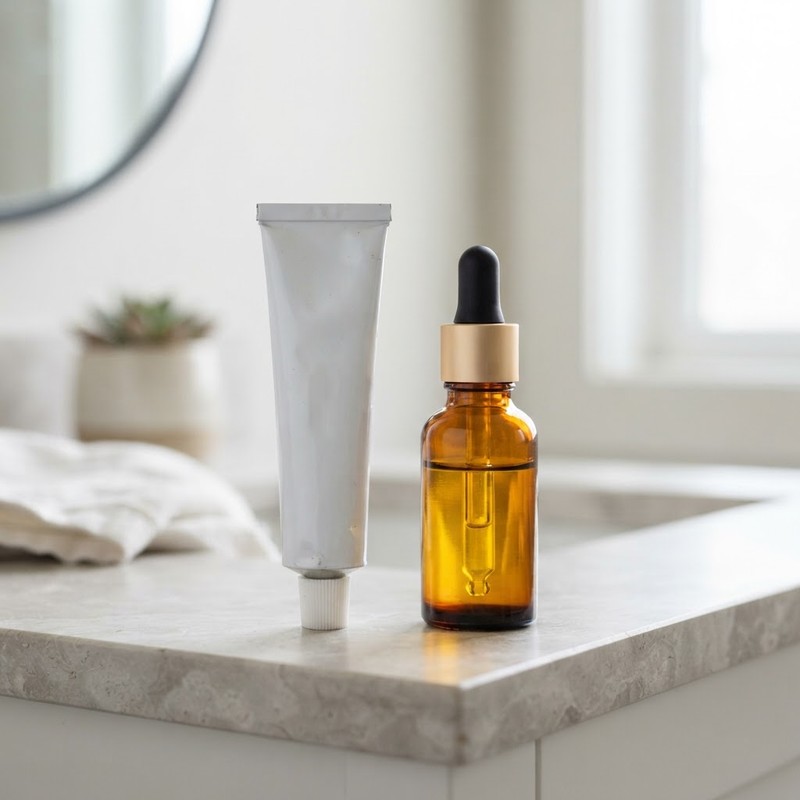
When navigating the extensive world of skincare ingredients, few compounds have earned as much attention and clinical backing as Vitamin A derivatives, collectively known as retinoids. Whether you are seeking to support healthy aging, refine overall skin texture, or manage persistent breakouts, you have likely encountered two primary names in conversations about skin health: tretinoin and retinol.
When navigating the extensive world of skincare ingredients, few compounds have earned as much attention and clinical backing as Vitamin A derivatives, collectively known as retinoids. Whether you are seeking to support healthy aging, refine overall skin texture, or manage persistent breakouts, you have likely encountered two primary names in conversations about skin health: tretinoin and retinol. While both belong to the same overarching chemical family, they are fundamentally distinct in their molecular structure, biological potency, regulatory classification, and mechanism of action within the skin.
For many adult women navigating skin changes—such as adult acne, hyperpigmentation, or shifting texture—selecting the right topical agent can feel overwhelming amid confusing product claims and marketing buzzwords. Understanding how these two molecules interact with human skin biology empowers you to make thoughtful, evidence-informed decisions in partnership with a qualified healthcare provider. In this detailed guide, we explore the science of retinoid conversion pathways, prescription status, clinical research depth, side effect management, and practical application strategies so you can better navigate your personal skincare path.
Understanding Retinoids: The Vitamin A Family Hierarchy
To appreciate the specific differences between tretinoin and retinol, it is helpful to examine the retinoid family tree. Retinoids are a broad group of synthetic and naturally occurring Vitamin A derivatives that play an essential role in regulating cell proliferation, differentiation, and tissue architecture across the human body. In clinical dermatology, topical retinoids are prized for their capacity to influence cellular signaling deep within both the epidermal and dermal layers of the skin.
When applied topically, Vitamin A derivatives work by communicating directly with specialized nuclear receptors inside skin cells—specifically retinoic acid receptors (RARs) and retinoid X receptors (RXRs). When activated, these receptors regulate gene transcription associated with collagen synthesis, cellular turnover, and the orderly shedding of surface skin cells. However, not all retinoids are capable of binding to these nuclear receptors immediately upon skin application. Most topically applied forms must undergo a step-by-step enzymatic transformation within cutaneous tissue before becoming biologically active.
The Molecular Spectrum of Vitamin A
The retinoid family encompasses several distinct chemical forms, categorized by how many biochemical steps separate them from the pure active molecule that skin receptors utilize. This hierarchy includes:
- Retinyl Esters: Gentle cosmetic derivatives (such as retinyl palmitate, retinyl propionate, or retinyl acetate) that require three conversion steps within the skin to become active.
- Retinol: An over-the-counter form requiring a two-step enzymatic conversion pathway to transform into retinoic acid.
- Retinaldehyde (Retinal): An intermediate precursor requiring a single conversion step to become retinoic acid.
- Retinoic Acid (Tretinoin): The active chemical molecule that directly binds to cellular retinoic acid receptors without requiring any enzymatic conversion steps.
- Synthetic Retinoids: Engineered pharmaceutical molecules (such as adapalene, tazarotene, and trifarotene) designed to target specific retinoic acid receptor subtypes for targeted skin benefits.
The Science of Conversion: How Retinol Becomes Active
The single most critical scientific distinction between tretinoin and retinol lies in the cutaneous conversion pathway. Human skin cells possess internal biological machinery that can only directly utilize pure retinoic acid. Any other form of Vitamin A applied to the skin surface must first be converted by local cellular enzymes into retinoic acid before it can trigger gene expression or cellular signaling.
When you apply an over-the-counter retinol product, cutaneous enzymes perform a multi-stage enzymatic process. First, alcohol dehydrogenase enzymes convert retinol into retinaldehyde. Next, retinaldehyde dehydrogenase enzymes convert retinaldehyde into retinoic acid (tretinoin). Because human skin conversion efficiency varies considerably from individual to individual—influenced by individual enzymatic activity, product concentration, formulation stability, and delivery vehicles—the actual amount of retinoic acid made available to cell receptors from OTC retinol is a small fraction of the original starting concentration.
Why Potency Differs Substantially
Because tretinoin is pure retinoic acid, it bypasses the conversion requirement entirely. Upon application and skin penetration, tretinoin immediately interacts with retinoic acid receptors inside skin cells. Clinical research suggests that prescription retinoic acid is approximately 20 times more potent on a concentration-for-concentration basis than over-the-counter retinol. Consequently, a 0.025% tretinoin cream delivers a significantly stronger cellular signal than a 1% over-the-counter retinol serum.
This biological distinction explains why over-the-counter retinol generally exhibits a gentler, more gradual onset of action, but also why it tends to cause less initial skin irritation. Tretinoin, by virtue of its immediate receptor engagement, prompts a robust cellular response that often requires an intentional adjustment period during early application.
Prescription Status, FDA Regulations, and Custom Formulations
The regulatory structure governing tretinoin and retinol reflects their differing biological potency, mechanism of action, and clinical indication profiles. Understanding these regulatory classifications helps clarify why certain skin preparations require clinical supervision while others are accessible on retail shelves.
Over-the-counter retinol is regulated as a cosmetic ingredient in the United States. Cosmetic formulations are designed for general public distribution and do not require pre-market approval by the Food and Drug Administration (FDA). While cosmetic retinols can support overall skin appearance and texture, manufacturers cannot make disease-treatment or structural therapeutic claims for cosmetic products.
FDA-Approved Prescription Medications
In contrast, tretinoin is an FDA-approved prescription medication. It received FDA approval decades ago for the topical treatment of acne vulgaris, and clinicians frequently prescribe it to manage visible signs of photoaging, fine lines, surface roughness, and hyperpigmentation. Because tretinoin is a potent pharmaceutical agent capable of significantly altering cellular activity, it can only be legally obtained through a prescription after a comprehensive evaluation by a licensed healthcare provider.
In clinical practice, licensed providers may also evaluate other prescription agents or personalized dermatological options based on individual patient needs:
- Spironolactone: An FDA-approved oral medication indicated as a diuretic, which clinicians frequently prescribe off-label for adult women experiencing hormonal acne due to its ability to block androgen receptors in sebaceous glands.
- Hydroquinone: A high-potency topical depigmenting agent available strictly by prescription in the United States for conditions such as melasma and post-inflammatory hyperpigmentation.
- Custom Compounded Formulations: Customized topical blends prepared by licensed compounding pharmacies—such as GHK-Cu copper peptide cream, hydroquinone combined with tranexamic acid and azelaic acid, or tretinoin combined with clindamycin or niacinamide. It is essential to understand that while individual active pharmaceutical ingredients contained within compounded preparations may be FDA-approved, custom compounded formulas themselves are tailored for individual patients and are not individually reviewed or FDA-approved by the agency.
Efficacy, Research Depth, and Skin Benefits
When comparing long-term efficacy, tretinoin possesses one of the most robust and extensive scientific research foundations in modern topical dermatology. First investigated in the late 1960s, tretinoin has been evaluated in hundreds of peer-reviewed clinical trials establishing its cellular mechanisms and clinical utility across diverse skin types.
Scientific studies indicate that topical retinoic acid supports multiple fundamental skin processes:
1. Supporting Cellular Turnover and Epidermal Renewal
As skin matures, natural cell renewal slows down, leading to an accumulation of dull, dead surface skin cells. Tretinoin accelerates epidermal turnover by promoting cohesive desquamation (shedding) of corneocytes. This action helps keep pores clear of debris, refines surface texture, and promotes a smooth, vibrant appearance. Over-the-counter retinol supports similar qualitative benefits over time, though enzymatic rate limitations mean changes manifest more slowly.
2. Supporting Collagen Matrix and Dermal Structure
In the deeper dermal layers, retinoic acid stimulates specialized fibroblast cells responsible for synthesizing structural proteins. Tretinoin has been shown to support new collagen synthesis while simultaneously inhibiting matrix metalloproteinases—enzymes activated by ultraviolet exposure that breakdown healthy dermal collagen. By protecting and supporting the structural dermal matrix, tretinoin supports healthy aging and skin resilience.
3. Addressing Hyperpigmentation and Tone Disparity
Tretinoin facilitates a more even distribution of melanin within the epidermis by accelerating the shedding of pigment-laden superficial skin cells. For women experiencing post-inflammatory hyperpigmentation from past breakouts or sun-induced discoloration, retinoids offer meaningful supportive benefits. For complex pigment disorders like melasma, clinicians often combine prescription retinoids with other targeted active ingredients under ongoing medical supervision.
Managing Side Effects and the Acclimation Phase ("Retinization")
While the biological benefits of retinoids are well documented, starting a retinoid routine often involves a temporary adjustment period known as retinization. Retinization describes the window of time during which epidermal tissue adapts to accelerated cell turnover and heightened receptor signaling.
During the initial 2 to 6 weeks of retinoid use, individuals may observe mild side effects, including:
- Dryness, surface tightness, and light peeling or flaking
- Mild localized redness and temporary skin sensitivity
- A brief purge period where pre-existing, underlying congestion surfaces as mild breakouts
Evidence-Based Application Strategies
To minimize discomfort while building cutaneous tolerance, clinical providers recommend practical application strategies:
1. The "Sandwich" Technique: Apply a light layer of non-comedogenic, hydrating moisturizer to clean skin, wait a few minutes for complete absorption, apply a pea-sized amount of retinoid across the entire face, and follow with a second layer of moisturizer. This buffering method minimizes irritation without hindering long-term outcomes.
2. Gradual Frequency Scaling: Begin by applying your retinoid only 2 or 3 evenings per week for the first month. As skin adapts without noticeable irritation, frequency can be gradually increased to every other night, and eventually to nightly application as tolerated.
3. Streamlined Care and Sunscreen Diligence: Avoid combining retinoids with harsh mechanical scrubs or high concentrations of exfoliating acids (such as glycolic or salicylic acid) during the initiation phase. Furthermore, because retinoids thin the outermost stratum corneum, daily application of broad-spectrum SPF 30+ sunscreen is imperative to protect skin from ultraviolet exposure.
Choosing Your Path and Taking the Next Step
Selecting between tretinoin and over-the-counter retinol depends entirely on your skin history, sensitivity threshold, personal health goals, and medical history. Over-the-counter retinol serves as a gentle, accessible starting point for individuals with sensitive skin, those new to retinoids, or those seeking general preventive skincare maintenance. On the other hand, for women managing persistent adult acne, marked signs of photoaging, or pronounced hyperpigmentation, prescription tretinoin offers a direct, powerful clinical pathway.
Because skin concerns such as melasma, adult acne, and inflammatory hyperpigmentation often present with overlapping symptoms, readers should avoid self-diagnosing or self-treating complex skin conditions. Partnering with a licensed healthcare provider ensures an accurate clinical evaluation and a personalized, medically guided treatment strategy tailored to your skin's unique needs.
Navigating prescription skincare options should always be a supportive, collaborative process with qualified healthcare professionals. At EOS Health, we connect you with experienced clinicians who evaluate your unique skin profile, listen to your goals with empathy, and design tailored treatment plans suited to your lifestyle. Whether you are interested in exploring prescription tretinoin, learning about customized compounded formulas, or seeking guidance for adult skin changes, expert care is readily accessible. Visit EOS Health Skincare Services today to schedule your virtual consultation with a licensed clinician and take an informed step toward healthy, radiant skin.
Retinoic Acid
The active biological form of Vitamin A that directly binds to nuclear receptors within skin cells to regulate cellular turnover, gene transcription, and collagen matrix maintenance.
Retinization
The temporary cutaneous adjustment period that occurs when beginning a topical retinoid, characterized by mild dryness, light peeling, and heightened skin sensitivity as cellular renewal accelerates.
Cellular Turnover
The natural biological process by which deeper epidermal cells mature, migrate to the skin surface, and desquamate (shed), allowing fresh skin cells to replace old surface cells.
Compounded Formulation
A customized medication prepared by a licensed compounding pharmacy according to a clinician's specific prescription, combining multiple active ingredients tailored to an individual patient's skin needs.
Photoaging
Premature cutaneous aging caused by chronic exposure to ultraviolet (UV) radiation, leading to fine lines, loss of elasticity, rough surface texture, and hyperpigmentation.
Sources
faq
Common questions, answered.
Is tretinoin stronger than over-the-counter retinol?
Yes. Tretinoin is pure retinoic acid, which means it directly binds to nuclear skin receptors without requiring enzymatic conversion. Over-the-counter retinol must undergo a two-step conversion process within the skin, making tretinoin significantly more potent on a concentration basis.
Can I use tretinoin and retinol together in the same routine?
No, combining tretinoin and retinol is generally not recommended. Using both simultaneously increases the risk of excessive skin irritation, redness, and peeling without providing added clinical benefit. It is best to choose one retinoid strategy based on clinical guidance.
How long does the retinization adjustment phase typically last?
For most individuals, the retinization phase lasts between 2 and 6 weeks. During this time, mild flaking, dryness, and temporary sensitivity may occur as the skin adapts to accelerated cellular turnover.
Is tretinoin FDA-approved?
Yes. Tretinoin is an FDA-approved prescription medication indicated for the topical treatment of acne vulgaris, and clinicians frequently prescribe it to manage visible signs of photoaging and structural skin support.
What is the difference between tretinoin and custom compounded retinoid creams?
Tretinoin is a single active pharmaceutical ingredient available in FDA-approved commercial formulations. Custom compounded retinoid creams are personalized formulations prepared by compounding pharmacies that combine tretinoin with additional active ingredients (such as niacinamide, clindamycin, or hydroquinone). While individual active ingredients within a compound may be FDA-approved, custom compounded mixtures themselves are not individually reviewed or FDA-approved.
Can retinoids help support skin affected by adult hormonal acne?
Yes. Retinoids support acne-prone skin by accelerating cellular turnover and preventing dead skin cells from clogging pores. For adult female hormonal acne, clinicians may also evaluate oral prescription options such as spironolactone, an FDA-approved diuretic commonly prescribed off-label for hormonal breakouts.
Do I need a prescription to obtain tretinoin in the United States?
Yes. In the United States, tretinoin is classified as a prescription-only medication and requires evaluation and authorization by a licensed healthcare provider.
Why is daily sunscreen application essential when using retinoids?
Retinoids accelerate surface epidermal renewal, which can temporarily make the outer layer of skin more susceptible to ultraviolet radiation. Applying broad-spectrum SPF 30+ sunscreen daily protects vulnerable skin cells and prevents sun-induced skin damage.
Great skin starts with the right protocol.™
Start free consultationwhat are you waiting for?
You're one click away from a new you.
Fill out our brief form and a licensed physician will evaluate which treatment plan is best for you.