What Is Autophagy? The Cell's Cleanup Process Explained
Understand what autophagy is and how cellular cleanup supports healthy aging. Explore preclinical research, lifestyle factors, and limits of cellular science.
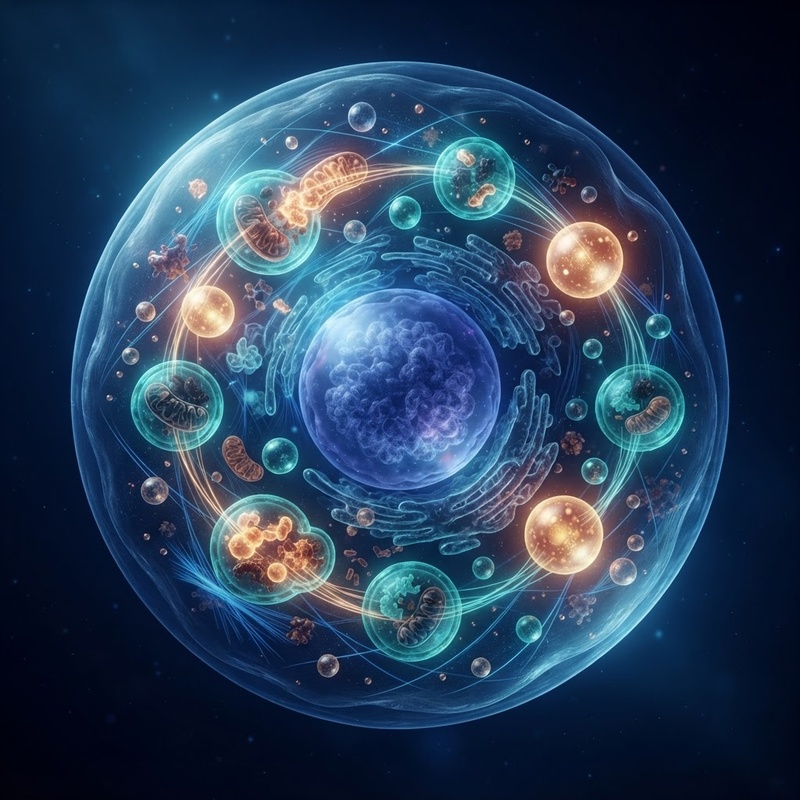
Every minute of every day, trillions of cells in the human body perform complex biochemical operations to sustain life. Over time, structural proteins, metabolic enzymes, and energy-producing mitochondria inside these cells accumulate wear and tear from normal physiological functions. When cellular components become damaged, misfolded, or obsolete, how does the biological system manage this internal waste? The answer lies in a fundamental biological mechanism known as autophagy. Derived from the Greek roots auto (meaning "self") and phagy (meaning "eating"), autophagy translates literally to "self-eating." While the term might sound alarming at first glance, it describes an essential, highly organized housekeeping system designed to degrade, recycle, and renew cellular components.
Every minute of every day, trillions of cells in the human body perform complex biochemical operations to sustain life. Over time, structural proteins, metabolic enzymes, and energy-producing mitochondria inside these cells accumulate wear and tear from normal physiological functions. When cellular components become damaged, misfolded, or obsolete, how does the biological system manage this internal waste? The answer lies in a fundamental biological mechanism known as autophagy. Derived from the Greek roots auto (meaning "self") and phagy (meaning "eating"), autophagy translates literally to "self-eating." While the term might sound alarming at first glance, it describes an essential, highly organized housekeeping system designed to degrade, recycle, and renew cellular components.
At EOS Health, we believe that understanding fundamental cellular biology empowers individuals to make informed decisions about their overall health and wellness journey. Research into autophagy has expanded rapidly over recent decades, shedding light on how cells maintain internal stability during periods of environmental stress, nutrient scarcity, and normal aging processes. In this educational guide, our clinical team explores what autophagy is, how it operates at the microscopic level, why its efficiency changes over time, how lifestyle factors correlate with cellular maintenance in scientific literature, and what current evidence can—and cannot—tell us about human cellular health.
Understanding Autophagy: The Body's Internal Recycling System
To understand autophagy, it helps to imagine a bustling manufacturing facility. As machinery operates continuously, structural parts wear down, scrap material accumulates, and defective products assemble on the factory floor. If the facility never sweeps its work floors or recycles discarded raw material, overall operational efficiency eventually declines. Autophagy functions as the cell's internal recycling program, identifying damaged structures, breaking them down into basic molecular building blocks, and making those raw materials available to synthesize new cellular components or generate energy.
The Stages of Cellular Cleanup
The autophagic process is an intricate cellular cascade that involves several sequential biological steps:
- Induction and Initiation: When a cell encounters physiological cues—such as nutrient deprivation, mild oxidative stress, or elevated energy demand—signaling pathways initiate the formation of an isolation membrane known as a phagophore.
- Cargo Selection and Enclosure: The phagophore expands and gradually engulfs targeted cellular debris, such as misfolded protein aggregates or dysfunctional mitochondria. The membrane seals completely to form a double-membraned spherical vesicle called an autophagosome.
- Lysosomal Fusion: The autophagosome travels along intracellular transport pathways until it docks and fuses with a lysosome—a specialized organelle filled with acidic hydrolases and digestive enzymes. The resulting merged structure is termed an autolysosome.
- Degradation and Recycling: Inside the autolysosome, specialized enzymes break down the enclosed cellular cargo into fundamental molecular building blocks, including amino acids, fatty acids, nucleotides, and simple sugars. These elementary components are transported back into the cytoplasm, where the cell reuses them for structural maintenance, protein synthesis, or cellular energy production.
Primary Pathways of Autophagy
Cellular biologists categorize autophagy into three primary pathways based on how intracellular material reaches the lysosomal compartment for degradation:
Macroautophagy: The most widely studied pathway, involving the engulfment of bulk cytoplasm or specific damaged organelles into autophagosomes prior to lysosomal degradation. Specialized forms of macroautophagy exist, such as mitophagy, which specifically targets impaired mitochondria for selective clearance.
Microautophagy: A direct mechanism wherein the lysosomal membrane itself invaginates to directly absorb cytosolic material, engulfing smaller protein complexes and cytoplasmic structures without requiring an intermediate autophagosome container.
Chaperone-Mediated Autophagy (CMA): A highly selective clearance pathway where specific target proteins containing a designated signal motif are recognized by molecular chaperones and translocated individually across the lysosomal membrane for enzymatic degradation.
Why Autophagy Declines with Age and Its Impact on Health
In youthful biological systems, autophagic processes operate with high efficiency, maintaining a dynamic balance between cellular breakdown and synthesis. However, extensive research in cell biology indicates that the functional capacity of autophagic pathways tends to decline progressively as tissues age. Understanding why this reduction occurs—and the physiological implications involved—remains a central area of study in longevity science.
Mechanisms Behind Age-Related Decline
Several interconnected biological shifts contribute to reduced autophagic efficiency over time:
- Lysosomal Acidification Deficits: As cells age, lysosomes can experience altered pH regulation or accumulate indigestible metabolic byproducts, such as lipofuscin pigments. This accumulation reduces the functional catalytic activity of lysosomal digestive enzymes.
- Dysregulated Nutrient Sensing Pathways: Central metabolic regulators, including the mechanistic target of rapamycin (mTOR) and AMP-activated protein kinase (AMPK), orchestrate autophagic signaling. Age-related alterations in nutrient sensing can lead to sustained mTOR pathway activation, sending signals that suppress autophagic initiation even when cellular debris accumulates.
- Decreased Autophagy-Related Gene Expression: Studies suggest that the transcriptional expression of key autophagy-related genes (ATG genes) and master nuclear factors (such as transcription factor EB, or TFEB) declines in aging tissues, diminishing the cellular machinery needed for autophagosome assembly.
Implications for Cellular Maintenance
When autophagic clearance slows down, cells gradually accumulate non-functional organelles and misfolded protein aggregates over time. Retaining dysfunctional mitochondria can lead to increased reactive oxygen species generation, elevating localized cellular strain and metabolic stress. Furthermore, persistent accumulation of cellular waste can contribute to cellular senescence—a biological state where damaged cells stop dividing and secrete pro-inflammatory signaling factors into surrounding tissue environments. Researchers actively investigate how supporting natural cellular maintenance pathways can help mitigate cellular stress and support healthy aging across various organ systems.
Lifestyle Factors Associated with Autophagy in Preclinical Research
Given the central role of cellular housekeeping in maintaining systemic function, scientific investigation has focused heavily on how daily habits and physiological stimuli relate to autophagic activity. It is critical to recognize that much of our existing understanding comes from preclinical models, including rodent studies, cell culture experiments, and non-mammalian organisms. While clinical investigations continue, scientific literature points to several lifestyle factors that correlate with autophagic signaling.
Physical Activity and Metabolic Strain
Exercise represents one of the most well-documented physiological triggers for autophagic activation across diverse tissues, including skeletal muscle, cardiac tissue, and neural structures. Physical exertion consumes cellular energy stores, altering the ratio of AMP to ATP. This alteration activates AMPK while inhibiting mTOR, signaling energy scarcity and prompting cellular recycling. Preclinical studies indicate that both endurance exercise and resistance training promote markers of autophagosome turnover, supporting tissue adaptation and overall metabolic health.
Nutrient Deprivation and Fasting Patterns
Nutrient availability directly regulates autophagic signaling cascades within tissues. When glucose and amino acids are plentiful, mTOR signaling remains elevated, prioritizing cellular growth and protein synthesis over breakdown. In contrast, periods of nutrient restriction lower circulating insulin and amino acid availability, leading to mTOR down-regulation and AMPK stimulation. In animal models, dietary protocols such as intermittent fasting, time-restricted feeding, and periodic caloric restriction demonstrate measurable increases in autophagic markers across hepatic, renal, and neural tissues. However, the precise duration of fasting required to initiate meaningful autophagic signaling in human tissues varies considerably based on individual metabolic flexibility, baseline nutrition, and daily physical activity.
Sleep Quality and Circadian Rhythms
Autophagic activity follows a circadian pattern synchronized with the body's internal master clock. Research suggests that disruption of regular sleep-wake schedules can impair transcriptional programs that govern lysosomal function and cellular debris clearance. Restorative deep sleep phases coincide with physiological recovery and cellular maintenance. Maintaining consistent sleep timing supports the natural circadian oscillations that coordinate cellular housekeeping throughout the body.
The Honest Limits of Human Autophagy Research
While popular health discussions sometimes frame autophagy as a simple mechanism that can be selectively triggered through quick lifestyle interventions, scientific reality involves significantly more nuance. EOS Health emphasizes transparent, evidence-aligned education regarding the boundaries and current limitations of autophagy research.
Translational Differences Between Models and Humans
The vast majority of foundational evidence regarding autophagic pathways derives from laboratory models, including yeast, fruit flies, roundworms, and rodents. While fundamental biochemical pathways are evolutionarily conserved, human physiology features complex organ interactions, distinct metabolic rates, and significantly longer lifespans. Consequently, observations made in cell culture or mouse models cannot be directly assumed to apply identically in human clinical settings.
Measurement Challenges in Clinical Settings
A primary challenge in clinical longevity research is the absence of non-invasive, validated real-time biomarkers to measure autophagic flux in living human beings. Laboratory researchers evaluate autophagy by collecting tissue biopsies, employing genetic markers, or using specialized microscopic techniques to observe autophagosome movement. In clinical medicine, however, no routine blood test or imaging scan exists to measure autophagic activity within human organs. Therefore, claims suggesting that specific products, supplements, or short-term habits increase human autophagy by precise percentages reflect oversimplifications of preclinical data rather than verified clinical measurements.
The Principle of Physiological Balance
Autophagy is not an unrestricted process where more is universally better; healthy function depends on precise physiological regulation. Excessive or persistent autophagic activity can contribute to tissue stress or cell loss under specific pathological circumstances. Biological health requires a harmonious balance between cellular degradation (autophagy) and cellular synthesis (anabolism). Scientific consensus underscores the value of supporting overall physiological balance rather than attempting extreme measures to hyper-stimulate cellular breakdown.
Navigating Cellular Health with Professional Guidance
Understanding internal cellular maintenance highlights the body's remarkable intrinsic capacity for continuous adaptation and renewal. Rather than seeking unverified supplements or extreme protocols, supporting healthy aging is best achieved through evidence-informed lifestyle habits grounded in clinical research.
A comprehensive approach to supporting cellular health focuses on foundational wellness pillars:
- Personalized Physical Activity: Structuring movement routines that match cardiovascular, metabolic, and musculoskeletal capacity.
- Balanced Nutrition: Emphasizing nutrient-dense whole foods that provide essential micronutrients, antioxidants, and fiber while avoiding chronic excess energy intake.
- Restorative Sleep Hygiene: Establishing consistent sleep habits to support natural circadian regulation and nightly cellular repair.
- Systemic Stress Management: Practicing stress-reduction techniques that help maintain autonomic nervous system balance and reduce systemic inflammatory strain.
Because every individual has a unique biological background, metabolic profile, and health status, adjustments intended to support cellular health should be undertaken thoughtfully. For individuals interested in tailored strategies or comprehensive wellness plans, consulting a qualified healthcare provider ensures that approaches are safe, appropriate, and aligned with personal health goals. Any therapeutic options or targeted interventions should always be discussed with a licensed clinician after thorough evaluation.
To learn more about how individualized clinical care can support your long-term health goals, explore our Cellular & Anti-Aging Care Services at EOS Health.
Autophagosome
A temporary double-membraned cellular vesicle that engulfs damaged organelles and misfolded proteins, transporting them to the lysosome for recycling.
Lysosome
A specialized cellular organelle containing acidic digestive enzymes responsible for breaking down cellular waste and recycling molecular components.
mTOR (Mechanistic Target of Rapamycin)
A central nutrient-sensing protein enzyme complex that promotes cell growth and protein synthesis when nutrients are abundant, while suppressing autophagy initiation.
AMPK (AMP-Activated Protein Kinase)
An intracellular energy sensor that detects low energy levels and triggers cellular processes to restore energy balance, including the activation of autophagy.
Cellular Senescence
A physiological state in which damaged cells permanently cease dividing while remaining metabolically active, sometimes releasing inflammatory signals into surrounding tissue.
Sources
faq
Common questions, answered.
What does autophagy mean in cellular biology?
Autophagy comes from Greek words meaning "self-eating." It refers to a natural biological process in which cells break down and recycle damaged organelle components, misfolded proteins, and cellular debris to maintain overall cellular health.
How long does a person need to fast for autophagy to occur?
The exact timeframe required for autophagy to increase during fasting remains uncertain in humans. Preclinical animal studies show increased autophagic markers after 18 to 48 hours of nutrient restriction, but human responses vary based on individual metabolic flexibility, physical activity, and baseline diet.
Can regular exercise stimulate cellular cleanup?
Yes, preclinical research indicates that exercise is a strong physiological stimulus for autophagy. Physical activity alters cellular energy ratios, triggering metabolic pathways like AMPK that promote cellular maintenance in muscle and organ tissues.
Are there supplements that turn on autophagy in humans?
While certain compounds like resveratrol, spermidine, and polyphenols show autophagic modulation in cell cultures and animal models, clinical proof in humans remains limited. No supplement is currently proven to selectively control human autophagic activity.
How do researchers measure autophagy in clinical studies?
In laboratory research, scientists measure autophagy using tissue biopsies, electron microscopy, and fluorescent tracking of autophagosome proteins. There is currently no simple, non-invasive blood test available for routine clinical measurement.
Is more autophagy always better for health?
No, autophagy relies on precise biological regulation. While baseline autophagy supports cellular health, excessive or unregulated autophagic activity can lead to cell damage or death under certain metabolic conditions.
How does sleep impact cellular housekeeping?
Autophagy follows natural circadian rhythms regulated by the body's biological clock. Consistent, high-quality sleep supports the rhythmic expression of genes involved in lysosomal digestion and nightly cellular repair.
Should I consult a healthcare provider before changing my routine for cellular health?
Yes, consulting a licensed clinician is recommended before making significant dietary, exercise, or lifestyle changes. A healthcare provider can provide personalized recommendations based on your health history and individual metabolic needs.
Invest in the years ahead.™
Start free consultationwhat are you waiting for?
You're one click away from a new you.
Fill out our brief form and a licensed physician will evaluate which treatment plan is best for you.