What Is BPC-157? What the Research Says
Curious about BPC-157? Explore what preclinical research says about this peptide, its FDA regulatory status, potential safety risks, and clinician advice.
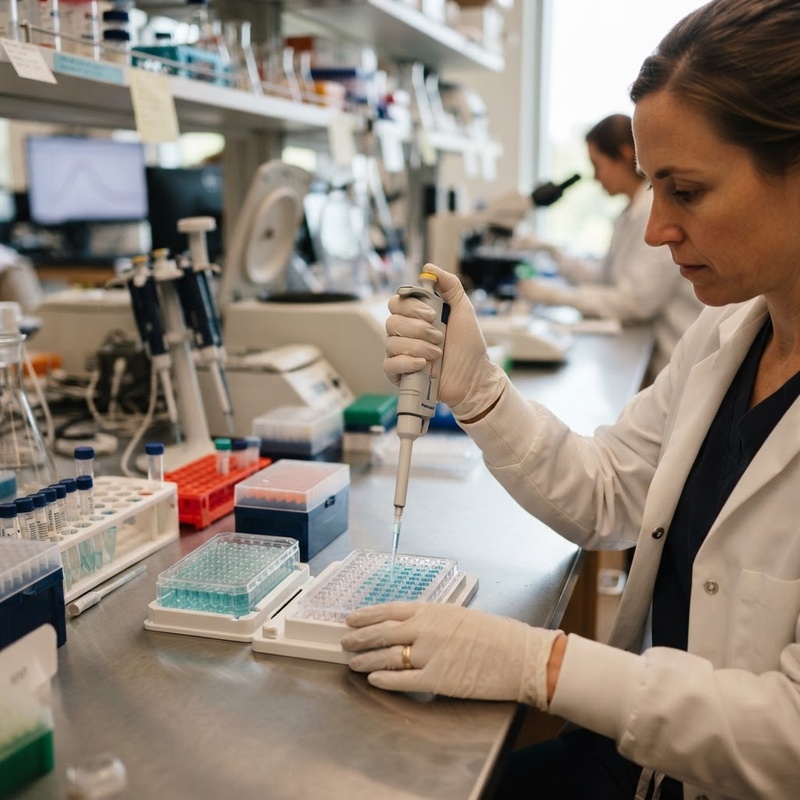
In recent years, interest in peptide science has expanded rapidly across wellness, fitness, and longevity communities. Among the various compounds discussed online, few have generated as much curiosity—or as much confusion—as BPC-157. Frequently described in lay discussions as a "recovery peptide," BPC-157 is often cited by enthusiasts searching for solutions to soft tissue strain, joint discomfort, or gut health concerns.
In recent years, interest in peptide science has expanded rapidly across wellness, fitness, and longevity communities. Among the various compounds discussed online, few have generated as much curiosity—or as much confusion—as BPC-157. Frequently described in lay discussions as a "recovery peptide," BPC-157 is often cited by enthusiasts searching for solutions to soft tissue strain, joint discomfort, or gut health concerns. However, the online narrative surrounding this compound frequently blurs the line between early laboratory research and validated clinical medicine.
At EOS Health, our clinical team is committed to providing objective, evidence-based education. Understanding emerging health concepts requires separating scientific facts from marketing claims and internet speculation. In this detailed overview, we examine what BPC-157 is, what preclinical laboratory studies have investigated, the evidence gaps that exist today, official regulatory warnings, and why unsupervised use carries significant safety risks. Above all, we aim to equip you with the knowledge necessary to navigate your recovery goals safely in partnership with a licensed healthcare professional.
What Is BPC-157? Understanding the Biological Foundation
BPC-157 stands for Body Protection Compound 157. Biologically, it is classified as a synthetic pentadecapeptide, meaning it is a short chain composed of 15 amino acids arranged in a specific sequence (Gly-Glu-Pro-Pro-Pro-Gly-Lys-Pro-Ala-Asp-Asp-Ala-Gly-Leu-Val). The molecular structure of BPC-157 is derived from a naturally occurring protective protein found in human gastric juice, known as gastric juice protein BPC. In human physiology, endogenous peptides act as cellular signaling molecules, communicating between cells to regulate diverse biological processes.
Synthetic peptides like BPC-157 are manufactured in laboratory settings to replicate or modify specific amino acid sequences. Researchers originally synthesized BPC-157 to investigate how isolated peptide fragments interact with gastrointestinal cell lines and mucosal tissue responses under laboratory conditions. Unlike naturally occurring hormones, synthetic peptides developed for investigational research are non-endogenous formulations designed primarily as tools for scientific inquiry rather than standardized pharmaceutical therapeutics.
It is crucial to emphasize that BPC-157 is not a vitamin, mineral, or dietary supplement. It is an investigational synthetic chemical compound. Because it does not possess approval as a prescription medication, its chemical stability, biological half-life, systemic distribution, and metabolic pathways in human beings remain subjects of ongoing scientific interest rather than established clinical knowledge.
Preclinical Laboratory Research: What Animal Studies Examined
The vast majority of scientific literature discussing BPC-157 consists of preclinical research. Preclinical research refers strictly to laboratory studies conducted in animal models—primarily rats, mice, and rabbits—or in vitro cell cultures grown in laboratory dishes. Over the past two decades, researchers in academic settings have explored several cellular mechanisms to observe how animal tissues interact with BPC-157.
One primary area of preclinical investigation involves angiogenesis, the biological process through which the body forms new blood vessels from existing vascular networks. In rodent models of tissue injury, researchers observed that BPC-157 appeared to interact with vascular endothelial growth factor receptor 2 (VEGFR2) pathways and nitric oxide signaling. By observing localized blood vessel formation in lab animals, researchers hypothesized that microcirculation might play a role in cellular nutrient delivery during experimental wound healing protocols.
Another focal point of preclinical study is fibroblast activity and extracellular matrix organization. In cell culture assays involving animal tendon, ligament, and muscle fibroblasts, laboratory researchers observed alterations in collagen synthesis and cell migration patterns. These preliminary observations led scientists to investigate whether the peptide influenced structural protein pathways following induced mechanical trauma in animal limbs.
In addition, early preclinical studies examined gastrointestinal mucosal lining preservation. Because the amino acid sequence originates from a stomach protein derivative, animal studies evaluated its effects on chemically induced gastric lesions and inflammatory cytokine expression in rodent digestive tracts.
While these preclinical observations offer valuable insights for molecular biologists, preliminary laboratory findings in rodents cannot be interpreted as proof of safety, efficacy, or therapeutic outcomes in human beings. Animal physiology differs profoundly from human biochemistry, and biological responses observed in laboratory settings do not translate automatically to human clinical care.
The Critical Evidence Gap: Lack of Quality Human Clinical Trials
The most significant distinction between validated medical therapies and investigational compounds like BPC-157 is the existence of rigorous human clinical trials. Before any medical intervention is recognized as safe and effective for human health, it must undergo a structured, multi-phase clinical trial process governed by regulatory standards.
In standard drug development, Phase I clinical trials evaluate safety, tolerability, and pharmacokinetics in healthy human volunteers. Phase II trials assess efficacy, optimal dosage ranges, and side effect profiles in targeted patient populations. Phase III trials involve large-scale, randomized, double-blind, placebo-controlled studies across hundreds or thousands of human subjects to definitively establish therapeutic benefit versus safety risks.
For BPC-157, there is a profound lack of peer-reviewed, high-quality Phase II and Phase III human clinical trials published in reputable medical journals. The vast majority of published papers are confined to animal studies conducted by a small number of research groups. Without robust, double-blind, placebo-controlled human data, medical science cannot confirm how BPC-157 behaves in the human body, what dose ranges might be safe, or what acute and chronic toxicities may occur.
Furthermore, critical pharmacokinetic questions remain unanswered in human populations. Scientists do not possess standardized human data regarding how BPC-157 is absorbed across different administration routes, how it is metabolized by human liver enzymes, or how it interacts with common prescription medications. Assuming that a compound is safe or effective for human use based almost entirely on rodent data represents a significant clinical risk.
Regulatory Status and Official Safety Warnings
Given the widespread online promotion of BPC-157, regulatory agencies around the world have issued clear classifications and safety warnings regarding its distribution and use. Consumers should be fully aware of the official regulatory realities surrounding this compound.
First and foremost, BPC-157 is NOT approved by the United States Food and Drug Administration (FDA) for any medical condition, therapeutic use, or disease prevention. In the United States, compounding pharmacies operate under federal guidelines established by the Federal Food, Drug, and Cosmetic Act. Under Section 503A, the FDA evaluates bulk drug substances to determine whether they can be legally compounded by licensed pharmacists.
In recent regulatory evaluations, the FDA placed BPC-157 into Category 2 bulk drug substances. Category 2 status indicates that the FDA identified significant safety concerns, potential immunogenicity risks, or a lack of sufficient safety data regarding the compound. The agency highlighted concerns that synthetic peptides of this nature could trigger unexpected immune system reactions, localized tissue inflammation, or unpredictable biological cascades. As a result, BPC-157 cannot be legally compounded by 503A pharmacies for human use under federal standards.
Additionally, athletic governing bodies maintain strict prohibitions regarding BPC-157. The World Anti-Doping Agency (WADA) explicitly includes BPC-157 on its Prohibited List under Category S2 (Peptide Hormones, Growth Factors, Related Substances and Mimetics). It is strictly banned for competitive athletes both in-competition and out-of-competition. The U.S. Anti-Doping Agency (USADA) similarly warns athletes that using or purchasing BPC-157 constitutes an anti-doping rule violation carrying severe disciplinary penalties.
Risks Associated with Unsupervised and Unregulated Sourcing
Because BPC-157 lacks FDA approval and cannot be legally compounded for routine prescription, individuals who seek out the compound often turn to unregulated online vendors selling products labeled as "research chemicals" or "not for human consumption." Operating outside traditional medical supply chains creates alarming health hazards that every individual must understand.
Unregulated online suppliers operate without oversight from Current Good Manufacturing Practice (cGMP) regulations enforced by pharmaceutical authorities. Independent chemical testing of products sold online frequently reveals widespread quality control failures. Common contamination issues include heavy metals (such as lead or arsenic), residual industrial solvents, bacterial endotoxins, chemical impurities, and incorrect amino acid sequence synthesis. Injecting or ingesting unverified chemical substances exposes the body to acute toxic reactions, systemic infections, and severe organ toxicity risks.
Moreover, unregulated products suffer from extreme dosing instability and lack of purity standards. Laboratory analyses of online peptide vials have demonstrated dramatic batch-to-batch variations, ranging from vials containing zero active peptide to vials containing dangerously concentrated doses. Unregulated formulations also degrade rapidly when exposed to heat or light, resulting in breakdown products with unknown biological activity.
Self-administration carries additional direct medical risks. Subcutaneous or intramuscular injections performed without clinical training pose risks of nerve injury, deep tissue abscess formation, localized necrosis, hematomas, and severe allergic reactions including anaphylaxis. Without medical monitoring, baseline blood work, and clinical supervision, individuals using unregulated peptides place their long-term health at profound risk.
Navigating Recovery Goals Safely: Evidence-Based Alternatives and Clinician Guidance
Experiencing persistent joint discomfort or soft tissue strain can be frustrating. However, resorting to unproven, unregulated research compounds is neither a safe nor an effective strategy. Fortunately, evidence-based sports medicine and longevity practices offer validated, structured approaches to support your body's natural repair mechanisms.
When working toward physical recovery, foundational health pillars remain the most powerful drivers of biological repair:
- Targeted Physical Therapy and Load Management: Working with a licensed physical therapist allows for progressive tissue loading, biomechanical realignment, and structured exercise protocols designed to strengthen surrounding musculature safely.
- Optimized Nutrition and Protein Intake: Providing your body with adequate bioavailable amino acids, essential fatty acids, vitamins (such as Vitamin C for collagen support), and trace minerals supports endogenous cellular repair pathways without chemical risk.
- Sleep Hygiene and Circadian Alignment: Deep sleep represents the primary physiological window during which the body releases endogenous growth hormone, reduces systemic inflammatory markers, and executes cellular repair.
- Evidence-Informed Clinical Modalities: A licensed clinician can evaluate appropriate, FDA-regulated therapeutic options, structured supplementation, blood markers, and physical medicine approaches tailored to your unique medical history.
If you are curious about peptide research or emerging recovery concepts, the safest approach is to schedule a consultation with a qualified healthcare provider. During your clinical intake, consider asking the following questions:
- What underlying biomechanical or metabolic factors might be contributing to my recovery timeline?
- Are there validated, evidence-based therapies or physical rehabilitation protocols suitable for my specific condition?
- What are the safety risks, drug interactions, or regulatory concerns associated with compounds I have read about online?
- What comprehensive blood tests (such as inflammatory markers or nutrient levels) should we review before adjusting my wellness plan?
Partnering with EOS Health for Informed Wellness
In summary, while BPC-157 remains a subject of ongoing laboratory investigation in animal models, its lack of FDA approval, Category 2 regulatory safety warnings, absence of human clinical trials, and unregulated sourcing hazards mean it should never be treated as a proven or safe therapeutic shortcut. Protecting your health requires a measured, science-based perspective rooted in clinical transparency and patient safety.
At EOS Health, our clinical team focuses on personalized, evidence-informed care that prioritizes your safety above all else. Whether you are addressing physical recovery, metabolic vitality, or overall longevity, working with a licensed clinician ensures that your health journey is guided by rigorous science, comprehensive medical intake, and validated therapeutic strategies.
Pentadecapeptide
A peptide molecule composed of a specific sequence of 15 amino acids linked by peptide bonds.
Preclinical Research
Scientific studies conducted in laboratory settings, such as cell cultures (in vitro) or animal models (in vivo), prior to clinical testing in humans.
Angiogenesis
The biological process through which new blood vessels develop from existing vascular networks.
FDA Category 2 Bulk Drug Substance
A classification assigned by the FDA to bulk drug substances that raise significant safety concerns or lack adequate safety data, prohibiting them from being compounded under Section 503A.
WADA Prohibited List
An official international registry maintained by the World Anti-Doping Agency identifying substances and methods banned in competitive sports.
Sources
faq
Common questions, answered.
What is BPC-157?
BPC-157 (Body Protection Compound 157) is a synthetic pentadecapeptide composed of 15 amino acids modeled after a sequence derived from human gastric juice protein. It is an investigational compound studied primarily in laboratory settings.
Is BPC-157 FDA-approved?
No. BPC-157 is not approved by the U.S. Food and Drug Administration (FDA) for human medical use, treatment, or disease prevention. The FDA has categorized it under Category 2 bulk drug substances due to significant safety concerns and lack of adequate safety data.
What does preclinical research on BPC-157 examine?
Preclinical research in rodent models and cell cultures evaluated pathways involving blood vessel formation (angiogenesis), fibroblast activity, collagen organization, and gastrointestinal mucosal responses. These animal findings do not demonstrate human safety or efficacy.
Are there human clinical trials proving BPC-157 is safe and effective?
No. There is a lack of peer-reviewed Phase II and Phase III randomized, double-blind, placebo-controlled human clinical trials. Human pharmacokinetics, toxicity, dosing, and long-term health effects remain unestablished.
Why has the FDA raised safety concerns about BPC-157?
The FDA raised concerns regarding potential immunogenicity, unexpected immune reactions, risk of harmful tissue inflammation, and lack of standardized safety data supporting human compounding or administration.
Is BPC-157 allowed in competitive sports?
No. BPC-157 is explicitly banned at all times by the World Anti-Doping Agency (WADA) under Section S2 of the Prohibited List (Peptide Hormones, Growth Factors, Related Substances and Mimetics). Using it constitutes an anti-doping violation.
What are the risks of purchasing BPC-157 online?
Online vendor products labeled as "research chemicals" lack Good Manufacturing Practice (cGMP) quality standards. Independent testing reveals frequent risks of heavy metal contamination, bacterial endotoxins, incorrect amino acid sequencing, and extreme dosing instability.
How should I approach my recovery goals safely?
Consult a licensed healthcare professional to evaluate your recovery goals through evidence-based modalities, including targeted physical therapy, optimized nutrition, sleep hygiene, baseline blood work, and FDA-approved clinical care plans.
Invest in the years ahead.™
Start free consultationwhat are you waiting for?
You're one click away from a new you.
Fill out our brief form and a licensed physician will evaluate which treatment plan is best for you.